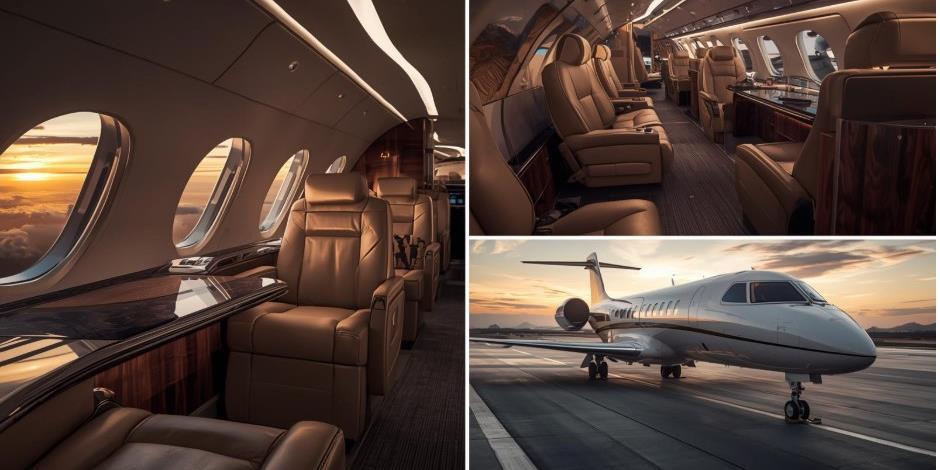
Beyond First Class: How Affordable Private Jets Are Redefining the Executive Travel Experience

November 26, 2025
Let’s be honest: the executive travel experience is broken.
If you’re a business owner or executive, you’ve felt it. It’s the 4:00 AM alarm for a 7:00 AM flight. It’s the fluorescent-lit purgatory of the security line. It’s the productivity-killing Wi-Fi in a crowded lounge, the delayed connections, and the hours spent in transit just to get to a single two-hour meeting.
You arrive fatigued, slightly rumpled, and already thinking about the draining return trip. You’ve saved money by flying commercially, but at what cost? Wasted time, lost energy, and a high level of friction just to do your job.
For decades, the only alternative was a level of private aviation so expensive it was reserved for billionaires and the heads of Fortune 50 companies. That was the rule.
But the rule is changing.
A seismic shift in technology, logistics, and business models has created a new, accessible tier of private travel. It’s an evolution that's moving private aviation from a pure luxury item to a powerful, high-ROI business tool. This article isn’t about extravagance; it’s about efficiency. Let’s break down how this new landscape is redefining what’s possible for leaders who value their time.
The Affordable Misconception: Redefining Value
The phrase affordable private jet can sound like a contradiction, like gourmet fast food. We’ve been conditioned to believe that the price of entry is a 20-passenger Global Express.
But the new market isn't about owning a $50 million asset; it's about accessing a service.
The real shift is one of mindset, moving from cost to value. The most successful entrepreneurs know their most valuable, non-renewable asset is time. The true cost of that commercial flight isn't just the ticket price; it's the six hours of productive, deep-work time you lost, the family dinner you missed, and the physical exhaustion that dulls your edge in the high-stakes meeting.
This new model of private aviationdriven by on-demand charters, jet cards, and a more transparent digital platform built on a different equation. It asks: What is your time worth?
When you can compress a two-day commercial slog into a single six-hour round trip, the cost of the flight is immediately reframed as an investment in productivity.
It’s Not About Luxury, It’s About Logistics
The biggest a-ha moment for first-time private flyers isn’t the leather seats. It’s the logistics. The entire process is re-engineered around efficiency, not crowd control.
The End of the 2-Hour Buffer
Imagine this travel day: you drive to a small, private terminal (known as an FBO), park your car 50 feet from the door, and are greeted by your pilots. You show your ID, walk straight to the aircraft, and are in the air 15 minutes after you arrive.
No lines. No security theater. No Group 4 boarding calls.
This single change fundamentally alters the travel experience. It eliminates the hours of buffer time that surround every commercial flight, turning transit from a stressful ordeal into a simple, friction-free process.
Accessing the Unseen Map
Major airlines operate on a hub-and-spoke model, forcing you to fly their routes. This often means landing at a massive hub, like Pearson or O'Hare, only to face an hour-long drive to your actual destination.
Private aircraft don't use this map. They have access to thousands of smaller, regional airports that commercial jets can't use.
Here’s what that means in practice: you can land at an airport just 10 minutes from your client’s factory, your new office, or your manufacturing plant. You bypass the city-center traffic and the hub-and-spoke detours entirely. This isn't just a convenience; it's a profound strategic advantage that can save you hours on each end of your trip.
The Cabin as a Confidential Boardroom
Try having a sensitive conversation about quarterly numbers or a new product strategy in the AAdvantage lounge. It's impossible. Even in a first-class pod, you’re in a public space.
A private cabin is a secure, private, and fully functional office. You can hold confidential board meetings, prep your team for a high-stakes negotiation, or simply engage in the kind of deep, focused work that’s impossible while surrounded by strangers. The flight time stops being downtime and becomes some of the most focused uptime of your day.
How On-Demand Charter Unlocked the Market
This entire revolution hinges on one key development: the rise of efficient, on-demand charter.
In the past, you either had to buy a whole aircraft (massive capital expense) or a fractional share (a multi-year, million-dollar commitment). Today, digital brokerage models and sophisticated logistics software have created a true on-demand marketplace.
Think of it like Uber Black for the skies.
You don't need to own the fleet. You simply pay for the specific trip you need, when you need it, on the exact aircraft that’s right for the mission. This asset-light model eliminates all the overhead, maintenance, and long-term costs of ownership.
This rise in accessibility has created a genuine market for affordable private jets, where efficiency, not just status, is the primary product. It's also created a much more competitive landscape. Operators are now competing for your business based on price, service, and safety, which has driven down costs and increased transparency for the end user.
Choosing Your Aircraft: The Right Tool for the Job
This new market isn't one-size-fits-all. A common mistake for new entrants is to think bigger is always better. The key to making private aviation affordable is using the right-sized tool for the mission.
You wouldn't use a sledgehammer to hang a picture, and you don't need a 14-seat long-range jet for a 90-minute flight.
Light Jets for Regional Hops
For trips under three hours with 2-5 passengers, a light jet (like an Embraer Phenom 300 or a Citation CJ3) is the workhorse of the modern executive. They are fast, incredibly efficient, and can access those small regional airfields we talked about. They are the perfect solution for multi-city day trips.
Midsize & Super-Midsize for Cross-Country
Need to cross the continent? A midsize or super-midsize jet (like a Citation Latitude or a Challenger 350) offers more range, a stand-up cabin, and more luggage capacity without the operating costs of a heavy jet. These are the best executive jets for balancing comfort, capability, and cost-effectiveness for a team of 6-8 people.
The smartest flyers and their charter partners work together to right-size the aircraft for every single trip, optimizing for budget, time, and passenger load.
The Hidden ROI: More Than Just a Flight
It’s hard to put a number on arriving at a critical meeting fresh, prepared, and unstressed.
What's the ROI of visiting teams in three different cities in a single day and still being home for dinner with your family? This kind of mission is flatly impossible with commercial airlines.
This is where we see the real, tangible business case.
- Reduced Burnout: The physical and mental drag of constant commercial travel is a leading cause of executive burnout. A smoother, faster travel process is a direct investment in your (and your team's) long-term energy and well-being.
- Seizing Opportunity: When a high-value client has a last-minute crisis, or a critical deal needs your personal attention now, you can be airborne in two hours. That agility to be there when it matters is a competitive advantage that can win or save multi-million dollar deals.
- Security and Discretion: For C-suite leaders, founders discussing a merger, or families in the public eye, the privacy and security of a private terminal and cabin are invaluable.
This multi-faceted return on time, energy, and opportunity is the true definition of what affordable private jets deliver in the modern economy.
A New Definition of Executive Success
The executive travel landscape has truly changed. The technology and business models have finally caught up to the demands of modern business, breaking private aviation out of its ultra-rich stereotype.
It's no longer just about luxury. It’s about logistics. It’s not about extravagance; it’s about efficiency.
For the savvy entrepreneur and the forward-thinking business leader, this isn't a perk; it's a productivity tool. It's a strategic lever you can pull to buy back your most precious asset: time.
Ultimately, the shift to strategic private aviation is about understanding what truly drives long-term success in your business and realizing your time may be the most critical asset you have.




