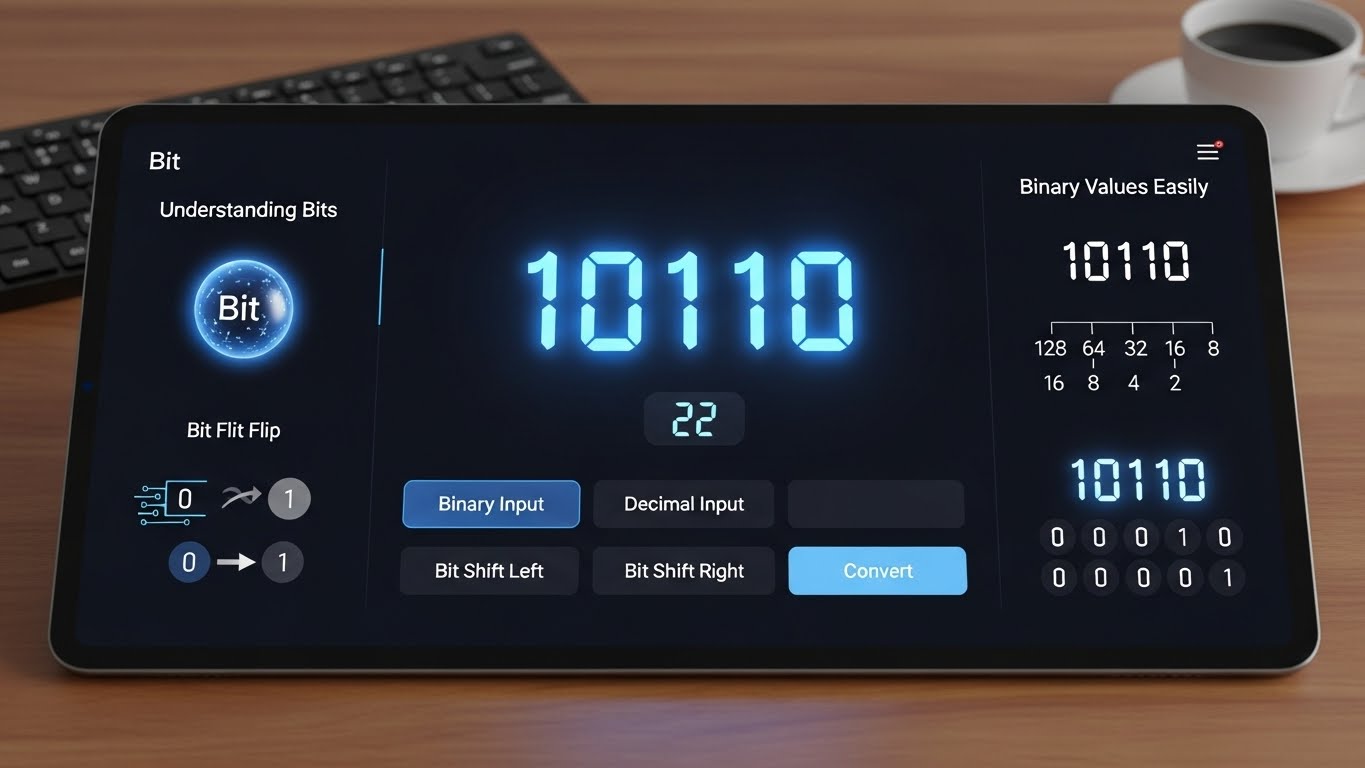

In the modern digital world, everything from computers and smartphones to the internet and software systems works on binary data. At the heart of this system are binary digits, commonly known as bits, which use only two values: 0 and 1. To simplify working with these values, a Binary Digit Calculator becomes an essential tool. Using a reliable Binary Digit Calculator in the middle of complex calculations helps users quickly understand, verify, and convert binary digits without manual errors, making learning and professional work far more efficient.
What Is a Binary Digit?
A binary digit, or bit, is the smallest unit of data in computing. Unlike the decimal number system (0–9), the binary system operates only on two digits:
0 (off / false / low voltage)
1 (on / true / high voltage)
Every piece of digital information—text, images, videos, and software—is ultimately represented using long sequences of these binary digits. Understanding how binary digits work is the foundation of computer science, electronics, and digital communication.
What Is a Binary Digit Calculator?
A Binary Digit Calculator is an online or software-based tool designed to perform operations related to binary digits. It allows users to:
Enter binary values (0s and 1s)
Validate whether a number is a valid binary digit sequence
Convert binary digits into decimal or other number systems
Perform basic binary operations such as checking bit values
This tool is especially helpful for students, programmers, engineers, and anyone dealing with digital logic or data representation.
Why Binary Digit Calculators Are Important
Manual binary calculations can be confusing and time-consuming, especially for beginners. A Binary Digit Calculator removes complexity and ensures accuracy. Here’s why it’s important:
Accuracy – Eliminates human calculation errors
Speed – Instant results without long manual steps
Learning Support – Helps students understand binary concepts
Professional Use – Useful for coding, networking, and electronics
Convenience – Accessible online anytime, anywhere
How a Binary Digit Calculator Works
The working principle of a Binary Digit Calculator is simple:
You input a binary digit or a sequence of binary digits.
The calculator validates the input (ensuring only 0s and 1s are used).
It processes the data using predefined algorithms.
The result is displayed instantly, often with explanations.
Some advanced calculators also show step-by-step logic, which is extremely useful for educational purposes.
Who Should Use a Binary Digit Calculator?
A Binary Digit Calculator is beneficial for a wide range of users, including:
Students learning computer science or mathematics
Programmers working with low-level code
Network engineers dealing with IP addressing and subnetting
Electronics engineers working with digital circuits
Teachers and trainers explaining binary concepts
Even non-technical users can use it to better understand how digital systems work.
Binary Digits in Real-Life Applications
Binary digits are not just theoretical concepts; they are used everywhere:
Computers & CPUs – Process instructions using binary logic
Mobile devices – Store and transmit data in binary form
Networking – IP addresses and data packets rely on binary
Digital storage – Hard drives and SSDs store binary data
Security & encryption – Binary keys protect sensitive information
Understanding binary digits with the help of a calculator gives users a clearer picture of how technology functions behind the scenes.
Benefits of Using an Online Binary Digit Calculator
Online Binary Digit Calculators offer additional advantages:
No installation required
User-friendly interfaces
Works on mobile and desktop devices
Free access in most cases
Supports quick learning and experimentation
These tools are especially useful for quick checks during exams, coding sessions, or technical problem-solving.
Common Mistakes Avoided by Binary Digit Calculators
When working manually with binary digits, people often:
Enter invalid digits like 2 or 3
Miscount bit positions
Confuse binary with decimal values
Make conversion errors
A Binary Digit Calculator automatically prevents these mistakes by validating input and showing correct results instantly.
Future of Binary Calculations
As technology evolves, binary systems will continue to dominate computing and digital electronics. With increasing interest in programming, AI, data science, and cybersecurity, tools like Binary Digit Calculators will remain essential for both learning and professional development.
Conclusion
A Binary Digit Calculator is a simple yet powerful tool that helps users understand and work with the fundamental building blocks of digital technology. Whether you are a beginner learning binary basics or a professional handling complex digital systems, this tool saves time, improves accuracy, and enhances understanding. Mastering binary digits becomes far easier when you have the right calculator at your fingertips.
FAQs
Q1: What is a binary digit?
A binary digit (bit) is the smallest unit of data that can be either 0 or 1.
Q2: Is a Binary Digit Calculator free to use?
Most online Binary Digit Calculators are completely free and accessible without registration.
Q3: Can beginners use a Binary Digit Calculator?
Yes, it is ideal for beginners as it simplifies learning and avoids calculation errors.
Q4: Does a Binary Digit Calculator work on mobile devices?
Yes, most online calculators are mobile-friendly and work on smartphones and tablets.
Q5: Is binary still relevant today?
Absolutely. Binary is the foundation of all modern computing, digital communication, and electronic systems.

You Might Like Also

Home Nursing Services Professional Care for Patients at Home

Explore Popular Reward-Based Gaming Options

Romantic Destinations and Unforgettable Travel Ideas






