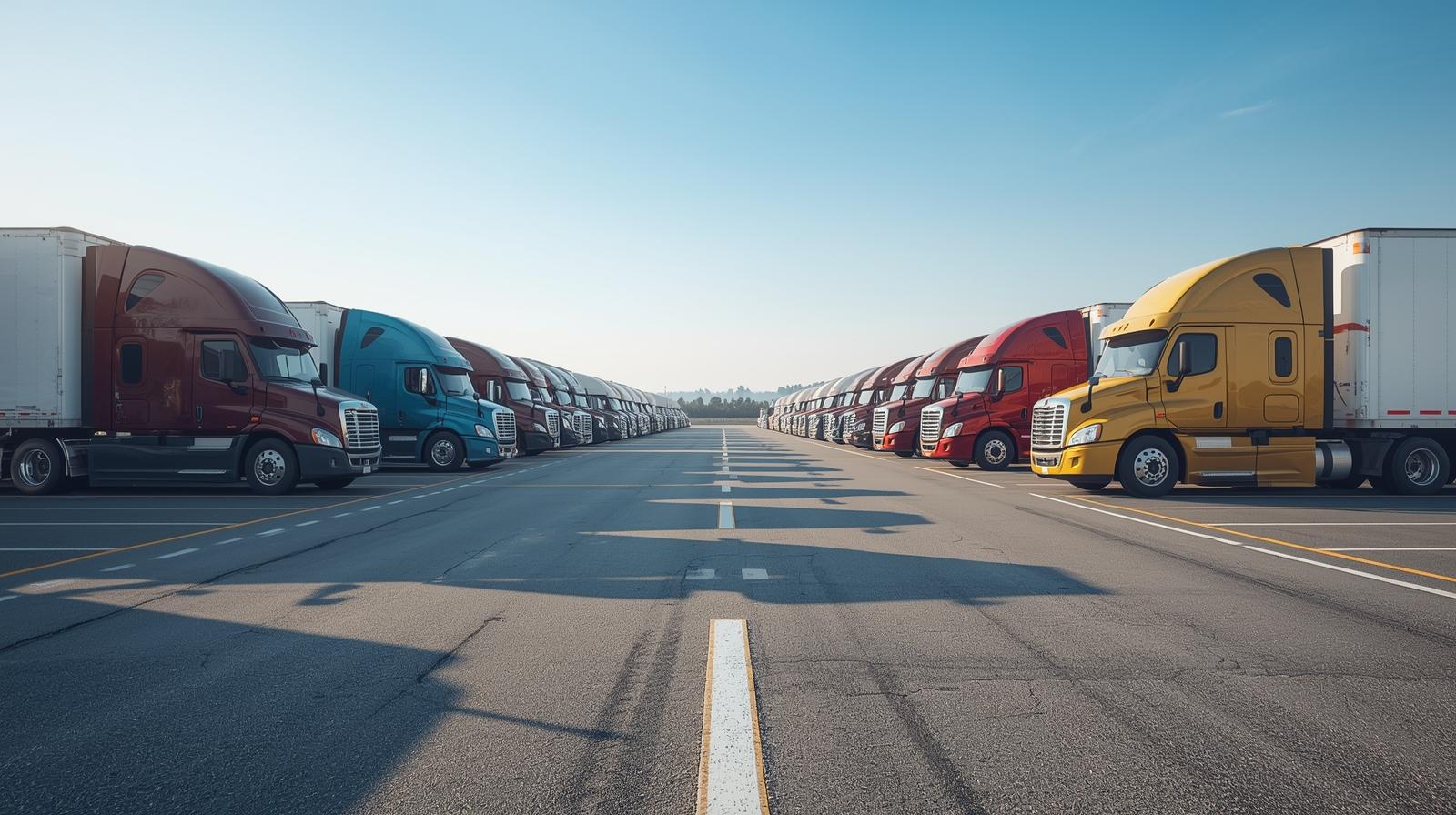

You are finished with your route. The manifest is clear, the deliveries are done, or you have dropped your trailer at the yard. You are ready to park for the night. But you aren't driving a sedan, and you aren't hauling a 53-foot trailer. You are in that tricky middle ground: the bobtail or the box truck.
Drivers of Class B vehicles, box trucks, and bobtail tractors face a unique set of challenges. You are often too big for residential driveways and retail parking lots, yet you might feel out of place—or get turned away—at massive truck stops designed for long-haul combinations.
Navigating this landscape requires a different approach than standard semi-truck parking. Because you likely operate closer to urban centers for "last-mile" deliveries, you face tighter squeezes, stricter zoning laws, and a higher risk of urban cargo theft. This guide breaks down how to find safe, legal, and convenient parking for your medium-duty or bobtail vehicle.
The Unique Struggle of the "In-Between" Vehicle
Why is it so hard to park a 26-foot box truck or a tractor without a trailer? The infrastructure simply isn't built for you.
The Urban Squeeze
Unlike long-haul drivers who stick to the interstate corridors, box truck drivers often live and work deep within city limits. You are navigating narrow streets and dense neighborhoods. Finding a spot in Manhattan, Chicago, or downtown Los Angeles isn't just about availability; it's about geometry. You need a lot that accommodates your turning radius and height clearance, which eliminates most parking garages and standard surface lots.
The Residential Ban
Many box truck owner-operators want to park at home. It makes sense—why pay for a yard when you have a driveway? However, Homeowners Associations (HOAs) and municipal zoning codes are your enemies here. Most cities have ordinances prohibiting commercial vehicles over a certain weight (often 10,000 lbs) from parking on residential streets overnight. Even if you fit in your own driveway, an HOA clause might ban commercial branding or "oversized vehicles" from being visible from the street.
The "Bobtail" Dilemma
For semi-drivers running bobtail (driving the tractor without the trailer), the challenge is different. You are small enough to fit in two standard car spots, but many businesses panic when they see a commercial tractor. Hotels might welcome you, but a Walmart manager might see "semi" and say no, regardless of your length. You are often caught in a gray area where you are technically small enough but legally or visually "too big."
Practical Strategies for Finding a Spot
Since you cannot rely on the standard "truck stop on the highway" model for every night, you need to diversify your search strategy.
Target Industrial Zones
This is the sweet spot for box trucks and bobtails. Industrial parks on the outskirts of cities are designed for your vehicle.
- Look for Wide Streets: Many industrial areas allow overnight street parking because there are no residents to complain. Look for signage carefully, but these areas are generally safer and more lenient.
- After-Hours Agreements: Look for businesses with large fenced yards that close at 5:00 PM. A polite conversation with a business owner could land you a secure spot for a small monthly fee. They get extra cash; you get a gated spot.
Self-Storage and RV Storage Facilities
Self-storage isn't just for furniture. Many facilities have realized the demand for vehicle storage and offer uncovered parking spaces.
- The Size Advantage: Because you don't have a 53-foot trailer, you can fit into "RV/Boat" storage spaces that are 30 or 40 feet long. These are much cheaper and more abundant than full tractor-trailer spaces.
- 24/7 Access: Ensure the facility offers 24-hour gate access. Some storage lots lock up tight at 9:00 PM, which won't work if your route runs late.
Leveraging Apps with Filters
Don't just use generic GPS. Use the same apps long-haulers use, but filter them differently.
- Trucker Path: Look for locations marked as having "bobtail" parking. Some truck stops reserve smaller, tighter spots specifically for bobtails that full rigs can't use.
- SecurSpace: This is essentially Airbnb for truck parking. It connects drivers with private yards that have excess space. It is particularly effective for box trucks needing secure parking near major metro areas.
Security and Compliance: Protecting Your Assets
Box trucks are frequent targets for cargo theft. They are often easier to break into than a heavy-duty container, and they frequently carry high-value consumer electronics or pharmaceuticals for local delivery.
The "Back-Against-The-Wall" Technique
If you are parking a box truck loaded with cargo, never leave the rear door exposed. Back your truck up against a concrete wall, a light pole, or a fence. If thieves cannot physically open the roll-up door, they cannot steal the freight. For bobtails, use a kingpin lock even if you don't have a trailer. It signals to thieves that you are security-conscious and not an easy target for vehicle theft.
Lighting is Your Best Friend
Avoid the dark corner of the industrial park. Park directly under a streetlamp. If you are paying for a monthly spot in a yard, choose the spot closest to the guard shack or the surveillance cameras. Criminals prefer shadows; do not give them any.
Know the Local Ordinances
Ignorance is expensive. If you park on a residential street, you risk a ticket, a boot, or a tow bill that can cost thousands.
- Check the signage: "No Commercial Parking 2 AM - 6 AM" is common in suburban transition zones.
- Get it in writing: If a business owner lets you park in their lot, get a simple email or text confirming it. If a patrol car sees your truck there at 3:00 AM, they might assume it is abandoned or trespassing unless you can prove otherwise.
Innovative Solutions for Medium-Duty Drivers
The market is finally waking up to the needs of the medium-duty sector. New services are popping up to solve the bobtail and box truck puzzle.
Shared Economy Parking
Just as people rent out their driveways for cars, industrial landholders are renting out excess pavement. Platforms are emerging that allow a warehouse with 10 empty dock spaces at night to monetize them. This is perfect for box trucks that need to be near the city center for morning deliveries. It transforms "dead capital" (empty asphalt) into a secure haven for drivers.
Dedicated Monthly Parking Hubs
We are seeing the rise of "truck condos" or dedicated commercial parking depots. unlike a transient truck stop, these are subscription-based.
- Why it works: You pay a monthly rate for an assigned spot. It is yours. You don't have to hunt for it.
- Amenities: These hubs often include plug-ins for engine block heaters, personal vehicle parking (so you can swap your car for your truck), and high-fence security. For a local box truck driver, this provides a reliable home base.
Fleet Hubs for Owner-Operators
Some larger logistics companies are opening their yards to independent contractors for a fee. If you are an owner-operator contracted with a specific carrier, ask if you can park at their local terminal. It is often the safest and cheapest option available.
Conclusion: Plan Smart to Park Safe
Finding parking for a box truck or bobtail requires a shift in mindset. You cannot rely on the interstate infrastructure designed for long-haulers, nor can you blend into the residential landscape like a sedan. You must be a strategic navigator of the urban environment.
By utilizing industrial zones, securing monthly spots at storage facilities, and leveraging new parking apps, you can eliminate the nightly stress of finding a home for your rig. Remember, the cost of a secure, legal parking spot is always lower than the cost of a tow, a ticket, or a theft. Treat your parking strategy as an essential part of your business plan, and you will keep your wheels turning and your cargo safe.




