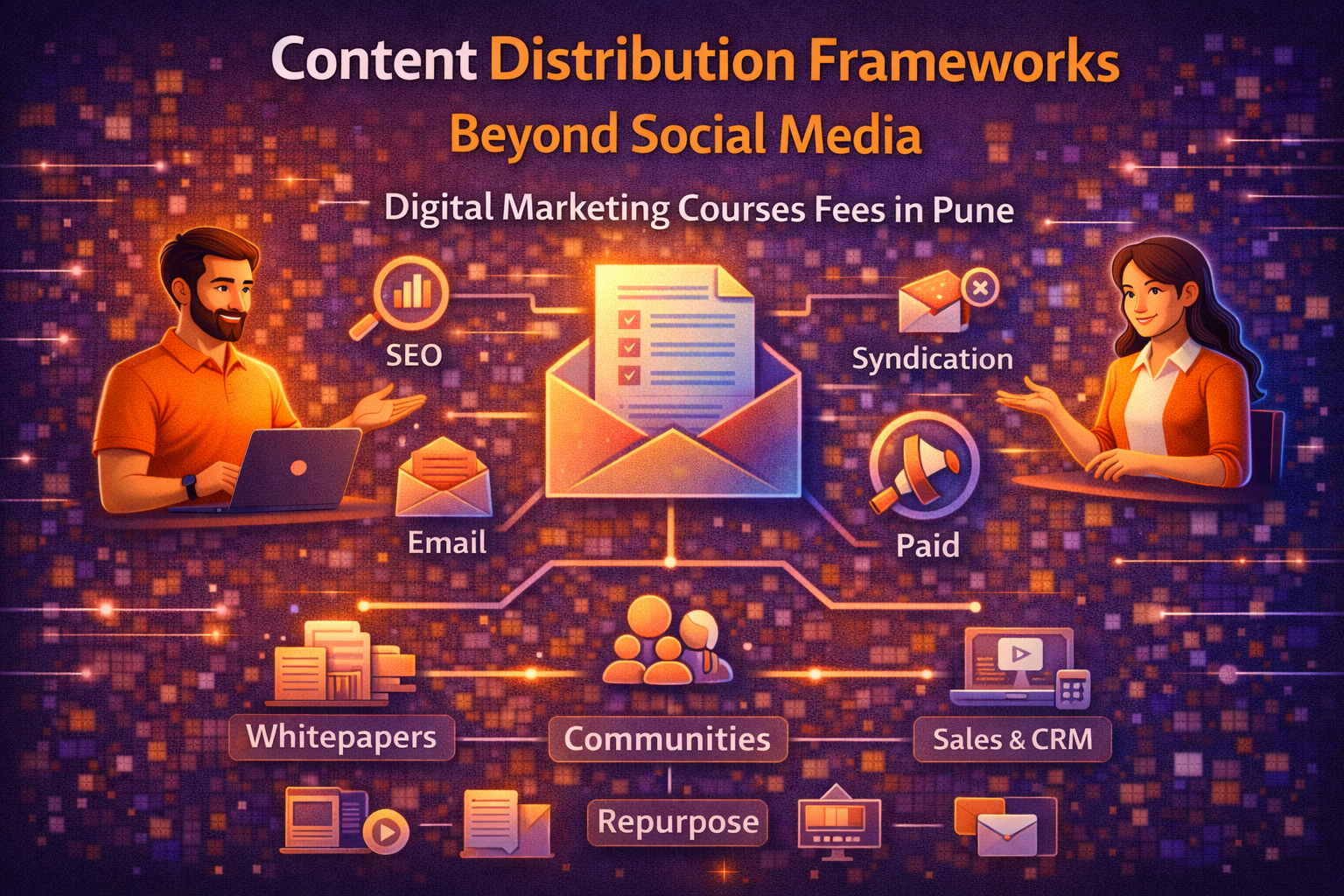

Content Distribution Frameworks Beyond Social Media
Creating great content is only half the job. The real challenge begins after the content is published. Many businesses put weeks into writing blogs, guides, or case studies—then simply share them on social media and hope for results.
But here’s the truth: social media alone is not a reliable distribution strategy. Algorithms change, reach drops, and content disappears in hours. That’s why modern marketers focus on content distribution frameworks that go beyond social platforms.
If you’re learning content marketing through digital marketing courses in Pune, understanding these frameworks is critical. It’s also a topic often discussed when evaluating digital marketing courses fees in Pune, because advanced distribution skills directly impact ROI.
Why Social Media Alone Is Not Enough
Social platforms are important, but they have limitations:
Organic reach is declining
Content lifespan is very short
Platforms control visibility, not you
Results are inconsistent
A blog post shared on LinkedIn may get attention for a day. But a well-distributed article using multiple channels can bring traffic, leads, and conversions for months or even years.
That’s why serious marketers build owned and diversified distribution systems.
What Is a Content Distribution Framework?
A content distribution framework is a structured system that ensures your content reaches the right audience through multiple channels—consistently and strategically.
It answers three key questions:
Where should this content be shared?
Who is the target audience?
What stage of the buyer journey does it support?
Good digital marketing courses in Pune teach that content without distribution is just an expense, not an asset.
1. SEO-Led Content Distribution (Your Long-Term Engine)
Search engines are the most powerful non-social distribution channel.
How It Works:
Optimize content for search intent
Build topic clusters
Use internal linking
Update content regularly
SEO ensures:
Continuous organic traffic
High-intent users
Long-term visibility
A single optimized blog can outperform hundreds of social posts over time.
This is why SEO is a core pillar in every professional digital marketing course in Pune, regardless of the digital marketing courses fees in Pune.
2. Email Marketing Distribution Framework
Email is one of the most underrated content distribution channels.
How to Use Email Beyond Promotions:
Weekly educational newsletters
Content roundups
Blog-to-email repurposing
Lead nurturing sequences
Unlike social media:
You own the audience
No algorithm limits reach
Higher engagement rates
A simple newsletter sharing one high-quality blog can drive more qualified traffic than paid ads.
3. Website-Centric Distribution (Owned Media Strategy)
Your website is your strongest distribution asset.
Smart Website Distribution Tactics:
Feature content on homepage sections
Use related post widgets
Add contextual CTAs inside blogs
Create resource hubs or learning centers
When users land on one article, they should naturally discover more.
This approach improves:
Time on site
Topical authority
Conversion rates
Advanced digital marketing courses in Pune focus heavily on turning websites into content ecosystems.
4. Community-Based Distribution (Beyond Followers)
Communities distribute content organically—without algorithms.
Examples:
WhatsApp groups
Telegram channels
Slack communities
Forums
Private email groups
Instead of broadcasting, you:
Share value
Answer questions
Build trust
Over time, members start sharing your content themselves.
This model works exceptionally well for education brands, trainers, and institutes offering digital marketing courses in Pune.
5. Content Syndication Platforms
Syndication means republishing content on platforms that already have traffic.
Popular Options:
Medium
LinkedIn Articles
Industry blogs
Niche portals
Important rule:
Always link back to the original content.
Syndication helps:
Expand reach
Build authority
Attract new audiences
Many marketers learning content strategy underestimate this channel until they see real results.
6. Paid Distribution (Smart, Not Expensive)
Paid distribution doesn’t mean boosting posts blindly.
Smart Paid Content Distribution:
Promote high-performing blogs
Run ads to evergreen guides
Retarget website visitors with content
Use lead magnets instead of direct selling
Paid distribution amplifies content that already works.
Understanding this balance is crucial when assessing digital marketing courses fees in Pune, because the goal is learning efficiency—not wasting ad budgets.
7. Sales & CRM-Driven Distribution
Content isn’t only for marketing teams.
How Sales Teams Use Content:
Share blogs during follow-ups
Send case studies to prospects
Use guides to answer objections
This shortens sales cycles and builds credibility.
Modern content frameworks connect:
Marketing
Sales
Customer success
This integrated thinking is now standard in high-quality digital marketing courses in Pune.
8. Repurposing as a Distribution Multiplier
One piece of content can fuel multiple channels.
Example:
One long-form blog →
Email newsletter
PDF guide
Webinar topic
Website FAQ
Internal training material
Repurposing increases reach without creating new content from scratch.
It’s a practical skill that delivers strong ROI—especially important for learners comparing digital marketing courses fees in Pune.
How to Choose the Right Distribution Framework
Ask these questions:
Who is my audience?
Where do they consume information?
What problem does this content solve?
Is the goal traffic, leads, or authority?
There’s no single “best” channel. The best framework is the one aligned with your audience and goals.
Real-World Example
A training institute published a detailed blog on career paths in digital marketing.
Instead of only posting on social media, they:
Optimized it for SEO
Sent it to their email list
Shared it with counselors for follow-ups
Repurposed it into a PDF guide
Result:
Steady organic traffic
Higher-quality inquiries
Better conversion rates
This is the power of structured distribution.




