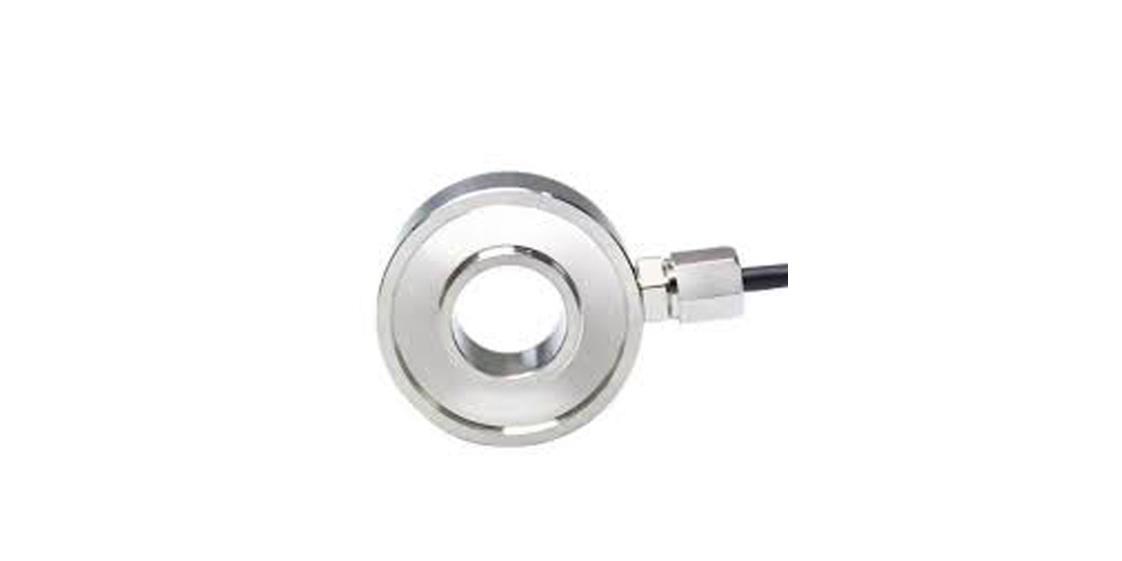

Finding Force on Rotating Equipment with a Load Cell
Using a load cell to measure force on rotating equipment might seem tricky, but it's a very effective method. This approach is widely used in industrial applications to monitor things like tension, torque, and material stress. Here's a breakdown of how it works and what makes it so useful.
The Challenge of Measuring Force
Directly measuring force on a moving or rotating object is difficult because the sensor itself needs to rotate with the object or be in a stationary position while the object moves against it. Traditional methods often involve complex setups, but a load cell offers a more streamlined solution.
A load cell is a transducer that converts a force into an electrical signal. This signal is usually a tiny voltage change that's proportional to the applied force. The core component of most load cells is a strain gauge, which is a resistive sensor whose resistance changes when it's stretched or compressed.
How to Use a Load Cell on Rotating Equipment
There are two primary ways to use a load cell to measure force on rotating equipment:
Stationary Mounting: This is the most common approach. Instead of attaching the load cell directly to the rotating part, you mount it to a stationary component that's experiencing the force from the rotating equipment.
Example: Measuring Belt Tension. Imagine a conveyor belt system. You can mount a load cell on the stationary frame that holds a pulley. As the belt rotates and creates tension, it pulls on the pulley, which in turn applies a force on the load cell. The load cell then measures this force, giving you a direct reading of the belt's tension.
Mounting on a Pivoting Arm: For some applications, you can mount the load cell on a pivoting arm or lever connected to the rotating part. As the rotating component exerts a force, it causes the lever to pivot, and the load cell measures this pivoting force.
Example: Measuring Torque on a Shaft. A classic method for this is a reaction torque sensor setup. The rotating shaft is connected to a stationary component (like a motor or gearbox) through a torque arm. A load cell is placed at the end of this arm. As the shaft rotates and exerts torque, it creates a reactive force on the arm, which the load cell measures. This measured force can be used to calculate the torque (
) using the formula:
where F is the force measured by the load cell and r is the length of the torque arm.
Key Components for a Successful Setup
Besides the load cell itself, a complete system for measuring force on rotating equipment typically includes:
Amplifier: The signal from a load cell is very small and needs to be amplified before it can be processed.
Data Acquisition System (DAQ): This system collects the amplified signal from the load cell and converts it into a digital format.
Slip Ring or Telemetry System: For applications where the load cell itself is rotating, you'll need a way to transmit the electrical signal from the rotating part to the stationary data acquisition system. A slip ring is a common choice, but a wireless telemetry system is often preferred for high-speed applications to avoid friction and wear.
Applications and Benefits
Using load cells for this purpose is beneficial in many industries:
Manufacturing: Monitoring tension on winding machines, ensuring consistent torque on assembly lines.
Robotics: Measuring force feedback at joints to improve control and safety.
Aerospace: Testing stress and strain on rotating parts of engines and turbines.
Material Handling: Ensuring proper tension on conveyor systems to prevent slippage and material damage.
The biggest advantage is the real-time data it provides. By continuously monitoring force, you can detect anomalies, prevent equipment failure, and optimize performance. It provides a reliable and cost-effective way to get accurate force measurements in dynamic, rotating environments.
For More Details, Please visit us




