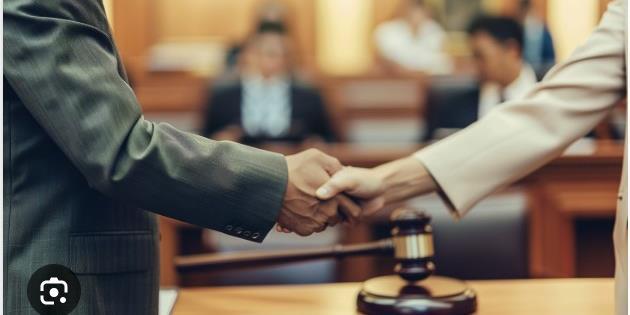
Handshake Promises, Courtroom Proof: Making a Verbal Agreement Stick

October 22, 2025
Nakase Law Firm Inc. often receives questions from clients asking, how can you prove a verbal agreement in court?, which highlights how common and pressing this issue is for individuals and businesses alike. Picture two neighbors leaning over a fence agreeing on a weekend paint job—no paper, just a nod and a smile. A week later, the job’s done, the payment isn’t, and now the story shifts depending on who’s talking. That’s usually the moment the handshake starts to feel a little thin, and the hunt for proof begins.
California Business Lawyer & Corporate Lawyer Inc. often advises clients to consider what is arbitration and how does it resolve disputes? since arbitration may be a faster and less costly alternative than litigating verbal contract disputes in court. And yes, that option can be a lifesaver when a simple promise turns into a slow-moving fight.
Do verbal agreements really count?
Short answer: yes. Courts treat a spoken deal as a real contract when four basics line up—an offer, a clear yes, something of value on both sides, and intent to make it binding. For instance, “I’ll refinish your deck for $600,” followed by “deal,” plus tools showing up on Saturday, checks a lot of boxes. The sticking point isn’t whether a verbal contract can exist—it’s proving what was said and what both sides truly meant.
There’s a catch, though. Some deals must be on paper. Think property sales or arrangements that can’t be finished within a year. No amount of texts or friendly witnesses will make those enforceable if the law expects writing.
Why evidence becomes the anchor
Memories blur. Stories bend around self-interest. And when money is at stake, tiny details suddenly matter: the price, the timeline, the scope. So evidence isn’t a bonus; it’s the whole ballgame. Without it, a case often looks like two competing scripts. Judges read both, then look for outside proof that keeps the plot steady.
Everyday proof that helps
Here’s the good news: the proof you need often lives in places you already check daily.
• Witnesses
A third party who heard the promise—say a coworker who sat in on a call—can steady the record. Neutral ears carry weight.
• Messages and emails
A quick “Thanks for agreeing to $600—starting Saturday” text can do more than hours of arguing. Even short confirmations point to terms both sides accepted.
• Actions that match the deal
Work started on time? Materials bought? Goods delivered? When behavior lines up with the story, judges pay attention.
• Payment trails
Bank transfers, cash app screenshots, invoices, and receipts tend to speak clearly. Even partial payments can show the agreement was real.
• Partial performance
Maybe the job’s half done and the buyer has already used the delivered materials. That kind of middle-mile proof makes a spoken promise feel less hypothetical.
Why things get messy
Stories shift. Timelines get fuzzy. People remember the parts that help them. And sometimes the only witness is a best friend who’s already on one person’s side. On top of that, the legal requirement for writing in certain situations can stop a case in its tracks. So even a solid recollection can fall short without some paper—or pixels—to back it up.
Small habits that protect you
Let’s keep it practical. You don’t need a law degree—just a few habits.
• Send a recap
After the conversation, fire off a short note: “Recap: $600 for the deck, two coats, done by Sunday.” Quick, simple, time-stamped.
• Loop in a neutral person
If the talk is important, have a colleague or neighbor present. Extra ears add stability.
• Keep the trail
Save receipts, bids, screenshots, and delivery confirmations in a single folder. Future-you will thank present-you.
• Record your work
Photos of the finished coat, time logs, and material lists help show real progress.
A quicker off-ramp: arbitration
Court isn’t the only road. Arbitration feels more like a private hearing than a public trial. One neutral decision-maker listens, reviews proof, and issues a result. Cases move along faster, the process stays quieter, and the costs stay steadier. Many businesses add an arbitration clause for exactly that reason. And when a handshake starts things, both sides can still agree later to use arbitration to avoid a drawn-out fight.
How judges think through these cases
When a verbal contract lands in court, the process has a rhythm:
- Were the four contract elements there?
- What proof supports the story—witnesses, messages, payment records, delivery slips?
- Did anyone start performing in a way that matches the claimed terms?
- Do the people testifying sound consistent and credible?
- Is this the kind of deal the law expects to be in writing?
That sequence helps the judge move from “two versions” to “one supported record.”
Lived-in examples
• The lunch deal
Two partners-to-be agree to split profits 50/50. Weeks later, only one draws from the account. The court looks at bank entries, follow-up emails about profit sharing, and a text saying, “Glad we agreed on the split.” That paper trail nudges the scale.
• The remodel rate
A homeowner and a contractor settle on a flat fee in a quick conversation. The contractor later claims a higher rate was promised. Time-stamped texts, a materials invoice matching the original budget, and a partial payment at the agreed fee help confirm the homeowner’s version.
• The furniture run
A seller agrees to build a batch of chairs. The buyer accepts delivery, then balks at paying the balance. Delivery notes, a deposit receipt, and a message saying “finishing the last four” fill in the gaps.
If you’re in this spot right now
Start simple and keep moving:
• Gather communications
Search your texts, emails, and messaging apps. Label screenshots by date.
• List possible witnesses
Coworkers, family members, or neighbors who heard the exchange or saw performance begin can help.
• Pull the money records
Deposits, partial payments, or invoices that match the claimed terms are gold.
• Show your performance
Photos, logs, checklists—anything that shows you acted on the deal.
• Talk to a lawyer
A short consult can help you organize your proof, spot blind spots, and choose the best path—court or arbitration.
And yes, breathe. This can feel personal. Clear steps reduce the stress.
Why writing still wins
Spoken promises can work; written ones save you from guesswork. A page or even a short email sets out the price, the timing, and the scope so nobody has to piece the story together later. That kind of clarity keeps good relationships intact and disputes shorter.
Final take
So, back to the fence-line question: can you prove a verbal agreement in court? You can, and the key is proof that lines up—messages that echo the terms, actions that match the promises, payments that mark the milestones, and witnesses who add steady detail. Put that package together and your case stops being just a tale. And next time the handshake feels right, add a quick written recap; it keeps the trust, and it gives both sides something solid to lean on.




