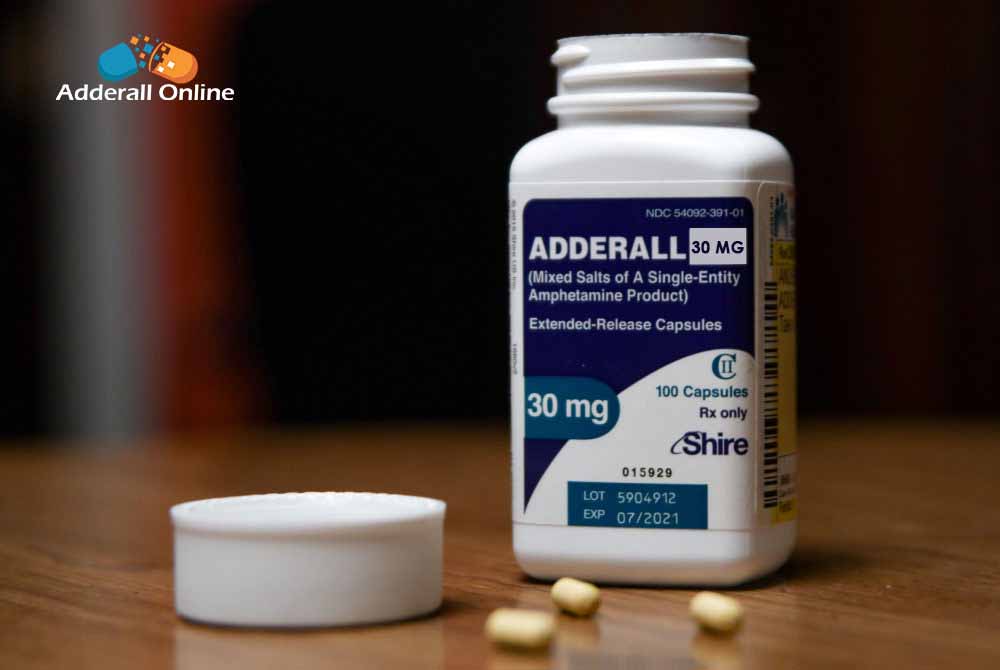

Adderall is a widely prescribed medication for attention deficit hyperactivity disorder (ADHD) and narcolepsy. One of the most common questions patients ask is how long Adderall 30mg stays in the system after use. Understanding this is important for medical safety, drug testing concerns, and overall treatment planning.
The length of time Adderall remains in your body depends on several factors, including how your body processes medication, the formulation you take, and how often the medication is used. In this article, we will explain how Adderall works, how long it can be detected, and what influences how quickly it leaves your system.
What Is Adderall 30mg?
Adderall is a prescription stimulant medication that contains a combination of amphetamine salts, specifically amphetamine and dextroamphetamine. These substances stimulate the central nervous system by increasing dopamine and norepinephrine levels in the brain, which helps improve focus, attention, and impulse control.
A 30mg dose is considered a higher-strength option and is typically prescribed to individuals who require stronger symptom management. Adderall is available in immediate-release and extended-release forms, and this difference plays a major role in how long the medication stays in the body.
How Adderall Is Absorbed and Metabolized
After oral ingestion, Adderall is absorbed through the gastrointestinal tract and enters the bloodstream. The liver then metabolizes the drug, and its byproducts are eliminated primarily through urine. Although the noticeable effects of Adderall may wear off within hours, traces of the medication can remain in the body for several days.
The speed at which Adderall is processed varies from person to person. Some individuals metabolize stimulant medications quickly, while others eliminate them more slowly due to genetics, health conditions, or lifestyle factors.
How Long Does Adderall 30mg Stay in Your System?
In most healthy adults, Adderall 30mg can stay in the system for approximately two to four days. This timeline refers to how long the drug or its metabolites may be detectable, not how long the effects last.
The half-life of Adderall ranges from about nine to fourteen hours in adults. The half-life is the time it takes for half of the drug to be eliminated from the body. Since it usually takes around five half-lives for a medication to be mostly cleared, Adderall can remain in the system for several days after the last dose.
Detection Time for Adderall in Drug Tests
Adderall detection times depend on the type of drug test used. Urine testing is the most common method and can typically detect Adderall for up to four days. Blood tests usually detect the drug for about one day, while saliva tests may detect it for one to two days. Hair tests can detect amphetamines for up to ninety days, although this method is less commonly used.
Detection time does not necessarily indicate impairment or active effects, as Adderall’s stimulant effects usually wear off much sooner.
Immediate-Release vs Extended-Release Adderall
Immediate-release Adderall generally produces effects for four to six hours and leaves the system slightly faster. Extended-release Adderall is designed to release medication gradually throughout the day, with effects lasting up to twelve hours. Because of this slow-release mechanism, extended-release versions may remain detectable in the body for a longer period.
Knowing which formulation you are taking is important when considering how long Adderall stays in your system.
Factors That Influence How Long Adderall Stays in the Body
Several factors can affect how long Adderall 30mg remains in your system. Metabolism plays a major role, as people with faster metabolisms tend to eliminate the drug more quickly. Age also matters, since younger individuals often process medications faster than older adults.
Body weight, hydration levels, kidney function, and liver health all influence drug elimination. Frequency of use is another key factor, as regular or long-term use can cause Adderall to accumulate in the body, leading to longer detection times. Urine acidity also affects elimination, with acidic urine speeding up excretion and alkaline urine slowing it down.
How Long Do the Effects of Adderall 30mg Last?
While Adderall may stay in your system for several days, its therapeutic effects are much shorter. Immediate-release Adderall typically works for four to six hours, while extended-release versions last between ten and twelve hours.
After the effects wear off, some individuals may feel tired, unfocused, or irritable. This does not mean the medication has left the body, only that its active effects have diminished.
Is There a Way to Flush Adderall Out of Your System Faster?
There is no safe or medically approved way to rapidly remove Adderall from your system. The body needs time to naturally metabolize and eliminate the drug. Staying hydrated, eating a balanced diet, and maintaining overall health may support normal elimination, but attempting to alter dosage or use unverified methods can be unsafe.
Any concerns about medication clearance should be discussed with a qualified healthcare provider.
Is Adderall 30mg Safe When Used Correctly?
When taken exactly as prescribed, Adderall is considered safe and effective for managing ADHD symptoms. Problems typically arise when the medication is misused, taken without medical supervision, or used at higher doses than prescribed.
If you have questions about your dosage, side effects, or how long Adderall stays in your system, it is important to consult a healthcare professional for personalized advice.
Final Thoughts
Understanding how long Adderall 30mg stays in your system can help you make informed decisions about treatment, medical testing, and overall health. In most cases, the medication can be detected for two to four days, even though its effects last only a few hours. Individual factors such as metabolism, dosage, and formulation significantly influence this timeline.
Always take Adderall under medical supervision and follow your healthcare provider’s instructions closely. Accurate information and responsible use are key to achieving the best outcomes with ADHD treatment.

You Might Like Also

Small Bathroom Remodeling Ideas on a Budget | NuHorizon Remodeling

Average Home Renovation Cost: A Complete Guide for Homeowners




