Keeping commercial trucks on the road is not simply about repairing them when something goes wrong. For fleet owners, owner-operators, contractors, and transportation companies, the bigger challenge is managing downtime.
A truck sitting in a repair shop is not generating revenue. A truck waiting for a tow is not completing a delivery. And a driver waiting for roadside assistance is not moving the next load.
This is one reason mobile service trucks have become an increasingly practical part of commercial fleet maintenance in Edmonton.
Instead of bringing every truck to a repair facility, a mobile service truck allows a trained technician to bring tools, diagnostic equipment, parts, and repair capabilities directly to the vehicle. Depending on the problem, work can be completed at a fleet yard, job site, parking location, or roadside.
For businesses that depend on heavy-duty equipment every day, that difference can be significant.
What Is a Mobile Service Truck?
A mobile service truck is a specially equipped service vehicle designed to allow technicians to perform repairs and maintenance away from a traditional repair shop.
Unlike a standard pickup used simply to transport a mechanic, a professional service truck is essentially a mobile workshop.
It can be equipped with tools and equipment needed for different types of heavy-duty work, such as:
- Diagnostic equipment
- Air compressors
- Welding equipment
- Hydraulic tools
- Electrical testing equipment
- Hand and power tools
- Lubrication equipment
- Replacement components and supplies
- Safety equipment
The exact equipment varies between service providers and the type of work they perform.
The main advantage is flexibility. Instead of moving the truck that needs repair, the technician can bring the service capability to the truck.
Why Mobile Service Matters for Commercial Trucks
A passenger vehicle can often be taken to a repair shop without significantly affecting a business.
Commercial trucks are different.
A truck may be responsible for transporting freight, supporting a construction project, hauling equipment, delivering materials, or completing a scheduled route.
When that truck stops working, the impact can extend beyond the vehicle itself.
A single breakdown can affect:
- Drivers
- Dispatchers
- Customers
- Delivery schedules
- Other fleet vehicles
- Job-site productivity
- Operating costs
Mobile service provides another option for dealing with these interruptions.
Mobile Service Trucks Are Not Just for Emergency Breakdowns
One common misconception is that mobile truck service is only useful when a vehicle has already broken down.
Emergency repair is certainly an important application, but it is not the only one.
A mobile service truck can also support routine maintenance and planned repairs at locations where commercial vehicles are already parked.
For example, a fleet may have several trucks at its yard at the end of a working day.
Rather than sending each vehicle to a repair facility, a mobile technician may be able to perform selected maintenance or repair work at the fleet's location.
This can make scheduling easier and reduce unnecessary vehicle movement.
What Can a Mobile Service Truck Do?
The services available depend on the equipment and expertise of the provider.
Heavy-duty mobile service may include diagnostic work, electrical repairs, brake-related repairs, cooling-system work, engine troubleshooting, routine maintenance, and other on-site repairs.
Some common situations include:
Engine Diagnostics
A truck that is losing power, running poorly, overheating, or showing warning lights may need diagnostic testing.
On-site diagnostics can help determine whether the problem involves the engine, fuel system, electrical components, sensors, or another system.
Electrical Repairs
Electrical faults can leave a truck unable to start or cause problems with important vehicle systems.
A mobile technician can inspect batteries, charging systems, wiring, starters, connections, and other electrical components.
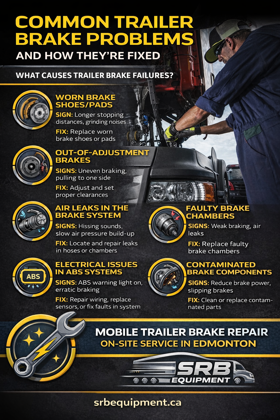
Brake Service
Brake problems require prompt attention because they directly affect vehicle safety.
Depending on the problem and available equipment, certain brake-related inspections and repairs can be performed at the truck's location.
Cooling-System Repairs
Overheating can quickly become an expensive engine problem.
A mobile technician can inspect coolant levels, hoses, radiators, cooling fans, and related components to identify potential causes.
Routine Maintenance
Not every service needs to happen inside a repair shop.
Oil and filter service, inspections, lubrication, and selected maintenance tasks may be possible at a fleet yard or other suitable location.
The Role of Mobile Service in Fleet Maintenance
For fleet managers, the biggest advantage of mobile service is not simply convenience.
It is flexibility.
Fleet maintenance involves balancing vehicle availability, driver schedules, repair requirements, parts, and customer commitments.
A mobile technician can sometimes work around the fleet's schedule instead of requiring the fleet to reorganize its schedule around a repair facility.
This can be particularly useful when multiple vehicles require attention.
For example, a fleet manager may schedule selected maintenance work while trucks are parked overnight. The vehicles can receive service without spending additional time travelling to and from a shop.
Mobile Service Can Help Reduce Unnecessary Downtime
Downtime has several components.
There is the actual repair time, but there can also be travel time, towing time, waiting time, scheduling delays, and time spent moving the vehicle between locations.
Mobile service does not eliminate all of these factors, and not every repair can be completed on-site.
However, when a repair is suitable for mobile service, eliminating unnecessary vehicle movement can make the overall process more efficient.
That can be particularly valuable for commercial fleets where every available truck matters.
Mobile Service Trucks and Construction Operations
Mobile service is also useful outside traditional trucking operations.
Construction companies often operate heavy equipment and commercial vehicles at locations that are not close to repair facilities.
Moving a disabled truck or piece of equipment from a job site can be difficult and expensive.
Having a service vehicle come to the site can provide a practical alternative when the required repair can be completed safely with the equipment available.
The same concept can apply to industrial operations, agricultural businesses, transportation yards, and other commercial environments.
Edmonton Creates Its Own Maintenance Challenges
Edmonton's commercial vehicles operate through changing seasonal conditions.
Cold temperatures can affect batteries and starting systems. Winter conditions can put additional demands on electrical and mechanical components. Road conditions can also contribute to wear.
During warmer months, heavy loads and long operating hours can place significant demands on cooling systems and engines.
These conditions make regular inspections and maintenance particularly important.
Mobile service can complement a maintenance program by allowing certain work to be completed where trucks are already operating or parked.
Emergency Mobile Service vs. Planned Mobile Maintenance
There are two different ways to think about mobile truck service.
Emergency Service
This is when a truck develops a problem that prevents it from continuing its work.
Examples include:
- A no-start condition
- Electrical failure
- Overheating
- Loss of engine power
- Brake problems
- Other roadside mechanical failures
The priority is to diagnose the problem, determine whether the vehicle can be safely repaired on-site, and get it back into service when possible.
Planned Service
This involves scheduling maintenance or repairs before a failure occurs.
A fleet can arrange for selected work to be performed while vehicles are parked at a yard or operating location.
Planned mobile service can be especially useful for fleets trying to minimize unnecessary vehicle movement.
Both approaches have a place in an effective maintenance strategy.
When a Mobile Repair Is Not the Right Solution
Mobile service is highly flexible, but it is not a replacement for a fully equipped repair facility.
Some repairs require specialized shop equipment, controlled working conditions, extensive component removal, or significant teardown.
For example, a major engine rebuild may require equipment that cannot reasonably be carried on a service truck.
A professional technician should therefore determine whether the required work is suitable for on-site repair.
If a truck needs to be transported to a shop, the technician can help identify that requirement rather than attempting an unsuitable roadside repair.
What Makes a Good Mobile Service Truck Provider?
Not all mobile service operations are equipped or experienced in the same way.
When choosing a provider, fleet managers should consider several factors.
Heavy-Duty Experience
Commercial trucks have different systems, components, and diagnostic requirements than passenger vehicles.
Look for a provider experienced with heavy-duty trucks and trailers.
Proper Diagnostic Equipment
Modern trucks depend heavily on electronic systems.
Having appropriate diagnostic equipment can help technicians identify faults instead of relying entirely on visual inspection or guesswork.
Broad Repair Capability
A provider capable of handling multiple systems can be useful when the exact cause of a breakdown is initially unknown.
Clear Communication
Fleet managers need to understand what was found, what needs to be repaired, and whether additional work is recommended.
Good communication makes repair decisions easier.
Availability
A mobile service provider is most useful when it can respond when the fleet actually needs assistance.
For businesses operating outside regular shop hours, emergency availability can be an important consideration.
Mobile Service as Part of a Larger Maintenance Strategy
Mobile repair should not be viewed as a substitute for preventive maintenance.
The strongest approach combines regular inspections, scheduled maintenance, professional diagnostics, and emergency support.
Routine maintenance can help identify developing problems before they cause a breakdown.
Mobile service provides another layer of support when repairs are needed at the vehicle's location.
Together, these services can give fleet managers more options for keeping equipment operational.
Why Owner-Operators Can Benefit From Mobile Service
Large fleets are not the only businesses that can benefit.
For an owner-operator, a single truck may represent the primary source of income.
If that truck is unavailable, there may be no replacement vehicle immediately available.
Being able to have a technician come to the truck can therefore be valuable when the problem is suitable for on-site repair.
It can also reduce the disruption associated with arranging a tow and transporting the vehicle to a repair facility.
Mobile Service for Trucks and Trailers
The vehicle itself is not always the only source of a problem.
Trailers can also develop mechanical, electrical, brake, lighting, suspension, and other issues.
A provider that works with both trucks and trailers can offer a more complete solution for commercial operators.
This can be particularly useful for fleets that manage multiple combinations of tractors and trailers.
How to Prepare for a Mobile Service Call
When requesting mobile service, provide as much useful information as possible.
Tell the technician:
- The truck's make and model
- The engine type, if known
- The current location
- What happened
- Any warning lights displayed
- Whether the truck starts
- Any unusual noises or smells
- Whether there are visible leaks
- Whether the problem appeared suddenly or developed gradually
Accurate information can help the technician prepare the right tools and equipment before arriving.
If possible, also make sure the truck is parked in a safe and accessible location.
A More Flexible Approach to Truck Repair
The biggest advantage of a mobile service truck is not simply that a mechanic can travel to the customer.
It changes how commercial vehicle repair can be organized.
Instead of every maintenance or repair issue requiring the vehicle to be transported to a shop, some work can be brought directly to the truck.
For Edmonton fleets, construction businesses, owner-operators, and transportation companies, that flexibility can help reduce unnecessary downtime and make maintenance easier to coordinate.
SRB Equipment provides mobile truck service in Edmonton along with heavy-duty truck and trailer repair, engine repair, routine service, CVIP inspections, and other commercial vehicle services. SRB Equipment
Final Thoughts
Mobile service trucks have become an important part of modern commercial vehicle maintenance because they bring repair capabilities directly to the equipment.
They can support emergency breakdown response, planned maintenance, fleet servicing, and repairs at locations where transporting a truck to a shop is inconvenient or impractical.
They are not the answer to every mechanical problem, but when the repair is suitable for on-site work, mobile service can give truck owners and fleet managers another way to manage downtime.
For businesses that depend on commercial vehicles every day, having access to a properly equipped mobile service truck is not just about convenience. It is another tool for keeping trucks working, maintenance organized, and operations moving.