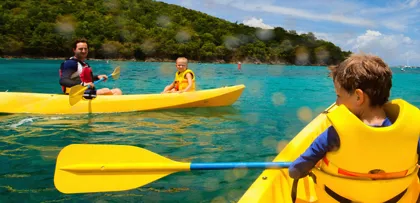
If you're planning a family trip to Maui between November and April, whale watching in Maui is arguably the most unforgettable experience you can add to your itinerary. The short answer: look for tours that offer small group sizes, certified naturalist guides, and age-appropriate options whether that's a large catamaran for comfort or an intimate kayak adventure. Humpback whales migrate to Maui's warm waters in massive numbers each winter, making this one of the best whale watching destinations on Earth. This guide breaks down everything families need to know to choose wisely.
Why Maui Is the World's Premier Whale Watching Destination
Maui's protected waters in the Hawaiian Islands Humpback Whale National Marine Sanctuary host roughly 10,000 North Pacific humpback whales each season. These gentle giants come to breed, calve, and nurse which means you're not just spotting whales in the distance. You're watching mothers with newborn calves, competitive pods of males, and spectacular surface behaviors like breaching, tail-slapping, and singing.
No other destination in the continental U.S. or Hawaii offers this density of whale activity in such accessible nearshore waters. Many whale watching tours in Maui operate just 1–3 miles offshore, meaning even on a calm day with young children, you're almost guaranteed a sighting.
The Two Main Types of Tours: Which Is Right for Your Family?
Boat-Based Whale Watching Tours
These are the most popular choice for families, especially those traveling with younger children or grandparents. Large catamarans and sailing vessels offer stable decks with railings and seating, onboard restrooms, certified marine naturalists who narrate the experience, and hydrophones to let you listen to whale song in real time. Groups typically range from 20 to 100 passengers depending on the vessel. Smaller boats under 25 passengers offer a more intimate experience and can maneuver closer to whale activity while still following federal guidelines that require vessels to stay at least 100 yards from humpbacks.
This format works best for families with children under 8, seniors, or anyone prone to motion sickness who prefers stability.
Maui Kayak Whale Watching
For adventurous families with older kids typically 10 and up maui kayak whale watching offers a completely different dimension to the experience. Sitting just inches above the waterline in a sea kayak while a 45-foot humpback surfaces nearby is genuinely awe-inspiring, and deeply quiet in a way no motorized vessel can replicate.
Kayak whale watching tours in Maui typically launch from South Maui beaches like Makena or Kihei. Small groups paddle out with a certified guide who reads whale behavior and positions the group safely. Because kayaks produce minimal noise and no engine vibration, whales often approach kayakers out of natural curiosity. When evaluating a kayak whale watching operator, look for a guide-to-participant ratio of 1:4 or better, double kayaks available for parent-child pairs, paddling instruction before launch, and guides with wilderness first aid certification. This format is best suited for active families with children aged 10 and older who want a low-impact, deeply immersive encounter.
7 Key Factors to Evaluate Any Whale Watching in Maui Tour
1. Guide Credentials and Naturalist Expertise
The single biggest differentiator between a mediocre tour and a life-changing one is the quality of the guide. Look for operators whose guides are certified by the American Cetacean Society, hold marine biology degrees, or have formal naturalist training. The best guides don't just point at whales they explain what the behavior means, identify individual whales by their fluke markings, and connect the experience to broader ocean conservation.
2. Group Size
Smaller is almost always better for families. A group of 8–12 people on a rigid inflatable or small catamaran means your kids can ask questions, get to the rail, and feel like active participants rather than spectators crowded on a deck.
3. Departure Time
Morning tours typically departing between 7 and 9 AM benefit from calmer seas and more active whale behavior. Afternoon tours can be rougher due to trade winds picking up, which matters for families with young children who might get seasick. Sunset tours offer stunning golden-hour photography and often include light snacks, making them ideal for families celebrating a special occasion.
4. Safety and Child Policies
Reputable operators will have clear minimum age policies, weight limits for kayak tours, and life jacket requirements for all passengers. Ask specifically what happens if ocean conditions are unsafe on your departure day. Good operators offer full refunds or rescheduling without penalty this is a strong indicator of overall professionalism.
5. Whale Sighting Guarantee
Many whale watching tours in Maui offer a return trip free of charge if you don't spot a whale. During peak season this rarely needs to be invoked, but it signals that the operator is confident in their routes and experienced enough to consistently find whale activity even on slower days.
6. Environmental Ethics
Choose operators who strictly follow NOAA guidelines for whale watching: no approaching within 100 yards, no pursuing or surrounding whales, no swimming with whales in the wild. Operators who take these rules seriously signal overall care for the ecosystem your family is there to enjoy. It also teaches children something valuable about responsible wildlife interaction.
7. Reviews From Other Families
Look beyond star ratings and read the actual review text. Search specifically for phrases like "great for kids," "perfect for toddlers," or "teens loved it." TripAdvisor, Google Reviews, and family travel forums are excellent sources. A tour with 4.8 stars and 600 detailed reviews mentioning families carries far more weight than a 5-star rating from a handful of recent posts.

What to Bring on a Family Whale Watching Tour
Preparation makes the difference between a smooth, joyful morning and a stressed-out scramble on the dock. For boat tours, pack reef-safe sunscreen, light layers since it's noticeably cooler on the water, motion sickness bands or pediatrician-approved medication, snacks for younger children, and a camera or phone with a good optical zoom. For kayak tours, wear quick-dry clothing and water shoes, bring a secure waterproof case for your phone, and apply high-SPF sun protection to faces and arms before you launch. A waterproof action camera is far more practical on the water than a DSLR.
When to Go: Timing Your Whale Watching in Maui Trip
Humpbacks typically arrive in Hawaiian waters in November and peak between January and March. By late April most whales have begun their northward migration back to Alaskan feeding grounds. January and February represent peak season for calves and competitive male pods, offering maximum activity and near-guaranteed sightings. December and March are excellent shoulder months with slightly smaller crowds and very strong whale presence. November and April offer the chance to see whales but with lower sighting frequency and less predictable activity.
Book whale watching tours in Maui at least two to three weeks in advance during January and February, as popular operators sell out quickly especially on weekend mornings and holiday dates.
What Families Consistently Say About the Experience
Parents who've done both boat and kayak formats consistently report the same thing: whale watching in Maui reframes how their children think about wildlife and the ocean. The families who feel disappointed are almost always those who booked the cheapest available tour without checking guide quality, chose a large crowded vessel on a choppy afternoon, or skipped motion sickness medication thinking they wouldn't need it. Small planning decisions have an outsized impact on how the day unfolds and on whether your kids leave the dock inspired or queasy.
Boat Tour vs. Kayak Tour: How They Compare
Boat tours accommodate all ages and require low physical effort, making them the more accessible and family-friendly default. They typically run 2–3 hours, carry anywhere from 10 to 100 passengers, and cost between $50 and $130 per person. The experience is comfortable and well-narrated, but the distance from the water and the size of the group can reduce the sense of intimacy with the whales.
Kayak tours are physically moderate, best suited for ages 10 and up, and run slightly longer at 3–4 hours. Group sizes are small usually 4 to 12 people and the cost typically ranges from $90 to $160 per person. What you gain is an unmatched closeness to the ocean and a level of quiet that allows for moments of genuine wildness. When a humpback surfaces 30 feet from your kayak, there's nothing between you and it except open water.
Final Thoughts: Making the Right Choice for Your Family
Whale watching in Maui isn't a commodity experience quality varies enormously based on who runs the tour, how they run it, and whether they genuinely care about both the animals and your family's time on the water. Prioritize knowledgeable guides, appropriate group sizes, and operators with a strong safety record and environmental ethic. If your kids are old enough, seriously consider maui kayak whale watching for the kind of close-to-the-water intimacy that no vessel can replicate. If you have younger children, a small well-crewed catamaran with a naturalist on board will still give them a morning they'll talk about for years.
The whales will show up. Your job is simply to make sure you're on the right boat or the right kayak when they do.

You Might Like Also