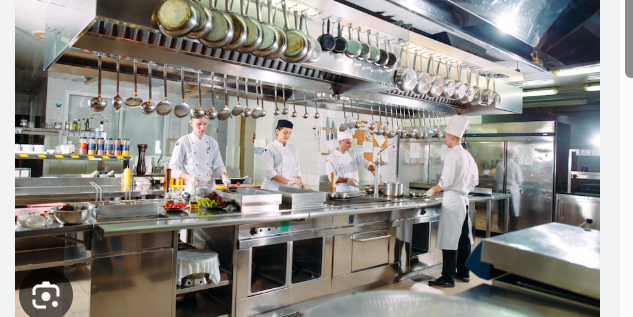

The food and beverage industry is undergoing a remarkable transformation, and one of the most innovative developments in recent years is the rise of the cloud kitchen Also known as ghost kitchens or virtual kitchens, these establishments are changing how food businesses operate and deliver to customers. A cloud kitchen is a professional food preparation and cooking facility set up for the purpose of preparing delivery-only meals, without a dine-in option.
This model has emerged as a cost-effective solution for restaurants and startups to meet the rising demand for food delivery. With technological advancement and shifting customer preferences, the cloud kitchen has become a critical part of modern food services.
Evolution Of Food Delivery And Digital Ordering
In the past, food delivery was often limited to pizza chains or local restaurants. However, the digital transformation and rise of food delivery apps have made ordering food easier than ever. Customers can now explore hundreds of menu items with a few taps on their smartphones. This shift has led to the evolution of the traditional food business model into the cloud kitchen setup.
The concept became even more popular during the pandemic, where physical interaction was minimized, and online orders soared. Food entrepreneurs discovered that operating from a cloud kitchen could save rent, staff salaries, and utility expenses.
How Cloud Kitchens Operate
A cloud kitchen operates by receiving online orders through food aggregator apps or its own website. There is no physical space for customers to dine in. The entire setup is focused on kitchen operations, efficient order processing, and prompt delivery.
Multiple brands can operate under one roof using shared kitchen infrastructure. For example, one cloud kitchen facility may host five different food brands, all working independently but using the same location. This arrangement helps businesses minimize costs and maximize profits.
These kitchens are usually located in areas where the demand for food delivery is high. Operators use data analytics and customer insights to choose locations with optimal delivery reach.
Benefits For Restaurant Owners
For business owners, the cloud kitchen model offers several advantages. The initial investment is significantly lower than setting up a traditional restaurant. There is no need for high-end interior design, waiting staff, or large space for diners. All the resources are directed toward kitchen efficiency and food quality.
Moreover, since the operational costs are low, owners can experiment with multiple cuisines and concepts. A single cloud kitchen setup can offer Chinese, Italian, and Indian cuisine under different brand names without the customer knowing they are being served from the same location.
This flexibility helps in quick adaptation to market trends and customer preferences.
Technology As The Backbone Of Cloud Kitchens
Technology plays a vital role in the functioning of a cloud kitchen. From order placement to inventory management and real-time delivery tracking, every process is supported by software and data analytics. POS systems, integrated order management tools, and kitchen display systems ensure that every order is prepared and dispatched with accuracy.
Data from previous orders help chefs plan better menus and control wastage. GPS systems enable customers to track their orders, while backend systems help managers optimize delivery routes and times.
In addition, artificial intelligence tools are being used to predict peak order times, customer preferences, and seasonal demand. This smart integration of technology makes the cloud kitchen a future-ready model.
Challenges Faced By Cloud Kitchens
Despite the numerous benefits, cloud kitchens also face a set of challenges. One major hurdle is building customer trust. Since there is no physical store, it becomes harder to build brand loyalty. Customers cannot walk in, see the cleanliness of the kitchen, or interact with the staff, which can raise questions about hygiene and authenticity.
Another issue is the high dependency on third-party delivery platforms. While these platforms help reach a wider audience, they also charge high commissions, sometimes up to 30% per order, which eats into the profit margin of the business.
Managing quality across multiple brands in one facility can also be complex. Each brand may require different ingredients, preparation times, and cooking techniques, demanding rigorous kitchen management practices.
Role Of Cloud Kitchens In Food Startups
The cloud kitchen model has provided a significant boost to food startups. New brands can now test their ideas and menus with minimal investment. Since the barrier to entry is low, young entrepreneurs can launch a food business without worrying about massive startup costs.
These kitchens also enable faster scaling. Once a model proves successful in one location, it can be replicated in other regions by simply setting up new kitchen units. Some companies also use franchising to expand rapidly.
Startups also benefit from valuable data collected through online orders. These insights help them make smarter decisions regarding pricing, menu updates, and marketing strategies.
Impact On Traditional Dining
The rise of the cloud kitchen is reshaping the restaurant industry. While it does not completely replace traditional dining experiences, it is causing many dine-in restaurants to rethink their strategies. Many established restaurants are now setting up their own cloud kitchen branches to capture online orders.
In urban areas where people value time and convenience, the cloud kitchen is becoming the go-to solution for meals. Even corporate offices and co-working spaces are tying up with these kitchens to provide food for their teams.
On the other hand, some customers still value the ambience, hospitality, and social aspect of dining out, which only a physical restaurant can offer. Therefore, a balance between both models is likely to emerge.
The Future Of Cloud Kitchens
The future of the cloud kitchen looks promising. With continued growth in food delivery services, rising smartphone usage, and customer preference for convenience, this model is expected to expand further. Companies are experimenting with robotic chefs, automated packing, and drone deliveries to improve efficiency.
Also, the concept of ‘kitchen-as-a-service’ is gaining traction, where entrepreneurs can rent kitchen space on an hourly or monthly basis, just like co-working spaces.
International markets are also showing interest in this model, and cloud kitchens are now a global phenomenon. From the United States to the Middle East and Southeast Asia, food brands are adopting this smart kitchen setup to optimize operations and meet demand.
Conclusion
The cloud kitchen model represents a powerful shift in how the food and beverage industry functions. It offers convenience to customers, flexibility to entrepreneurs, and efficiency to food operations. While there are some challenges to overcome, the overall outlook is highly optimistic.
As the digital era progresses, and consumer habits evolve, the cloud kitchen is set to play a central role in how we enjoy our favorite meals. For new food businesses looking to grow without heavy investment, it provides the ideal platform to launch, test, and thrive in a competitive market.




