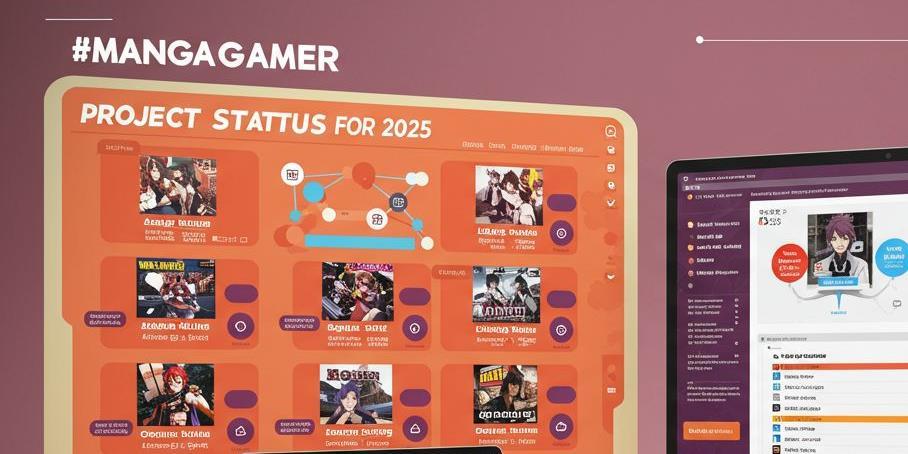

Introduction: Why “MangaGamer Project Status” Matters
If you’re a fan of Japanese visual novels (especially those localized for English audiences), chances are you’ve come across the phrase “MangaGamer project status.” It’s more than a simple status list — it’s a window into how one of the most prominent localization companies is operating: how many projects they have in the pipeline, how far along each is, what obstacles they face, and how they communicate with their community.
For many fans, the project status is a source of hope, anticipation, and sometimes frustration. It sets expectations for upcoming releases and keeps the community informed (or sometimes leaves them guessing). From an SEO standpoint, tracking these updates is also useful to spot patterns in release cadence, strategy shifts, and risk points.
In this article, I’ll explore:
- What exactly “MangaGamer project status” entails
- The most recent public snapshot and key projects in progress
- Known announcements and off‑status pipelines
- The typical localization workflow and where delays happen
- Key challenges and past controversies
- Strategic moves MangaGamer is making
- What the status updates imply about their current health and direction
- What fans and watchers should monitor going forward
Let’s begin by defining the term more clearly.

1. Defining “MangaGamer Project Status”
When we say “MangaGamer project status,” we are referring to the public updates MangaGamer issues on its blog (or staff blog) that list multiple ongoing localization projects, with notes about their stage of progress (translation, editing, QA, porting, etc.).
These updates often include:
- Percentage completed for translation
- Percentage or status of editing / proofreading
- Indicators like “beta testing,” “port in progress,” or “available now”
- Remarks about delays, platform issues, or readiness
These updates serve multiple roles:
- Transparency & Trust: They let the fan community see that work is ongoing
- Expectation Management: They moderate hype and clarify which projects are near release
- Marketing & Visibility: They keep older titles or upcoming ones in mind
- Internal Signaling: They may reflect internal resource allocation and priorities
However, a few caveats are important:
- These are snapshots, not guarantees. A “100% translated” project may still take months before release.
- Hidden work — bug fixes, regression testing, platform compliance — is often not shown explicitly.
- Some projects are not listed (secret or undisclosed).
- Delays, changes, or cancellations are possible even after status updates.
With that understanding, let’s dive into the latest public snapshot.

2. The Latest Public Update: April 2025 Snapshot
The most recent “Project Status” post from MangaGamer is dated April 14, 2025. Below is a summary of what was listed and what it suggests.
Key Titles & Their Status
Title | Status / Notes |
|---|---|
Rance 03 | “Available now!” (released) |
X – Showdown | Translation 100% — Editing 24% |
The Pillagers of Raillore | Beta testing complete! |
Eve of the Twelve Months | Beta testing complete! |
Hana Awase New Moon | Port in progress |
Rose Guns Days | Translation 100% — Editing 70% |
Beat Valkyrie Ixseal | Available now! |
Luckydog1 | Beta testing in progress |
Funbag Fantasy 4 | |
Sleepless – A Midsummer Night’s Dream | Translation & Editing 100% |
Sleepless – Nocturne | Translation & Editing 100% |
From this, a few observations:
- A few titles are already released (Rance 03, Beat Valkyrie Ixseal)
- Several are fully translated but still in editing or subsequent phases (Rose Guns Days, X – Showdown)
- Some are nearing completion (Funbag Fantasy 4 at editing 95%)
- Titles like The Pillagers of Raillore and Eve of the Twelve Months are labeled “beta testing complete,” implying they might be awaiting final steps (release build, platform compliance, etc.)
- Hana Awase New Moon is in “port in progress,” indicating platform or technical adaptation work
This snapshot reveals a fairly robust pipeline, with multiple projects at staggered phases. But to understand the full canvas of MangaGamer’s operations, we need to look beyond this list.
3. Beyond the Status Page: Additional Projects & Announcements
MangaGamer sometimes releases project updates or teases that don’t immediately appear in the status blog. A relevant example comes from DualShockers, which reported a number of projects and their states, as well as “secret projects” rumored to be underway.
Some Notable Projects & Their States
From that report:
- The Shadows of Pyhmalion — Out of beta testing
- Da Capo 3 R — Currently in testing
- Dal Segno — Fully translated and edited
- The House in Fata Morgana: A Requiem for Innocence — 38% translated, 5% edited
- Sorcery Jokers — 62% translated, 50% edited
- Maggot Baits — 10% translated (Chapter 1 complete)
- If You Love Me, Then Say So! — Fully translated and edited; entering beta testing
- Hapymaher — 60% translated, 42% edited
- Fashioning Little Miss Lonesome — 44% translated, 43% edited
- Hadaka Shitsuji — 33% translated, 21% edited
- Princess Evangile W Happiness — 76% translated, 50% edited
Additionally, DualShockers noted that MangaGamer teased five “secret projects” currently in development.
One important note: The House in Fata Morgana: A Requiem for Innocence is a high-profile title that was originally slated for localization by Playism, but due to financial constraints the project was handed over (or shared) to MangaGamer under a profit‑sharing scheme.
Other strategic moves include MangaGamer working with GOG to bring its catalog to a DRM‑free storefront. The known launch titles for GOG include Higurashi When They Cry series, eden and additional visual novels.
In general, this shows that the number of projects MangaGamer is managing is greater than what’s visible in any one status blog, and that many are in early or intermediate phases.
4. The Localization Pipeline: From License to Release
To make sense of the percentages and statuses, it's crucial to understand the typical workflow in visual novel localization. Although each project is unique, many follow similar phases:
- Licensing & Contracting
Negotiating rights with original developers, deciding business terms (fixed fee vs. profit share), and defining platform scope (PC, consoles, DRM or not). - Preparation & Extraction
Obtaining game scripts, assets, glossaries, style guides, and initial technical setup. - Translation
Converting Japanese (or original language) text into English (or other target languages). Long games may split by chapters, routes, or segments. - Editing / Proofreading
Revising for grammar, consistency, tone, character voice, cultural references, re-translation where necessary. This step often uncovers translation errors or coherence issues. - Integration / Engineering
Inserting translated text into the game engine, adjusting UI, handling text wrapping, modifying coding logic, and making sure menus, images, and scripts behave properly. - Bug Fixing / Regression Testing
Resolving crashes, broken references, incorrect line calls, and regression from earlier changes. Playthroughs are used to find edge cases. - Beta / QA Testing
Dedicated testers (sometimes external) go through the game in near-release condition to find translation inconsistencies, bugs, logic issues, and edge defects. - Porting / Platform Compliance
If targeting multiple platforms, adaptations might be necessary (e.g. console requirements, certification, packaging). Also, ensuring policy compliance (e.g. content restrictions on Steam). - Final Build & Release Preparation
Building the final version, preparing store pages, promotional assets, metadata, patches, and final testing. - Launch & Post‑Release Support
Monitoring bugs after release, issuing patches, updating builds, and handling feedback and support.
At each stage, unexpected issues can arise: translation ambiguities, technical constraints, engine limitations, content policy violations, last-minute bug discoveries, or platform rejections. So even when a project hits “100% translated,” there can remain weeks or months of work before a final release.
5. Challenges, Risks & Past Controversies

The path from “project status 50% → 100% → release” is rarely smooth. MangaGamer, like many localization houses, has encountered challenges. Let’s examine a few.
Platform / Content Policy Risks
A high-profile case: Bokuten – Why I Became an Angel was unexpectedly pulled from Steam. According to MangaGamer, this was due to hidden adult assets in inaccessible game files, not user-accessible content. They fixed the oversight and got the game reinstated.
The removal triggered confusion, as no prior contact from Valve had been made. MangaGamer contested the removal, citing no changes had been made in the build submitted.
This incident illustrates how even seemingly minor or unused assets can pose policy risks on platforms like Steam — thus requiring additional QA rigor.
Another example: The Pillagers of Raillore’s release via MangaGamer ended up being banned (or delisted) on Steam, which forced it to be distributed through MangaGamer’s site instead (per community reports).
These events underscore the importance of platform compliance as a nontrivial part of project status and delay.
Organizational & Release Cadence Challenges
Many fans have noticed that MangaGamer’s output has slowed compared to earlier years. On Reddit:
“In years past, MangaGamer used to regularly put out a game every month … but in 2022, they have only put out a few games. They also haven’t updated the project status page since July despite several games being announced since then.”
This suggests possible capacity constraints, strategic pullback, or prioritizing quality over quantity.
Another user, more recently:
“I remember how they were releasing VNs every two months. Now I barely hear about them. What happened? … They’re still doing quality translations, just doing less I think.”
This perception of slowdown also indicates that the community’s engagement with project status is emotionally invested — delays or silence can provoke worry.
Competition & License Acquisition Pressure
Some community discussion points to Shiravune (another localization publisher) “eating their lunch” by aggressively acquiring popular titles.
With more companies competing for the same Japanese developers, MangaGamer may be under pressure to negotiate faster, but that can stretch their internal resources.
Communication Issues & Silent Periods
Fans have expressed frustration with long gaps in updates. One criticism is:
“They also haven’t updated the project status page since July despite several games being announced since then.”
When updates are infrequent or silent, community speculation runs wild, and credibility can erode — meaning MangaGamer has to carefully balance transparency versus expectation management.

Licensing / Financial Models
For expensive or riskier titles, MangaGamer has sometimes shifted to profit-sharing rather than paying large upfront licensing fees. This model can spread risk, but also means revenue depends heavily on sales performance.
The example of The House in Fata Morgana: A Requiem for Innocence being moved to such a model is telling.
Additionally, dissent or disagreements can lead to changes in publisher-developer relationships. For example, MangaGamer severed relations with Winged Cloud in 2016, citing “intractable creative differences.”
Though that was years ago, it shows that publishing partnerships are not always stable.
6. Strategy & Adaptation: How MangaGamer Responds
To navigate these risks and challenges, MangaGamer appears to be adjusting its strategy. The project status updates and external reports hint at several adaptive moves.
DRM-Free / GOG Strategy
A significant move: MangaGamer (along with Sekai Project) has partnered with GOG to bring its visual novel catalog to a DRM‑free storefront. Known initial titles for GOG include Higurashi When They Cry, eden, and others. By doing this, MangaGamer reduces reliance on Steam, mitigates content policy risk, and gives fans more secure ownership. They have said they hope to transition the full catalog in time.
Selective Announcements & Secret Projects
To avoid hype fatigue, MangaGamer seems to be announcing projects later in their development lifecycle — often when translation or editing is significantly advanced.
The teasing of secret projects also suggests they want to maintain surprise and buffer public expectations.
Focus on Major / Legacy Titles
MangaGamer continues to lean on flagship and fan-favorite series. The inclusion of Rance and Rose Guns Days in the April 2025 blog underscores that.
By ensuring quality releases of known IPs, they maintain community loyalty and market stability.
Balance of Licensing Models
Rather than paying large upfront fees for risky titles, MangaGamer is open to profit-sharing arrangements with developers, reducing financial upfront burden and aligning incentives. The Fata Morgana case is a prominent example.
This allows them to take on ambitious projects without crippling capital risk.
Maintaining Public Communication
Even with slower release pace, MangaGamer’s project status page remains a key communication tool. Regular updates (even incremental ones) help sustain fan confidence. This is visible in their blog page and in the number of active projects listed.
They also run community surveys asking which games fans would like localized next.
This helps align licensing decisions with audience demand.
Is rance 3 in English?
The Japanese release of Rance 02: The Rebellious Maidens was also officially re-released as freeware in 2023. Most of the games have been officially localized and released in the west by MangaGamer starting with Rance 5D and VI in 2016. The latest English release is Rance 03: The Fall of Leazas, released in March 2024.
7. What the Project Status Tells Us About MangaGamer’s Current State & Outlook
By synthesizing all of the above — the public status pages, external reports, community feedback, and industry context — we can draw several inferences.
Sustained Activity, but Slower Cadence
The 2025 status update shows MangaGamer is actively managing many projects. They haven’t disappeared. But compared to prior years, the number of new releases per year appears reduced, suggesting they are more cautious or resource-constrained.
Community perception supports this:
“Now I barely hear about them … They’re still doing quality translations, just doing less I think.”
Emphasis on Depth Over Breadth
Rather than many small or low-stakes titles, MangaGamer seems to be leaning into fewer, more text-heavy, ambitious projects — for which the margin and payoff are higher, but the risk and timeline are longer. This is evidenced by Fata Morgana, Rose Guns Days, etc.
Platform Risk Is a Central Concern
Given prior incidents (e.g. Bokuten removal) and the move toward GOG, platform compliance and content policy remain major levers of delay and risk. MangaGamer’s status updates must now reflect not only translation but compliance readiness.
Community Trust & Communication Are Strategic Assets
The project status page, developer notes, surveys — all are part of maintaining goodwill and reducing uncertainty in a fandom setting. Long silences or outdated updates risk undermining community confidence. Their continued public updates suggest they understand that.
Financial Risk Is Managed More Cautiously
By moving toward profit-sharing deals and selective licensing, MangaGamer appears to be hedging against overexposure. They may be more risk-averse now than in earlier years.
Competition & Licensing Pressure Are Real Threats
Other localization firms (e.g. Shiravune) acquiring licenses may force MangaGamer to compete more vigorously or lose access to desirable titles. Community commentary suggests this is already happening.
If MangaGamer cannot maintain speed or matching offers, they risk being outbid or bypassed by more agile competitors.
8. What Fans & Observers Should Watch Next
To use “MangaGamer project status” as a predictive tool, here are signals and events to monitor:
- Next Project Status Update: How soon it comes, and how many projects are listed
- Secret Project Reveals: When teased projects are announced — and whether they are nearly completed
- Release Momentum of Titles from the 2025 Snapshot
- X – Showdown (translation done, editing 24%)
- Rose Guns Days (editing 70%)
- Funbag Fantasy 4 (editing 95%)
- Hana Awase New Moon (port stage)
- Steam Listing or Delisting Events: If games are removed or flagged, that signals policy volatility
- GOG Catalog Expansion: Movement of more titles to DRM‑free distribution
- Quality & Patch Feedback Post-Release: A buggy or poorly optimized release suggests internal pressure
- Announcements at Anime/Industry Events: MangaGamer tends to drop notable news (e.g. license acquisitions) at conventions
- Community Feedback on Update Gaps: If fans notice long silences or delays in updates, it may reflect internal constraints
Conclusion
“MangaGamer project status” reflects more than a pipeline checklist — it is a lens into MangaGamer’s operational health, strategic decisions, community relationships, and the inherent risks of visual novel localization.
The April 2025 update shows a full queue of projects at varying stages, indicating that MangaGamer remains active. But the pace is slower, the stages lengthier, and the stakes higher — especially with platform compliance, licensing risk, and competition from other localization houses.
For fans, the project status page is a valuable tool, but one that must be read with nuance. Translation done does not mean release imminent. Delays, porting, QA, and compliance remain major time sinks. The community’s trust depends heavily on consistent updates and realistic messaging. MangaGamer’s strategy — from DRM‑free distribution to profit sharing and selective announcements — shows a company adapting to changing challenges.
If you like, I can convert this into a timeline dashboard, or even build an alert system to notify when a new project status is published or a title moves phases. Would you like me to do that for you?




