Optimizing Metal Forming Processes for Industrial Efficiency

December 27, 2025
Introduction to Modern Metal Fabrication
Metal fabrication is a core aspect of industrial production. From construction and transportation to machinery and consumer products, formed metal components are essential. Achieving high accuracy in bending operations ensures that parts fit together correctly, function as intended, and maintain structural integrity. As industries demand faster production with minimal errors, manufacturers increasingly rely on advanced bending solutions that combine precision, automation, and skilled operation.
Importance of Accurate Bending
Accurate bending is crucial for the performance and reliability of metal components. Inaccurate bends can cause assembly issues, weaken structural components, and increase the likelihood of failure. Consistency in bending also allows for predictable assembly and reduces quality control challenges. For industries that require high tolerances, maintaining precise angles and dimensions is essential.
Reliable bending reduces rework, minimizes material waste, and ensures that every component meets design specifications. This not only improves production efficiency but also enhances overall product quality.
Evolution of Bending Techniques
Traditional bending methods relied on manual adjustments and operator experience. While skilled operators could achieve acceptable results, variability was common, especially when handling materials of different thicknesses or strengths. Modern fabrication requires more consistent outcomes, which has led to the development of computer-controlled and automated bending equipment.
Advances in mechanical design, hydraulic control, and digital interfaces have transformed bending into a precise and repeatable process. Today, manufacturers can achieve accurate results across large production runs, minimizing human error and improving efficiency.
Understanding Material Behavior
Different metals react differently to bending forces. Thickness, hardness, tensile strength, and grain orientation all affect how a sheet of metal will deform. One common challenge is springback, where the metal partially returns to its original shape after bending. Compensating for springback is critical to achieve the correct final angles and dimensions.
Modern bending methods incorporate material behavior calculations, allowing machines to adjust force, angle, and pressure automatically. This ensures consistent quality and reduces the need for trial and error.
Role of precision press brake in Modern Fabrication
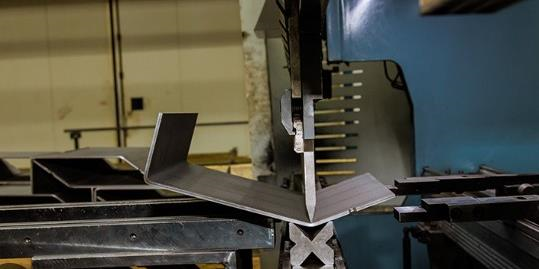
Precision press brake machines are widely used in manufacturing to achieve controlled and accurate bends. They apply force along precision press brake a defined axis, providing consistent results for metal sheets of various sizes and thicknesses. This type of equipment allows manufacturers to produce components with tight tolerances and maintain repeatable quality across multiple production runs.
The adaptability and reliability of precision press brake systems make them suitable for both custom fabrication and high-volume industrial production.
Tooling Selection and Setup Accuracy
The accuracy of bends is heavily influenced by the choice of tooling. Punches and dies must be matched to the material and the desired bend radius. Poorly selected or worn tooling can result in surface defects, uneven bends, and dimensional inconsistencies.
Correct setup and calibration are equally important. Proper alignment, tool positioning, and pressure settings ensure uniform bending across the entire component. Regular inspection and maintenance of tooling extend machine life and maintain bending quality.
Automation and CNC Control Advantages
Automation has transformed the metal bending process. CNC-controlled machines allow operators to input precise bending parameters, store programs, and repeat operations consistently. This reduces reliance on manual adjustments and ensures uniform quality across batches.
Real-time feedback and monitoring allow operators to detect deviations and make immediate adjustments. Automation improves production efficiency, minimizes errors, and supports high-volume manufacturing.
Industrial Applications of Accurate Bending
Accurate bending is essential in numerous industries. Construction projects rely on bent metal components for structural frames, brackets, and supports. Automotive manufacturing uses precisely bent parts for vehicle frames, body panels, and safety-critical elements. Industrial equipment and machinery depend on reliable bending for enclosures, brackets, and functional components.
Precision bending solutions enable manufacturers to meet diverse industry requirements while maintaining consistent quality and performance.
Reducing Material Waste and Increasing Efficiency
High-accuracy bending reduces material waste by eliminating rework and minimizing scrap. When components are produced correctly the first time, manufacturers save on raw materials, labor, and production costs. This efficiency also leads to shorter production cycles and faster delivery times.
Precision processes contribute to sustainability by optimizing material usage and reducing environmental impact.
Importance of Skilled Operators
While modern machines offer advanced automation, skilled operators remain critical. Operators must understand machine functions, material behavior, and safety procedures. Experienced operators can optimize programs, troubleshoot potential issues, and maintain consistent quality across all production runs.
The combination of skilled personnel and advanced machinery ensures optimal performance and high-quality output.
Maintenance and Longevity of Equipment
Routine maintenance is essential to maintain accuracy and prolong equipment lifespan. Tooling, hydraulic systems, and control components require regular inspection and calibration. Preventive maintenance helps detect potential issues early, reducing downtime and production disruptions.
Well-maintained machines deliver consistent bending performance, reduce the risk of failures, and enhance overall manufacturing efficiency.
Future Trends in Metal Bending
The future of metal bending is closely tied to smart manufacturing technologies. Integration with sensors, data analytics, and predictive maintenance allows machines to optimize bending parameters automatically. These innovations will improve precision, repeatability, and operational efficiency.
As production demands grow and customization increases, advanced bending systems will continue to play a vital role in delivering high-quality components with minimal waste.
Conclusion
Achieving accurate and reliable bends is essential in modern sheet metal fabrication. Advances in machinery, automation, tooling, and operator training have transformed bending into a precise and efficient process. Precision press brake machines are a critical tool for achieving consistent results across diverse industrial applications. By emphasizing accuracy, proper maintenance, and process control, manufacturers can reduce waste, improve efficiency, and produce high-quality components that meet rigorous industry standards.




