Precision at Its Peak: The Power of Narrow Linewidth Laser in Modern Photonics

August 12, 2025
In the constantly evolving field of photonics, one technology stands out for its exceptional precision and stability: the narrow linewidth laser. These lasers, distinguished by their ability to emit light with an extremely narrow spectral width, are driving advances in a wide range of scientific and industrial applications—from spectroscopy and optical sensing to coherent communications and quantum computing.
Unlike traditional laser sources that often emit light over a broader range of frequencies, a narrow linewidth laser produces a single, highly coherent frequency of light. This unique characteristic makes them particularly valuable in fields that require exact control over wavelength and phase.
What is a Narrow Linewidth Laser?
The term “linewidth” in laser technology refers to the width of the laser’s emission spectrum, typically measured in hertz (Hz), kilohertz (kHz), or megahertz (MHz). A narrow linewidth laser has a spectral width that can be as small as a few Hz or even sub-Hz. This ultra-narrow spectral range is the result of superior optical design, refined gain media, and highly stable cavity structures.
This precise control over the laser’s output frequency leads to higher temporal coherence, low phase noise, and minimal frequency drift over time. As a result, narrow linewidth lasers are the go-to choice for high-resolution applications.
Key Features and Benefits
1. High Coherence and Stability
Narrow linewidth lasers offer excellent temporal coherence, enabling high-quality interference patterns and reduced noise in signal processing applications.
2. Low Phase Noise
The output of these lasers is clean and stable, ensuring reliable phase-sensitive measurements in interferometry and metrology.
3. Ultra-Fine Resolution
Their spectral purity allows precise measurements of minute wavelength shifts, making them indispensable in Raman spectroscopy and Doppler shift measurements.
4. Compatibility with Advanced Modulation Techniques
These lasers support advanced modulation formats, critical in next-generation telecommunications such as coherent optical communication systems.
Applications of Narrow Linewidth Lasers
The unique advantages of a narrow linewidth laser make it a core technology in several high-tech fields:
Optical Coherent Communications
In modern telecommunications, data transmission rates are soaring, and signal clarity is more crucial than ever. Coherent optical systems use narrow linewidth laser to achieve high-capacity, long-distance data transfer with minimal distortion. Their stability enables the use of advanced modulation schemes like QPSK and QAM, boosting bandwidth without increasing power consumption.
LIDAR and Remote Sensing
LIDAR systems for autonomous vehicles and environmental monitoring rely on stable laser sources to measure distances and object profiles with high accuracy. A narrow linewidth laser ensures high resolution in time-of-flight and frequency-modulated continuous-wave (FMCW) LIDAR systems.
Atomic Clocks and Quantum Applications
Timekeeping at the atomic level requires extraordinary precision. Narrow linewidth lasers are used to probe atomic transitions with minimal noise, ensuring the stability of optical atomic clocks. They also play a vital role in emerging quantum technologies, including quantum computing and quantum key distribution (QKD).
High-Resolution Spectroscopy
In molecular and atomic spectroscopy, the ability to distinguish closely spaced energy levels is crucial. A narrow linewidth laser allows scientists to perform highly resolved spectral measurements, unlocking insights into the structural and dynamic properties of materials.
Interferometry and Metrology
Precision measurement systems, such as Fabry-Pérot interferometers and laser interferometric sensors, depend on lasers with minimal frequency drift and narrow spectral output. This ensures that even nanometric changes in distance or refractive index can be detected.
Challenges in Designing Narrow Linewidth Lasers
Despite their advantages, creating a stable narrow linewidth laser is technically challenging. Engineers must carefully balance factors such as thermal stability, cavity design, and feedback mechanisms. Environmental noise, mechanical vibrations, and thermal fluctuations can all affect linewidth stability. That’s why many systems incorporate active feedback controls, temperature regulation, and isolated mounting to preserve laser purity.
Manufacturers often employ external cavity diode lasers (ECDLs), distributed feedback (DFB) lasers, or fiber lasers to achieve narrow linewidth performance. Each approach has its own benefits and trade-offs in terms of cost, size, and tunability.
Narrow Linewidth Lasers in Fiber Optic Systems
In fiber optic sensing and distributed acoustic sensing (DAS), the use of narrow linewidth lasers helps detect even the smallest changes in environmental conditions. Their high coherence length allows long-range transmission through optical fibers without signal degradation. This is particularly useful in oil and gas pipeline monitoring, earthquake detection, and border security systems.
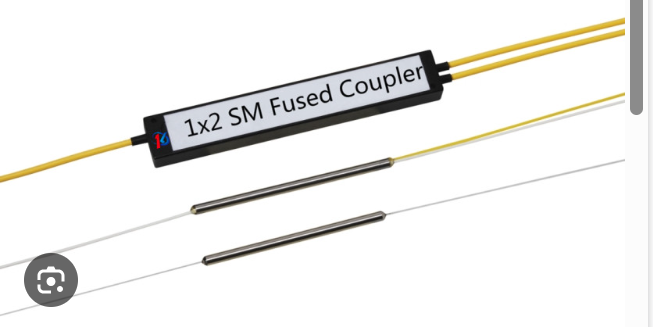
Furthermore, the laser’s interaction with other photonic components like fused couplers, optical isolators, and tunable filters makes it a central component in complex photonic networks. A well-integrated system can amplify, split, or manipulate the laser’s signal with extraordinary finesse, leading to breakthroughs in multi-channel fiber arrays and sensor arrays.
Market Trends and Future Outlook
As photonic technologies become more embedded in sectors such as healthcare, space exploration, and defense, the demand for narrow linewidth lasers is expected to grow significantly. Emerging trends include:
- Miniaturization: Developing chip-scale lasers with narrow linewidths for integration into portable devices.
- Wavelength Agility: Incorporating tunability into narrow linewidth designs for dynamic applications.
- Quantum Readiness: Aligning specifications with the requirements of quantum photonics, including entanglement generation and quantum memory.
Industry players are investing heavily in R&D to push the boundaries of laser linewidth control, with some aiming for sub-Hz linewidths over extended periods.
Conclusion
The narrow linewidth laser is more than just a light source—it is a gateway to ultra-precise measurement, communication, and sensing. Its unparalleled coherence and stability make it an essential tool in the modern scientific arsenal. As photonics continues to revolutionize everything from data transmission to quantum computing, the role of narrow linewidth lasers will only become more significant.
Whether integrated into a state-of-the-art fiber optic sensor system or embedded within a satellite-based LIDAR, these lasers are enabling technologies that define the frontier of innovation. As the push for precision continues, one thing is clear: in the world of photonics, narrow truly is powerful.




