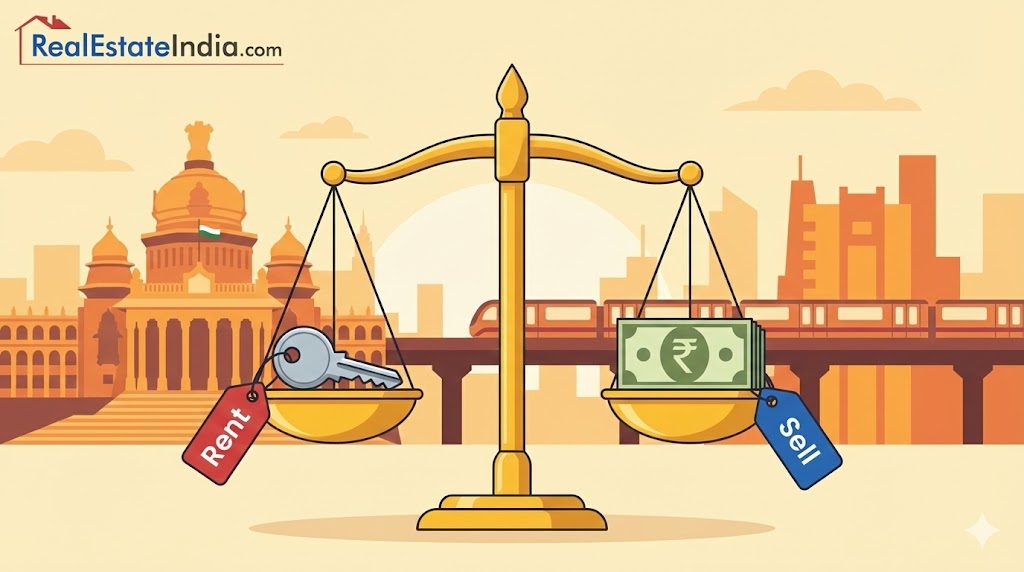
Renting vs. Selling: Which is Better for Bangalore Property Owners?

December 22, 2025
If you own a flat or a house in Bangalore, you probably ask yourself this question a lot. Should you keep it and rent it out? Or should you sell it and take the cash?
It’s not an easy choice. Both options have pros and cons. It depends on your money situation and your future plans.
Here is a straightforward look at both sides to help you decide.
The Current State of Bangalore
Bangalore is different from other cities. It is the tech hub of India. This means people are always moving here for jobs. They need places to live.
Areas like Whitefield, HSR Layout, and Electronic City always have demand. If your property is there, finding a tenant is usually easy. But property prices have also gone up. Selling now could mean a big profit.
If you are looking to Rent Your Property Online in banglore, the process is easier than it used to be. But just because you can rent it doesn't always mean you should.
The Case for Renting Your Property
Let’s look at why you might want to hold onto the house.
1. Regular Monthly Income This is the main reason people rent. You get money in your bank account every month. It’s passive income. If you have a loan on the property, the rent can pay the EMI. If the loan is cleared, that money is just extra cash for your expenses.
In Bangalore, rental yield—which is the rent you get compared to the property price—is generally around 3% to 4%. That might sound low, but it is better than many other Indian cities.
2. Property Appreciation Real estate usually goes up in value over time. If you sell now, you lose that future growth. Bangalore is expanding. The Metro is growing. New tech parks are opening.
A house worth 80 lakhs today might be worth 1.5 crores in ten years. If you sell now, you miss out on that gain. By renting, you keep the asset while it grows.
3. Tax Benefits If you have a home loan, renting the property gives you tax breaks. You can deduct the interest you pay on the loan. There are also deductions for repairs and maintenance. You should talk to a CA about this, but generally, holding property can lower your tax bill.
4. A Safety Net Owning a physical house feels safe. If you lose your job or want to retire, you have a roof over your head. You can always move back in. If you sell it, that safety net is gone.
The Downsides of Renting
It isn't all good news. Being a landlord is hard work.
1. Dealing with Tenants This is the biggest headache. Tenants can be difficult. They might pay late. They might damage your walls or furniture. In Bangalore, the standard deposit used to be 10 months of rent. Now, due to the Model Tenancy Act and market pressure, it is often much less. This means you have less security if they wreck the place.
2. Maintenance Costs Houses break. Pipes leak. Paint peels. When you rent a place out, you still have to fix structural issues. If the geyser breaks, the tenant calls you. These costs eat into your profit.
3. Vacancy Risk Sometimes, you can't find a tenant. Maybe the market is slow. Maybe your asking price is too high. If the house sits empty for three months, you lose that income. But you still have to pay maintenance fees to the society and property tax to the BBMP.
The Case for Selling Your Property
Now let’s look at why you might want to sell.
1. Large Lump Sum Amount Selling gives you a lot of money at once. You can use this cash for big goals. Maybe you want to start a business. Maybe you want to send your kid to college abroad. Or maybe you want to buy a bigger house where you actually live.
Liquid cash is powerful. You can invest it in stocks or mutual funds. Often, the stock market gives better returns than real estate appreciation.
2. No More Headaches When you sell, you wash your hands of the property. No more calls about leaking taps. No more chasing tenants for rent. No more paying property tax. You get your peace of mind back. For people who live in another city or country (NRIs), managing a property in Bangalore is very stressful. Selling fixes that.
3. Market Saturation In some areas of Bangalore, there are too many flats. Builders are launching new projects every day. If your building is getting old, it might lose value compared to the fancy new gated communities with swimming pools and gyms. Selling before the building gets too old might be smart.
The Downsides of Selling
Selling isn't perfect either.
1. Capital Gains Tax The government wants a share of your profit. If you sell, you have to pay Long Term Capital Gains (LTCG) tax. It is a significant amount. You can save this tax if you reinvest the money into another property or specific bonds, but that locks your money up again. If you just want the cash, you lose a chunk to tax.
2. Losing the Asset Once it's gone, it's gone. If real estate prices skyrocket next year, you can't benefit from it. You can't change your mind and move back in.
3. Where Do You Put the Money? If you sell, you need a plan for the cash. If you just leave it in a savings account, inflation will eat it. You have to be good at investing in other things. If you don't understand stocks or mutual funds, you might end up losing money.
Doing the Math: A Real Example
Let’s try a simple example.
Imagine you have a flat in Indiranagar worth 1 Crore. You rent it out. You might get 30,000 to 35,000 rupees a month. That is roughly 4 lakhs a year. From that 4 lakhs, subtract property tax, repairs, and the month it sits empty. You might net 3 lakhs. That is a 3% return on your 1 Crore asset.
If you sell the flat for 1 Crore and put that money in a fixed deposit at 6%, you get 6 lakhs a year. That is double the rental income.
So, strictly for monthly cash flow, selling often beats renting.
However, the Fixed Deposit capital (the 1 Crore) stays 1 Crore. It doesn't grow. The flat worth 1 Crore might become 1.2 Crores in a few years. That appreciation is why people keep the property.
Emotional Factors
Money isn't everything. You have to think about your feelings too.
Did you grow up in that house? Is it your first investment? We get attached to physical things. Selling can feel like losing a memory.
On the other hand, does the house stress you out? Do you worry about squatters? Do you hate dealing with brokers? If the property causes you anxiety, the rental income isn't worth it.
The NRI Perspective
A lot of Bangalore property owners live in the US, UK, or Dubai. For you, renting is tough. You can't visit to check the house. You have to rely on brokers or friends. Property management companies exist, but they charge fees.
If you plan to return to Bangalore eventually, keep it. You will need a home. If you have settled abroad permanently, selling usually makes more sense. Managing Indian bureaucracy from overseas is a nightmare.
Checklist: Should You Sell?
Sell if:
- You need a large amount of cash urgently.
- You are tired of managing repairs and tenants.
- The property is very old and needs major renovation.
- You can get better returns in the stock market.
- You don't plan to live in Bangalore ever again.
Checklist: Should You Rent?
Rent if:
- You want a steady monthly income stream.
- You believe the area will become more expensive soon.
- You want to keep the house as a backup for retirement.
- You don't want to pay Capital Gains tax right now.
- You have a loan and need help paying the EMI.
Conclusion
There is no single right answer. It comes down to what you need. If you want to build long-term wealth and don't mind some hassle, renting is usually better. The combination of rent plus appreciation is powerful. If you want a stress-free life or need cash for a different goal, selling is the way to go.
Look at your bank account. Look at your stress levels. Look at the specific location of your Bangalore property. Don't rush the decision. Once you sign the sale deed, you can't go back. But if you just rent it, you can always change your mind and sell later. Take your time. Think about what helps you sleep better at night. That is usually the best investment strategy.

You Might Like Also

Buyer vs Seller Real Estate Leads: Which Converts Better?


Plots in Dholera Smart City: Why Investors Buy in 2026

WhatsApp API Integration with CRM: A Step-by-Step Guide

2 BHK Flats for Sale in S G Highway Ahmedabad Under ₹50-70 Lakh

New Residential Projects in Ahmedabad's Western Corridor 2026




