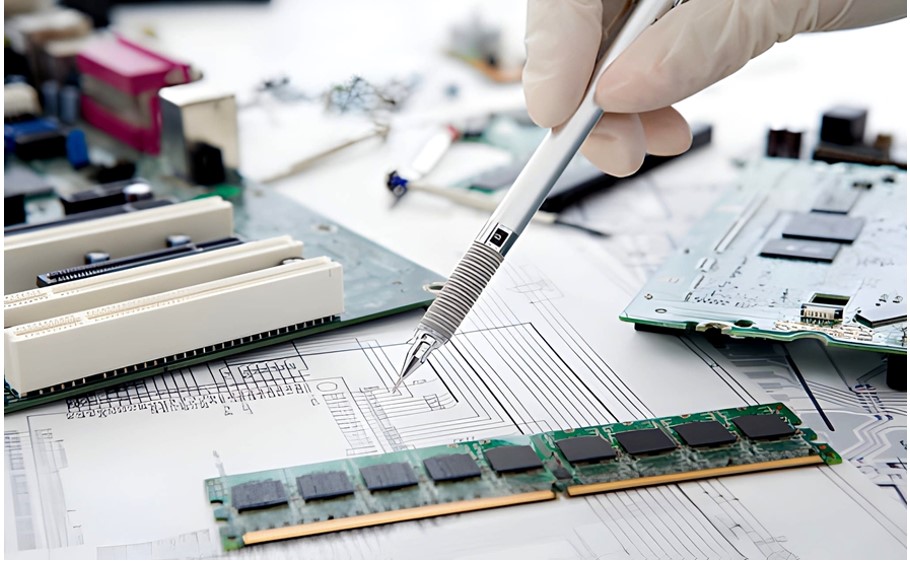
Rogers PCB refers to printed circuit boards manufactured using Rogers laminate materials, which are specifically engineered for high-frequency and high-speed electronic applications. Unlike standard FR-4 materials, Rogers laminates offer superior electrical performance, thermal stability, and dimensional consistency. As modern electronics increasingly rely on high-speed signal transmission and precise impedance control, Rogers PCB has become a preferred choice for applications where signal integrity and reliability are critical.
Rogers PCB is widely used in industries such as telecommunications, aerospace, automotive radar, and advanced computing. These applications demand consistent electrical characteristics across varying environmental conditions, which Rogers materials are designed to deliver. The growing adoption of 5G, microwave systems, and RF-based technologies has further increased the importance of Rogers PCB in advanced electronic designs.
Material Characteristics of Rogers PCB
The performance of a Rogers PCB is largely defined by the unique properties of Rogers laminate materials.
Low Dielectric Constant and Signal Stability
One of the most important advantages of Rogers PCB is its stable dielectric constant across a wide frequency range. This stability ensures predictable signal behavior, which is essential for RF and microwave circuits. Rogers PCB minimizes signal distortion and phase variation, allowing engineers to design high-frequency systems with greater accuracy and confidence.
Low Dielectric Loss
Rogers PCB materials exhibit very low dielectric loss compared to conventional PCB substrates. This characteristic significantly reduces signal attenuation, especially at high frequencies. As a result, Rogers PCB supports cleaner signal transmission, improved efficiency, and enhanced overall system performance in high-speed and RF applications.
Thermal and Mechanical Reliability
Rogers PCB materials are designed to maintain structural integrity under thermal stress. They offer excellent resistance to heat and dimensional changes, which helps prevent warping and delamination during manufacturing and operation. This thermal reliability makes Rogers PCB suitable for environments where temperature fluctuations are common.
Rogers PCB Manufacturing Process
The manufacturing process of Rogers PCB requires specialized expertise and precise control to fully utilize the advantages of Rogers materials.
Material Handling and Lamination
Rogers laminates require careful handling due to their specific mechanical properties. During lamination, temperature and pressure parameters must be tightly controlled to ensure strong bonding between layers. Proper lamination is essential for achieving consistent electrical performance in a Rogers PCB.
Circuit Imaging and Etching
High-resolution imaging techniques are used to transfer circuit patterns onto the copper layers of a Rogers PCB. Accurate etching ensures precise trace widths and spacing, which are critical for impedance-controlled and high-frequency designs. Any deviation at this stage can impact signal integrity.
Drilling and Via Formation
Drilling Rogers PCB materials requires optimized tooling and parameters to avoid material damage. Vias are carefully plated to ensure reliable interlayer connectivity while maintaining electrical performance. This step is especially important in multilayer Rogers PCB designs used in complex RF systems.
Surface Finishing and Quality Control
Surface finishes are applied to protect copper traces and improve solderability. Throughout the manufacturing process, Rogers PCB undergoes rigorous inspection and testing to verify impedance control, dimensional accuracy, and electrical performance. Quality control is essential to meet the strict requirements of high-frequency applications.
Types of Rogers PCB
Rogers PCB technology supports various configurations to meet diverse application needs.
Single-Layer Rogers PCB
Single-layer Rogers PCB is commonly used in simple RF circuits and antenna designs where controlled impedance and low signal loss are required. These boards provide an efficient solution for straightforward high-frequency applications.
Multilayer Rogers PCB
Multilayer Rogers PCB is designed for complex systems that require multiple signal, power, and ground layers. These boards enable compact designs while maintaining excellent signal integrity, making them suitable for advanced communication and radar systems.
Hybrid Rogers PCB
Hybrid Rogers PCB combines Rogers materials with traditional FR-4 in a single board. This approach allows designers to optimize cost while maintaining high-frequency performance where it is most needed. Hybrid designs are often used in applications that include both digital and RF sections.
Applications of Rogers PCB
Rogers PCB is widely used across industries that demand precision and performance.
Telecommunications and 5G Systems
Rogers PCB plays a critical role in base stations, antennas, and RF modules used in modern telecommunications. Its low loss and stable dielectric properties support high data rates and reliable signal transmission in 5G infrastructure.
Automotive Radar and ADAS
Advanced driver-assistance systems rely on radar sensors that operate at high frequencies. Rogers PCB provides the electrical performance and reliability required for accurate detection and safe operation in automotive environments.
Aerospace and Defense Electronics
In aerospace and defense applications, Rogers PCB is used in radar, navigation, and communication systems. Its ability to perform consistently under extreme conditions makes it a trusted choice for mission-critical electronics.
Medical and Industrial Equipment
High-frequency medical imaging systems and industrial sensors benefit from the signal stability and reliability of Rogers PCB. These applications require precise performance to ensure accurate data acquisition and system safety.
Advantages of Choosing Rogers PCB
Rogers PCB offers several key advantages that distinguish it from standard PCB materials.
Superior Signal Integrity
The low dielectric loss and stable electrical properties of Rogers PCB ensure minimal signal degradation, even at very high frequencies. This advantage is crucial for RF and microwave designs.
Design Flexibility
Rogers PCB supports fine trace geometries and complex multilayer structures, enabling advanced circuit designs that meet modern performance demands.
Long-Term Reliability
The thermal and mechanical stability of Rogers PCB contributes to longer product lifetimes and reduced maintenance, particularly in demanding environments.
Future Trends in Rogers PCB Technology
As technology continues to advance, the role of Rogers PCB is expected to grow.
Higher Frequencies and Miniaturization
Emergingogers PCB materials are increasingly being optimized for millimeter-wave and ultra-high-frequency applications. This trend supports the development of smaller, more powerful electronic devices.
Integration with Advanced Systems
Rogers PCB is being integrated into more complex systems that combine digital, RF, and power electronics. This integration drives innovation in hybrid and multilayer PCB designs.
Conclusion
Rogers PCB has become an essential solution for high-frequency, high-speed, and RF electronic applications that demand exceptional signal integrity and reliability. Its superior electrical performance, thermal stability, and design flexibility make it a preferred choice across telecommunications, automotive, aerospace, and industrial sectors. Working with an experienced Rogers PCB manufacturer ensures precise fabrication, strict quality control, and consistent performance, helping you achieve reliable and high-performing electronic products in today’s advanced technology landscape.

You Might Like Also


The History and Evolution of Viking Axes


Maintenance Tips to Extend the Life of Your Chain Hoist

Solving the Tour Trouble: How to Conquer Common Concert-Going Headaches

How to Get Expert Water Dispenser Service in Hyderabad




