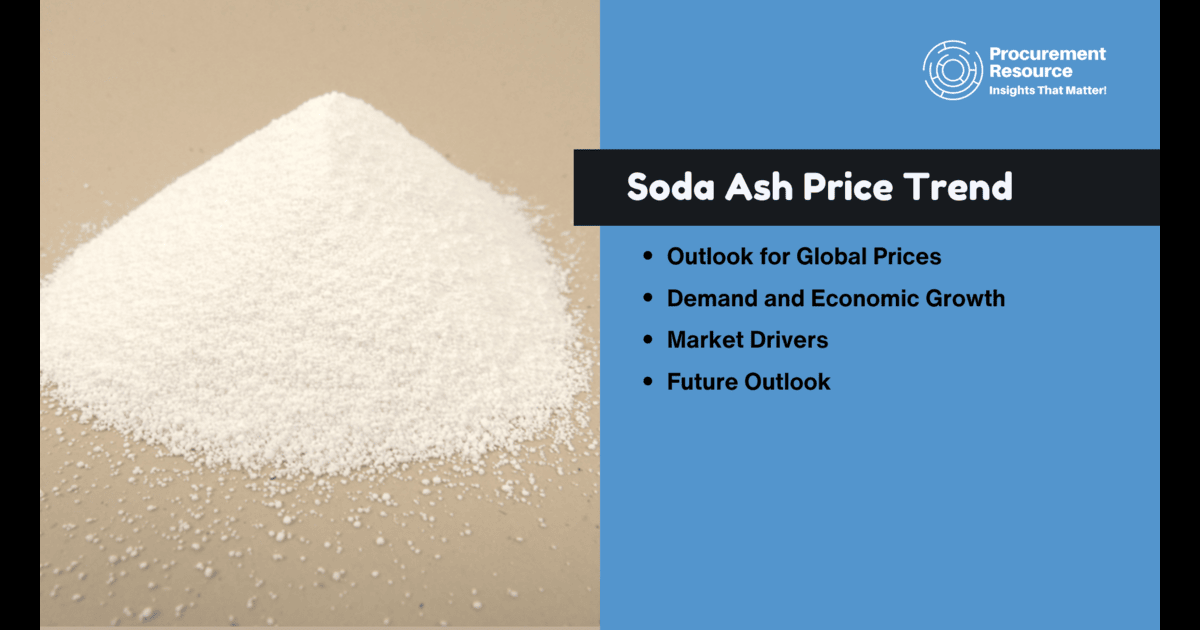

Soda ash, also known as sodium carbonate (Na₂CO₃), is a crucial industrial chemical widely used in various sectors, including glass manufacturing, detergents, chemicals, and textiles. India is one of the key markets for soda ash, with significant domestic production and imports catering to growing industrial demand. Understanding the Soda Ash Prices in India is essential for businesses, traders, and policymakers to make informed decisions.
This article provides an in-depth analysis of soda ash prices in India, covering market trends, factors influencing price fluctuations, and the future outlook for the industry.
Understanding Soda Ash and Its Applications
Soda ash is an essential raw material used in various industries. The major applications of soda ash include:
1. Glass Manufacturing
The largest consumer of soda ash, accounting for nearly 50% of total demand.
Used in the production of flat glass, container glass, and fiberglass.
2. Detergents and Soaps
Acts as a water softener and pH regulator in detergent formulations.
Widely used in household and industrial cleaning products.
3. Chemical Industry
Used in the production of sodium silicates, bicarbonates, and other industrial chemicals.
Plays a role in water treatment processes.
4. Textile Industry
Used in dyeing and bleaching processes.
Helps in removing impurities from fabrics.
Enquire For Regular Prices: https://www.procurementresource.com/resource-center/soda-ash-price-trends/pricerequest
Factors Affecting Soda Ash Prices in India
The price of soda ash in India is influenced by several factors, including supply-demand dynamics, production costs, raw material availability, and global market trends. Some key factors include:
1. Raw Material Costs
Soda ash is produced using natural trona ore or synthetic methods involving sodium chloride and limestone.
Fluctuations in the cost of raw materials, including salt, limestone, and energy, impact soda ash pricing.
2. Production and Supply Chain
India has a mix of domestic soda ash producers and import dependence.
Any disruption in local production or global supply chains affects pricing.
3. Import and Export Trends
India imports soda ash from China, Turkey, and the U.S.
Trade policies, tariffs, and global supply conditions influence prices.
4. Demand from End-Use Industries
The construction and automotive sectors impact glass manufacturing demand.
Growth in detergent and chemical industries also drives demand.
5. Currency Exchange Rates and Freight Costs
Imported soda ash prices fluctuate based on the Indian Rupee exchange rate against the U.S. Dollar.
Rising transportation and freight costs add to the final pricing.
6. Government Policies and Regulations
Environmental regulations on emissions and waste disposal affect production costs.
Government incentives or restrictions on imports impact supply and prices.
Market Trends and Historical Price Analysis
1. Price Fluctuations Over the Years
Soda ash prices have seen variations due to supply-demand imbalances, global economic conditions, and raw material cost fluctuations.
Price surges have been observed during periods of high industrial demand and supply constraints.
2. Regional Price Variations in India
Prices may vary across different states depending on transportation costs and proximity to manufacturing hubs.
Gujarat, a major soda ash producer, often has competitive pricing compared to regions dependent on imports.
3. Impact of Global Market Trends
Changes in international prices affect domestic market trends.
Any disruptions in major exporting countries can create price volatility in India.
Future Outlook: Forecast and Industry Expectations
The future of soda ash prices in India will depend on multiple factors, including economic growth, industrial expansion, and technological advancements in production. Some key expectations include:
1. Increasing Domestic Production
India is focusing on reducing import dependence by expanding local manufacturing capabilities.
Investments in modern production techniques may help stabilize prices.
2. Rising Demand from Emerging Industries
The increasing adoption of renewable energy solutions (e.g., solar glass) is driving demand.
Growth in personal care and household cleaning products may boost consumption.
3. Potential Price Stability with Improved Supply Chain Management
Efforts to enhance supply chain efficiency may lead to more stable pricing.
Strategic partnerships between manufacturers and distributors can ensure a steady supply.
4. Sustainability and Green Manufacturing Trends
Companies are adopting environmentally friendly production methods to align with global sustainability goals.
Government incentives for green production may influence long-term price trends.
Soda ash remains a critical component in India’s industrial landscape, with its price dynamics closely tied to multiple economic and market factors. As demand continues to rise across various industries, businesses must stay informed about price fluctuations and emerging trends to optimize their procurement strategies.
By keeping an eye on global and domestic developments, stakeholders can make strategic decisions that align with market conditions. Whether you're a manufacturer, trader, or end-user, understanding the price trends of soda ash in India is crucial for navigating the evolving market landscape.
Stay Updated on Soda Ash Market Trends
For the latest updates on soda ash prices, industry insights, and market forecasts, stay connected with industry reports and expert analyses. If you have any questions or require customized market data, feel free to reach out!
Contact Us:
Company Name: Procurement Resource
Contact Person: Leo Frank
Email: sales@procurementresource.com
Toll-Free Numbers:
- USA & Canada: +1 307 363 1045
- UK: +44 7537171117
- Asia-Pacific (APAC): +91 1203185500
Address: 30 North Gould Street, Sheridan, WY 82801, USA







