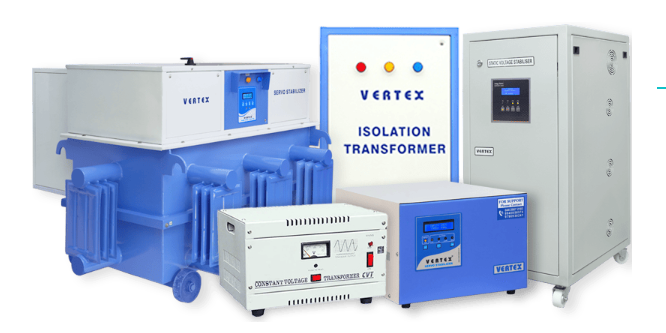
The Complete Buyer’s Guide to Servo Voltage Stabilisers in India (2025 Edition)

December 04, 2025
Industries across India are facing a silent but serious enemy unstable voltage supply. Whether it’s a manufacturing plant, hospital, IT park, textile unit, packaging facility, or commercial building, voltage fluctuations can cause machine failures, safety hazards, and heavy financial losses.
This is why businesses increasingly depend on a servo voltage stabilizer in India, a precision device engineered to deliver regulated power and ensure machinery performs without interruption. As the country accelerates toward automation, digitization, and high-precision manufacturing, servo stabilizers are no longer optional—they are a foundational investment in operational reliability.
This 2025 Buyer’s Guide will help you understand what servo stabilisers are, how they work, who needs them, how to choose the right model, and which specifications truly matter. Think of this as your complete roadmap to making a smart, ROI-driven equipment purchase.
1. What Is a Servo Voltage Stabilizer?
A servo voltage stabilizer is an electromechanical device that continuously monitors incoming voltage and corrects fluctuations using a motor-controlled mechanism called a servo motor. Unlike static stabilizers or traditional relay-based stabilizers, a servo stabilizer offers high accuracy, fast correction, and smooth voltage regulation, making it ideal for sensitive and high-value equipment.
It ensures that even if your input voltage drops as low as 140V or rises up to 300V, your output remains stable within ±1% to ±3%.
2. Why Voltage Fluctuation Is a Serious Threat in 2025
Despite rapid modernization, India still experiences:
- High load variations in industrial zones
- Seasonal power instability
- Poor distribution infrastructure
- Sudden voltage drops during peak hours
- Unexpected surges after outages
- Harmonics from heavy electrical equipment
Such instability affects your machines in ways most owners underestimate:
- Overheating of motors
- Damage to control panels
- Frequent breakdowns
- Low production efficiency
- Premature equipment failure
- High electricity bills
- Downtime losses that run into lakhs
In many industrial audits conducted in 2024–25, voltage fluctuations accounted for 20–35% of machine breakage and 45% of unplanned downtime. A servo stabilizer is the simplest and most reliable solution to eliminate this problem.
3. How a Servo Stabilizer Works (Simple Explanation)
A servo stabilizer works on a closed-loop, feedback-based mechanism. Here’s the simplified flow:
- The input voltage enters the sensing circuit.
- If the voltage is below or above the set limit, the system signals the servo motor.
- The servo motor adjusts the variable transformer (variac).
- The corrected voltage passes through a buck/boost transformer.
- The stabilizer outputs perfectly regulated voltage to your machines.
Think of it like cruise control in a car—automatically adjusting speed to keep the drive smooth and steady.
4. Who Needs a Servo Voltage Stabilizer?
Servo stabilizers are crucial for industries and establishments where power quality directly affects performance, safety, and output.
Industries that must use servo stabilizers:
- CNC machines
- Injection molding
- Textile mills
- Printing and packaging
- Pharma manufacturing units
- Food processing plants
- Hospitals (MRI, CT, dialysis, OT equipment)
- IT parks and server rooms
- Data centers
- Cold storage facilities
- Battery manufacturing
- Chemical and petroleum plants
Commercial establishments that benefit:
- Hotels and restaurants
- Malls
- Institutional buildings
- Schools and colleges
- Commercial complexes
High-value equipment that requires stable voltage:
- Compressors
- Motors
- HVAC systems
- Medical devices
- PLC-controlled automation units
If your business runs on 24/7 machinery, sensitive electronics, or automated systems, a servo stabilizer is not just protection—it’s insurance.
5. Types of Servo Stabilizers in the Market
Understanding the correct type is essential before buying.
a. Single-Phase Servo Stabilizer
- Used where equipment runs on single-phase input.
- Common for labs, clinics, small industries, precision machines.
b. Three-Phase Balanced Type
- Corrects all three phases simultaneously.
- Ideal when load is evenly distributed across phases.
c. Three-Phase Unbalanced Type
- Corrects each phase independently.
- Best for industries with uneven load distribution, such as printing, CNC, or textile units.
6. Key Technical Specifications to Look for (2025 Standards)
To choose the right stabilizer, focus on these critical parameters:
1. Input Voltage Range
Common Indian industrial ranges:
- 140V – 300V
- 170V – 270V
- 120V – 280V
- Custom ranges available
Choose a range based on your area's voltage pattern, not just the lowest price.
2. Voltage Correction Accuracy
Best-in-class accuracy: ±1%
Acceptable: ±2–3%
Machines like CNC, medical, and packaging require ±1%.
3. Response Time
Fast response ensures sensitive machines stay safe.
Ideal: 10–20 ms
4. Overload Capacity
A quality stabilizer must handle at least 120% short-term overload.
5. Copper vs Aluminium Winding
Copper windings offer:
- Better conductivity
- Longer life
- Higher efficiency
- Less heat generation
Although costlier, copper-wound stabilizers provide higher ROI.
6. Digital Control & Display
Modern units feature:
- LCD/LED touch display
- Real-time voltage monitoring
- Error indication
- Auto bypass functionality
7. Cooling System
Options include:
- Natural Air Cooling (NAC)
- Oil Cooled
Oil-cooled is better for heavy-duty and high ambient temperatures.
8. Protection Features
Ensure the stabilizer includes:
- High/low voltage cutoff
- Short circuit protection
- Overload protection
- Spike & surge protection
- Phase reversal protection
- Auto start & stop
7. Correct Sizing: How to Choose the Right kVA Capacity
This is where most buyers make mistakes.
Formula to calculate required kVA:
Total connected load (in watts) ÷ Power factor (0.8)
Example:
If your machine load is 25,000 watts:
25,000 ÷ 0.8 = 31.25 kVA
Round up → 35 kVA stabilizer
Important mistakes to avoid:
- Never buy the same capacity as your load.
- Always add 20–25% headroom for startup surge and expansion.
- For motors, consider inrush current.
- For CNC/automation, choose ±1% accuracy models.
8. Why Servo Stabilizers Offer the Best ROI (Compared to Relay or Static Types)
Relay-based stabilizers:
- Slow
- Less accurate
- Not suitable for industrial loads
- Frequent maintenance
Static stabilizers:
- No moving parts
- Fast switching
- Good for IT loads, not heavy machinery
Servo stabilizers: (Best for industry)
- Highest accuracy
- Long life (10–15 years)
- Supports heavy inductive loads
- Smooth, noise-free output
- Handles harsh voltage variations
- Saves energy by stabilizing input
ROI often recovers within 6–12 months due to reduced downtime and maintenance cost.
9. How to Compare Brands Before Buying
When evaluating manufacturers in 2025, compare based on:
- Transformers quality (copper vs aluminium)
- Motor and variac build quality
- Type of protection circuits
- Real-world performance in voltage-affected zones
- Warranty terms (minimum 1 year, optional 3–5 years)
- Availability of service centers
- After-sales support
- Customization options
- Installation support
A cheap stabilizer will cost you more over its lifetime than a high-quality one with superior components.
10. Installation Checklist (What Your Electrician Must Verify)
Before switching on your new stabilizer:
- Ensure correct earthing
- Use appropriate gauge cables
- Maintain proper ventilation
- Keep stabilizer away from heat & moisture
- Check input/output connections
- Verify phase sequence in 3-phase systems
- Ensure stabilizer capacity matches load
Incorrect installation can cause equipment failure even if the stabilizer is premium.
11. Maintenance Tips for Long Life
A well-maintained unit lasts 10–15 years easily.
- Clean filters every 3 months
- Check carbon brushes (if any)
- Inspect terminal tightness
- Monitor output voltage periodically
- Ensure the room stays dust-free
- For oil-cooled units, check oil levels annually
Schedule preventive maintenance annually for best performance.
Conclusion
A servo stabilizer is more than a voltage correction device—it’s a long-term asset that protects your machinery, reduces maintenance cost, prevents breakdowns, and ensures uninterrupted production. As Indian industries move toward automation and precision-driven manufacturing, choosing the right stabilizer becomes non-negotiable. When selecting a system, always consider parameters like input range, kVA rating, accuracy, and protection features. Above all, choose a trusted servo stabilizer manufacturer who offers reliable after-sales service, high-quality components, and customized solutions for your industry. With the right stabilizer, you safeguard your machines, enhance productivity, and create an environment where your business runs smoothly, regardless of power fluctuations.




