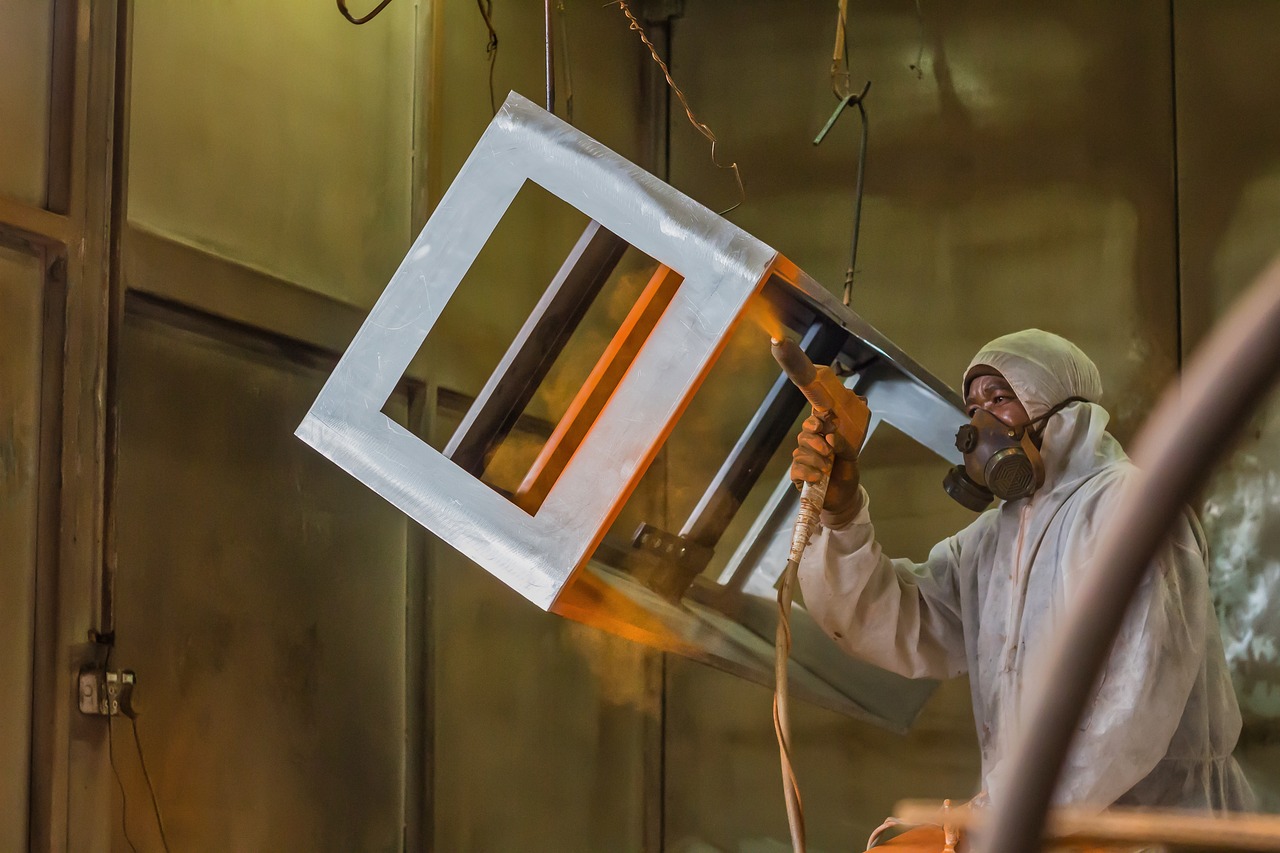

Storage tanks, reservoirs, penstock, and other industrial uses to last over time, industrial coatings are essential.
To find out more about industrial coatings, their protective uses, and the varieties of industrial paints that are available, keep reading.
Industrial Coatings: What Are They?
Chemically designed paints known as coatings and industrial finishes are used to shield industrial goods—such as field-erected tanks and pipelines—from abrasions and harsh environmental conditions.
As per GMI Research, the Saudi Arabia Paints & Coatings Market size estimated to reach USD 2.7 billion in 2032
To prevent corrosion and provide a healthy environment for drinking water, industrial paints are also used to line the interior of water tanks and reservoirs.
Multiple coating layers, such as primer, paint, and sealant, may be needed for some applications. As is the case with many water standpipes and reservoirs, industrial applications may also call for coatings that are both aesthetically pleasing and durable.
Various Industrial Coatings Types
Industrial coatings come in a variety of forms. The type of product you'll be storing, the environment your application will be placed in, and other considerations will determine which primer, coating, or sealant is best for your job.
An overview of some of the most often used industrial coatings in the metal manufacturing sector is provided below:
Coatings using Epoxy
Epoxy coatings are perfect for steel applications placed in demanding operating conditions because they efficiently resist weathering, abrasion, and corrosion.
Tanks that contain hot products or are subjected to great heat can benefit from these coatings because they are also resistant to extremely high temperatures.
Epoxies have the drawback of chalking in the presence of sunlight. Epoxies are therefore most frequently utilized in interior or submerged applications.
Three layers are frequently used for applying industrial epoxy coatings. A primer, such as a zinc primer, is first applied. Epoxy is then sprayed on. Lastly, the coating procedure is completed by applying a polyurethane topcoat or epoxy binder.
Coatings Rich in Zinc
For steel components that need rectification and abrasion resistance, zinc coatings work incredibly well since they offer a polymeric and galvanic barrier.
Both the zinc dust and the polyurethane or epoxy binders employed in the coating's creation provide this strong protection.
Coatings Made of Acrylic
Because of their high gloss and resilience to corrosion, acrylic industrial protective coatings are most frequently utilized in architectural and automotive applications. Tanks, reservoirs, and penstock are examples of other industrial applications where acrylic coatings are less frequent.
Coatings Made of Metal
In order to generate a durable coating, metalizing involves melting down metal wire, atomizing the molten material, and then spraying it onto the product's surface.
Zinc, tungsten, stainless steel, nickel, chrome, bronze, and aluminum can all be used to create this kind of durable coating. Additionally, to improve their resistance to corrosion, metalized parts are usually seal-coated.

You Might Like Also






