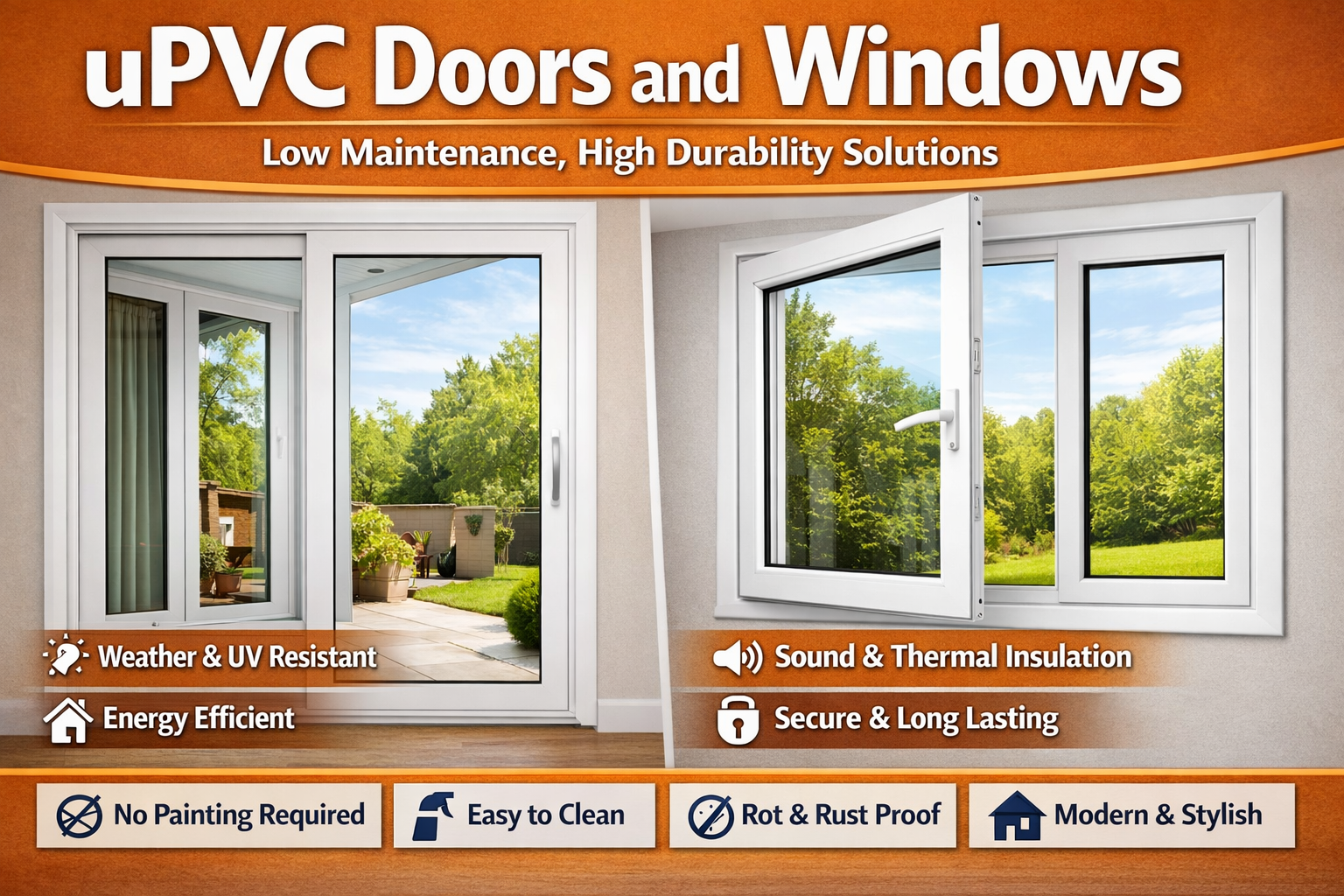

Choosing the right doors and windows for your home or commercial space is a crucial decision. They not only affect the appearance of your property but also play a major role in energy efficiency, security, comfort, and long-term maintenance costs. With modern construction trends evolving rapidly, homeowners are increasingly comparing uPVC doors and windows with traditional wooden or aluminum windows to determine which option offers better value.
In this blog, we will explore a detailed comparison between uPVC doors and windows and traditional windows across various factors such as durability, insulation, maintenance, cost, and aesthetics to help you make an informed decision.
Understanding uPVC Doors and Windows
uPVC (unplasticized polyvinyl chloride) is a rigid and durable material widely used in modern construction. Unlike regular PVC, uPVC does not contain plasticizers, making it stronger, weather-resistant, and environmentally friendly.
uPVC doors and windows are manufactured using advanced engineering techniques to ensure excellent thermal insulation, soundproofing, and long-lasting performance. They have become especially popular in urban homes, apartments, offices, and commercial buildings.
What Are Traditional Windows?
Traditional windows are usually made from materials such as wood, aluminum, or steel. Wooden windows have been used for centuries due to their natural appearance, while aluminum and steel gained popularity for their strength and slim profiles.
Although traditional windows offer a classic look, they often require higher maintenance and may lack some of the performance benefits offered by modern alternatives like uPVC doors and windows.
1. Durability and Lifespan
When it comes to durability, uPVC doors and windows clearly outperform traditional options.
uPVC is resistant to moisture, termites, corrosion, and rust.
It does not warp, crack, or peel over time.
uPVC windows can last over 25–30 years with minimal wear.
In contrast, wooden windows are prone to swelling, termite attacks, and rot, especially in humid or rainy climates. Aluminum windows may corrode over time and can weaken under extreme temperature variations.
Winner: uPVC doors and windows
2. Energy Efficiency and Insulation
Energy efficiency is one of the biggest reasons homeowners switch to uPVC doors and windows.
uPVC provides excellent thermal insulation, helping maintain indoor temperatures.
It reduces heat loss in winters and heat gain in summers.
This leads to lower electricity bills and reduced dependency on air conditioners and heaters.
Traditional windows, especially aluminum ones, conduct heat easily and may cause temperature fluctuations indoors. Wooden windows offer better insulation than aluminum but still cannot match the efficiency of multi-chambered uPVC profiles.
Winner: uPVC doors and windows
3. Sound Insulation
If you live in a busy city or near traffic, noise pollution can be a serious concern.
uPVC doors and windows combined with double or triple glazing can significantly reduce external noise, creating a peaceful indoor environment. Their airtight sealing prevents sound leakage effectively.
Traditional windows often have gaps due to wear and tear, allowing noise to enter. Even well-fitted wooden windows may lose their soundproofing capability over time.
Winner: uPVC doors and windows
4. Maintenance Requirements
Maintenance is where the difference becomes most noticeable.
uPVC doors and windows require very little maintenance.
No painting, polishing, or varnishing needed.
Simple cleaning with soap and water is sufficient.
Traditional wooden windows demand regular polishing, painting, and termite treatments. Aluminum windows may need repainting to prevent corrosion.
Over time, maintenance costs of traditional windows can exceed their initial purchase cost.
Winner: uPVC doors and windows
5. Security and Safety
Modern uPVC doors and windows come with multi-point locking systems, reinforced frames, and toughened glass options, offering superior security.
Traditional wooden windows may weaken over time, and older locking systems may not provide adequate protection against break-ins. Aluminum frames, while strong, can be bent with force if not reinforced properly.
Winner: uPVC doors and windows
6. Aesthetic Appeal and Design Options
Traditional windows, especially wooden ones, are often preferred for their classic and natural look. However, modern uPVC doors and windows now offer a wide variety of colors, textures, and finishes, including wood-grain effects that closely resemble natural wood.
You can choose from sliding, casement, tilt-and-turn, French, and fixed window styles in uPVC, making them suitable for both modern and traditional architectural designs.
This makes uPVC a versatile option that combines beauty with performance.
Winner: Tie (depends on personal preference)
7. Weather Resistance
India experiences diverse weather conditions, including extreme heat, monsoons, and pollution.
uPVC doors and windows are designed to withstand harsh climates:
Resistant to UV rays
Waterproof and wind-resistant
Ideal for coastal and high-humidity regions
Traditional wooden windows may swell during monsoons and crack during dry seasons, while aluminum windows can heat up excessively in summers.
Winner: uPVC doors and windows
8. Environmental Impact
uPVC is a recyclable material, making uPVC doors and windows an eco-friendly choice. Their energy-efficient properties also help reduce carbon emissions by lowering power consumption.
Traditional wooden windows contribute to deforestation, while metal windows require high energy for manufacturing.
Winner: uPVC doors and windows
9. Cost Comparison
At first glance, traditional windows may appear cheaper. However, when you consider long-term expenses such as maintenance, repairs, and energy costs, uPVC doors and windows prove to be more cost-effective.
Lower maintenance costs
Reduced electricity bills
Longer lifespan
This makes uPVC a smart investment in the long run.
Winner: uPVC doors and windows
Final Verdict: Which Is Better?
When comparing uPVC doors and windows vs traditional windows, uPVC clearly emerges as the better option for modern homes and commercial spaces. They offer superior durability, energy efficiency, sound insulation, low maintenance, and enhanced security.
While traditional windows may still appeal to those who prefer a classic aesthetic, the practical benefits of uPVC doors and windows make them the preferred choice for today’s lifestyle.
If you are planning to upgrade your home or start a new construction project, choosing uPVC doors and windows will ensure comfort, savings, and long-lasting performance.




