
What's Cooking with Pancake Load Cells? 🥞
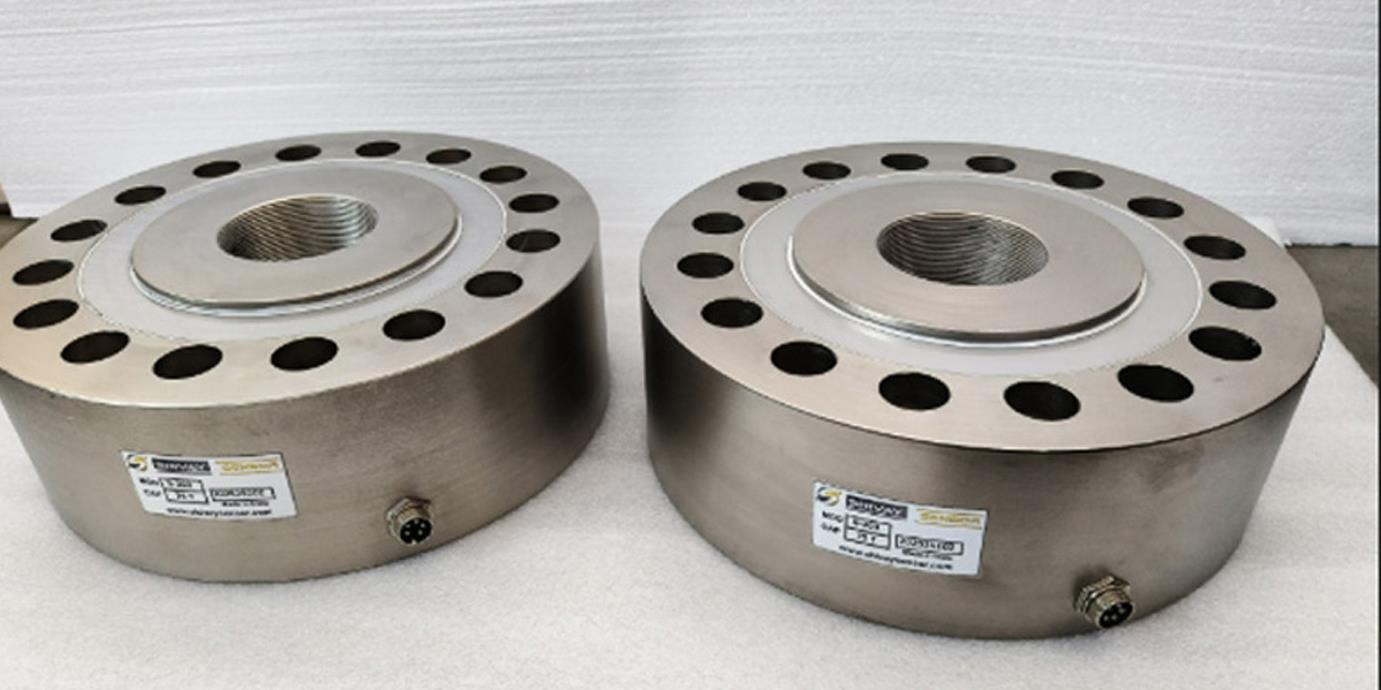
In the world of industrial sensors, where precision and durability are key, one device stands out for its unique shape and incredible performance: the pancake load cell. Named for its flat, low-profile design, this sensor is a true workhorse, a versatile and powerful tool for measuring force in a wide range of applications.
More Than Just a Pretty Face
So, what exactly is a pancake load cell? At its core, it's a force transducer that converts a mechanical force—like a push or a pull—into an electrical signal. The magic happens inside its robust, typically stainless steel or aluminum, body. When a force is applied, the internal structure of the load cell deforms ever so slightly. Attached to this structure are several strain gauges, which are small, resistive sensors. As the load cell deforms, the strain gauges stretch or compress, causing their electrical resistance to change. These changes are measured by a Wheatstone bridge circuit, which converts the change in resistance into a voltage output that is directly proportional to the applied force.
What makes the pancake load cell special is its low-profile design and its ability to handle both tension (pulling) and compression (pushing) forces. This dual-capability is a huge advantage, making it a "universal" load cell suitable for a wide variety of tasks. Many models also feature a central threaded hole and multiple mounting holes on the outer ring, which makes installation and integration into existing systems surprisingly easy.
The All-Star Performer of Force Measurement
The versatility of the pancake load cell is truly impressive. Its unique design makes it a top choice for a number of demanding industries and applications.
Aerospace: From testing the structural integrity of a wing to measuring the forces on landing gear, pancake load cells are critical for ensuring aircraft safety and performance.
Automotive: In crash test scenarios, they provide crucial data on the forces involved, and on the assembly line, they're used for press-fit and torque measurements to ensure components are installed correctly.
Material and Fatigue Testing: This is where pancake load cells really shine. They're built to withstand repetitive, dynamic loading, making them ideal for testing the durability and lifespan of materials and components.
Structural Monitoring: Engineers use these sensors to monitor the load on bridges, buildings, and other large structures, providing early warnings for potential issues and ensuring long-term safety.
Robotics and Automation: In automated systems, pancake load cells provide real-time feedback, enabling robotic arms to perform delicate tasks with precision and control.
Why Choose a Pancake Load Cell?
When you're comparing load cells, a pancake model offers several distinct advantages. Beyond its low-profile shape, which is a lifesaver in space-constrained applications, it boasts:
High Accuracy: Pancake load cells are known for their exceptional precision, often with low error margins. This is crucial for applications where a small error could have significant consequences.
Durability: Made from high-quality materials and designed to handle tough conditions, they offer long-term reliability and require minimal maintenance, even in harsh environments.
Resistance to Off-Axis Loading: Their design, often with a dual-diaphragm structure, makes them less sensitive to forces applied from the side (extraneous loads), ensuring more accurate measurements.
In a world where precision is paramount, the pancake load cell is a hero in disguise. Its blend of a compact, rugged design with high accuracy and versatility makes it an indispensable tool for engineers and manufacturers who demand reliable, repeatable force measurements.
For More Info, Visit us




