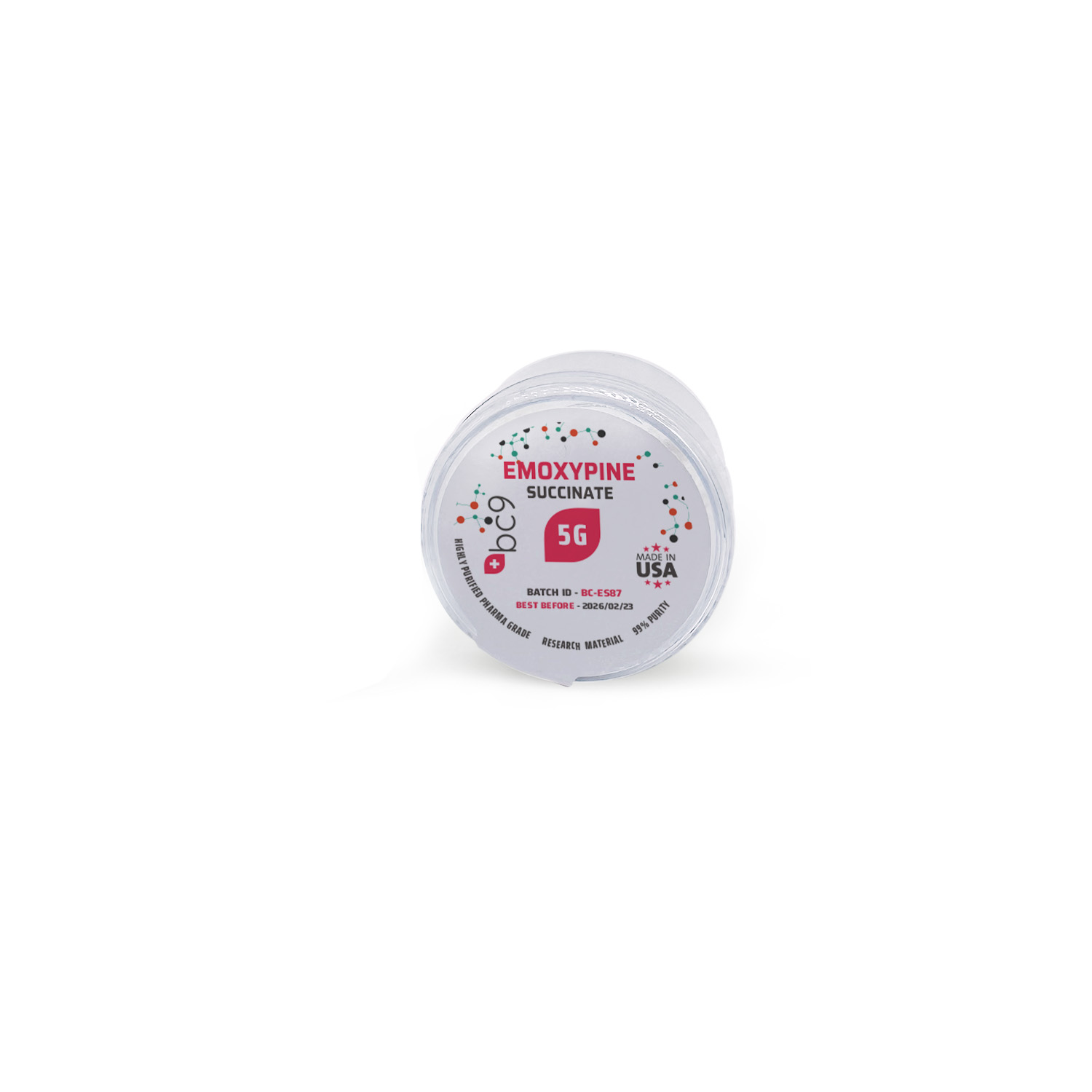
Emoxypine Succinate Explained: Antioxidant Research & Neuroprotective Potential

December 15, 2025
Overview of Emoxypine Succinate
Emoxypine Succinate is a synthetic antioxidant compound widely studied in biochemical and neuropharmacological research for its membrane-stabilizing, anti-hypoxic, and free-radical–scavenging properties. Structurally derived from 3-hydroxypyridine, Emoxypine Succinate combines antioxidant activity with succinate-mediated metabolic support, positioning it as a compound of high interest in oxidative stress and neuroprotection research models.
Its biochemical profile has made Emoxypine Succinate a frequent subject in studies involving cellular resilience, mitochondrial efficiency, and stress-related neuronal pathways.
Chemical Structure and Biochemical Characteristics
Emoxypine Succinate integrates two biologically significant components:
- 3-Hydroxypyridine nucleus – associated with potent antioxidant and membrane-protective activity
- Succinic acid moiety – a key intermediate in the Krebs cycle, contributing to cellular energy metabolism
This dual functionality allows Emoxypine Succinate to interact with both oxidative pathways and intracellular metabolic processes, distinguishing it from conventional antioxidants.
Mechanisms of Antioxidant Activity
Emoxypine Succinate demonstrates multi-level antioxidant behavior in experimental settings:
Free Radical Neutralization
The compound effectively scavenges reactive oxygen species (ROS), including superoxide anions and hydroxyl radicals, reducing lipid peroxidation in cellular membranes.
Membrane Stabilization
By preserving phospholipid integrity, Emoxypine Succinate enhances membrane fluidity and resistance to oxidative damage, particularly in neuronal and endothelial cells.
Enzymatic Modulation
Research indicates modulation of endogenous antioxidant enzymes such as superoxide dismutase and catalase, contributing to sustained oxidative balance.
Neuroprotective Research Applications
Emoxypine Succinate has been extensively evaluated in neurobiological research due to its capacity to support neuronal viability under stress conditions.
Cerebral Hypoxia Models
In hypoxic and ischemic experimental models, Emoxypine Succinate has been associated with improved neuronal survival and reduced oxidative injury, highlighting its relevance in oxygen-deprivation research.
Neurotransmitter System Stability
Studies suggest a stabilizing effect on neurotransmitter signaling pathways by mitigating oxidative disruptions to synaptic membranes.
Cognitive and Behavioral Research
Experimental observations in controlled research environments have linked Emoxypine Succinate to preserved cognitive performance markers under oxidative or metabolic stress conditions.
Role in Mitochondrial and Metabolic Research
The succinate component of Emoxypine Succinate provides a unique metabolic dimension:
- Supports mitochondrial electron transport chain activity
- Enhances ATP synthesis efficiency under stress conditions
- Reduces metabolic acidosis associated with hypoxia
This dual antioxidant–metabolic mechanism is particularly relevant in cellular energy metabolism and neuroenergetics research.
Cardiovascular and Microcirculatory Research Interest
Beyond neurological models, Emoxypine Succinate has demonstrated relevance in vascular research:
- Reduction of oxidative damage to endothelial cells
- Improved microcirculatory parameters in experimental settings
- Stabilization of erythrocyte membranes, enhancing oxygen transport efficiency
These properties make Emoxypine Succinate valuable in systemic oxidative stress and circulation-related research studies.
Anti-Stress and Adaptogenic Properties
Experimental data indicate that Emoxypine Succinate may influence stress-response pathways by moderating oxidative cascades linked to cortisol release and autonomic imbalance. This has positioned the compound as a subject of interest in adaptogenic and stress-modulation research frameworks.
Comparative Advantages Over Conventional Antioxidants
Unlike single-mechanism antioxidants, Emoxypine Succinate offers:
- Dual antioxidant and metabolic support
- Enhanced membrane affinity for targeted cellular protection
- Sustained intracellular activity rather than transient free-radical scavenging
These attributes contribute to its prominence in advanced antioxidant research.
Research Safety and Handling Considerations
In laboratory environments, Emoxypine Succinate is typically handled as a stable, water-soluble compound. Standard research safety protocols apply, including controlled storage, accurate dosing preparation, and adherence to institutional research guidelines.
Future Research Directions
Ongoing scientific interest in Emoxypine Succinate continues to expand into areas such as:
- Neurodegenerative disease models
- Age-related oxidative stress pathways
- Combined antioxidant–metabolic compound development
- Cellular resilience and longevity research
Its multifaceted biochemical profile suggests continued relevance in translational and mechanistic studies.
Conclusion
Emoxypine Succinate stands out as a scientifically compelling compound in antioxidant and neuroprotective research. Its unique integration of oxidative defense and metabolic enhancement provides a comprehensive framework for studying cellular protection, neuronal resilience, and energy efficiency under stress conditions. As research continues to evolve, Emoxypine Succinate remains a cornerstone compound for advanced investigations into oxidative balance and neurobiological stability.






