
How Commercial Battery Storage Can Improve Business Energy Management?

October 15, 2026
Have you noticed your electricity bills creeping up quarter after quarter? Are power outages disrupting your operations and costing you money? What if there were a way to take control of your energy costs while doing your bit for the environment?
For Australian businesses, energy management has never been more critical. With electricity prices continuing to rise and grid reliability becoming increasingly unpredictable, smart business owners are looking for ways to reduce their dependence on traditional power sources. Commercial battery storage has emerged as a game-changer, offering businesses the ability to store energy, cut costs, and maintain operations even when the grid fails.
In this article, we'll explore how commercial battery storage works, the benefits it offers, and whether it's the right investment for your business. Whether you're running a small retail shop or managing a large manufacturing facility, you'll discover practical insights to help you make an informed decision about your energy future.
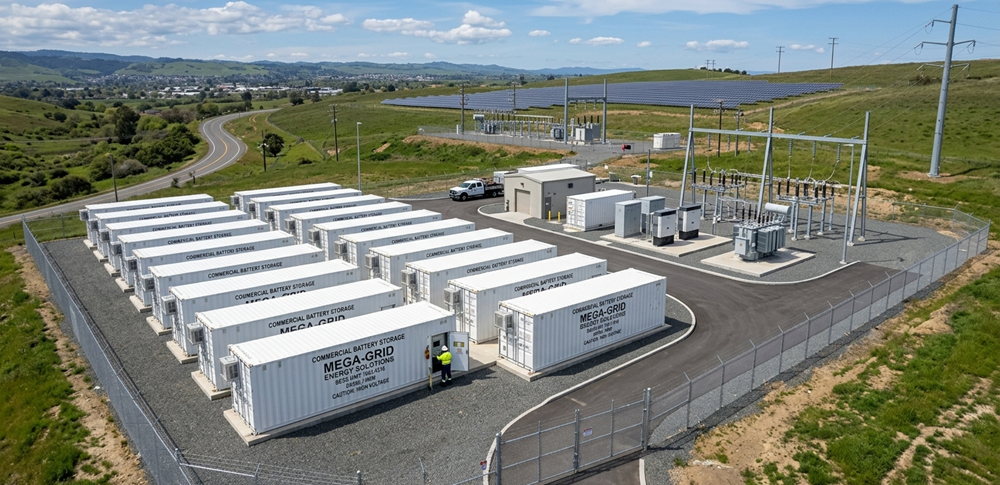
What Is Commercial Battery Storage and How Does It Work?
The Basic Components of a Commercial Battery System
Commercial battery storage systems are essentially large-scale versions of the batteries you'd find in your phone or laptop. They store electrical energy for later use, allowing businesses to draw on that stored power when needed most.
The main components include the battery cells themselves (typically lithium-ion), an inverter that converts stored DC power to usable AC power, and a battery management system that monitors performance and safety. There's also smart software that decides when to charge, discharge, or hold the stored energy based on your usage patterns and electricity tariffs.
How Energy Storage Integrates with Your Existing Infrastructure?
The beauty of modern battery systems is their flexibility. They can work alongside your existing electrical setup without major modifications. If you've already got solar panels installed, your battery system can store excess generation during the day for use in the evening.
Integration happens through your main switchboard, with the battery management system communicating with your building's electrical infrastructure. Many systems also connect to smart meters and energy management platforms, giving you real-time visibility into your energy flows and savings.
What Are the Benefits of Battery Storage for Businesses?
Reducing Peak Demand Charges
Here's something many business owners don't realise: a significant chunk of your electricity bill comes from demand charges, not just the energy you consume. These charges are based on your highest power usage during peak periods.
Battery storage lets you shave these peaks by discharging stored energy during high-demand times. Instead of drawing heavily from the grid when rates are highest, you use your stored power. The result? Substantially lower demand charges and a more predictable energy bill each month.
Achieving Energy Independence and Reliability
There's genuine peace of mind in knowing your business isn't entirely dependent on the grid. With battery storage, you've got a buffer against price volatility and supply disruptions.
Plus, you gain the flexibility to respond to time-of-use pricing. Charge your batteries when electricity is cheap (typically overnight or during solar generation), then use that stored power when prices spike. It's a straightforward strategy that puts you back in control.
Maximising Solar Investment Returns
If you've already invested in solar panels, adding battery storage amplifies your returns. Without batteries, excess solar generation often gets exported to the grid at minimal feed-in tariffs. That's money left on the table.
Batteries capture that excess generation for later use, meaning you benefit from every kilowatt your panels produce. This combination of solar and storage creates a powerful system that maximises self-consumption and minimises grid dependence.
Supporting Sustainability Goals and ESG Commitments
More businesses are making environmental, social, and governance (ESG) commitments. Battery storage supports these goals by enabling greater use of renewable energy and reducing reliance on fossil fuel-generated grid power.
It's also a visible demonstration of your commitment to sustainability—something customers, employees, and stakeholders increasingly value. Many businesses find that going green isn't just good for the planet; it's good for their reputation and bottom line.
Is Battery Storage Worth It for Small Businesses?
Assessing Your Energy Usage Patterns
For small businesses, the value proposition depends heavily on your energy patterns. If you've got high energy consumption during peak periods or already own solar panels that generate excess power, batteries make strong financial sense.
On the other hand, if your energy usage is minimal or occurs mainly during off-peak hours, the case becomes less compelling. Start by reviewing your bills and understanding when and how you use power.
Scalable Solutions for Growing Operations
The good news for growing businesses is that battery systems are increasingly scalable. You can start with a smaller capacity and add more storage as your needs expand.
This modular approach means you're not locked into a massive upfront investment. You can match your battery capacity to your current requirements while building in flexibility for future growth.
How Long Do Commercial Batteries Last?
Battery Lifespan and Warranty Considerations
Most commercial lithium-ion batteries are designed to last 10 to 15 years, though actual lifespan depends on usage patterns and environmental conditions. Manufacturers typically offer warranties of 10 years, often guaranteeing that capacity won't fall below 70-80% during that period.
When comparing systems, look beyond the headline warranty figures. Check what's actually covered and under what conditions. Some warranties have capacity guarantees; others cover throughput (total energy cycled over the battery's life).
Maintenance Requirements and Best Practices
Commercial batteries are relatively low-maintenance, but they're not zero-maintenance. Regular inspections, software updates, and occasional component replacements help ensure optimal performance and longevity.
Most installers offer maintenance packages that include periodic check-ups. Keeping your system well-maintained protects your investment and helps identify potential issues before they become costly problems.
Can Battery Storage Help During Power Outages?
Backup Power Capabilities for Business Continuity
Absolutely—though it's important to understand the difference between grid-connected systems with backup capability and those without. Not all battery systems automatically provide backup power during outages.
If business continuity during blackouts is a priority, make sure you specify a system with backup functionality. These systems can island your premises from the grid during outages, keeping critical operations running until power is restored.
Protecting Critical Operations and Equipment
For businesses where downtime means lost revenue or damaged stock—think restaurants, medical practices, or data centres—backup power is invaluable. Batteries can keep refrigeration running, servers online, and essential equipment operational.
Consider which systems are truly critical and size your battery backup accordingly. You might not need to power your entire premises, just the essential circuits that keep your business functioning.
Choosing the Right Commercial Battery Storage System
Key Features to Compare
When evaluating systems, focus on capacity (how much energy can be stored), power rating (how quickly energy can be discharged), cycle life (how many charge-discharge cycles the battery supports), and round-trip efficiency (how much energy is retained through the charge-discharge process).
Also consider the software and monitoring capabilities. Good energy management software can optimise your battery operation automatically, maximising savings without constant manual intervention.
Working with Accredited Installers
Always work with Clean Energy Council accredited installers. They've demonstrated competence in designing and installing battery systems safely and effectively.
Get multiple quotes and check references. A quality installer will conduct a thorough site assessment, provide detailed modelling of expected performance, and offer ongoing support after installation.
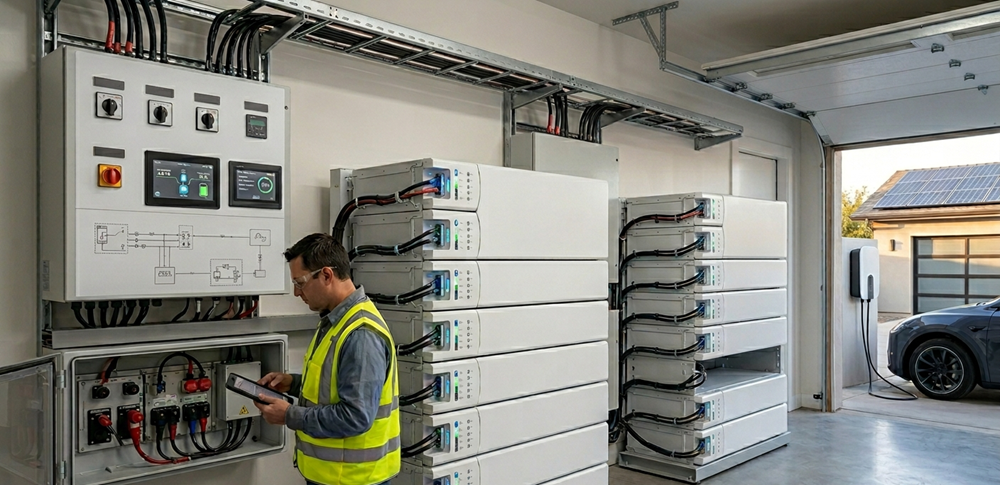
Real-World Applications: Industries Benefiting from Battery Storage
Across Australia, diverse industries are embracing battery storage. Manufacturing facilities use batteries to manage high peak loads and maintain production during grid instability. Retail businesses reduce operating costs while demonstrating environmental leadership. Agricultural operations power irrigation and processing equipment with stored solar energy.
Healthcare facilities ensure critical equipment stays operational regardless of grid conditions. Office buildings optimise their energy costs while meeting tenant expectations for sustainability. The applications are as varied as Australian businesses themselves.
Taking the Next Step Towards Smarter Energy Management
Commercial battery storage represents a genuine opportunity for Australian businesses to take control of their energy costs, improve reliability, and demonstrate environmental leadership. The technology has matured significantly, and the economics increasingly favour adoption, particularly when combined with solar generation.
The key is approaching the decision with clear eyes. Understand your current energy usage, get proper assessments from qualified installers, and don't be swayed by sales pressure. The right system for your business is one that delivers measurable financial returns while meeting your operational requirements.
Ready to explore whether commercial battery storage Brisbane makes sense for your business? Start by gathering your energy bills and reaching out to accredited installers for initial assessments. With the right information, you'll be well-positioned to make a decision that serves your business for years to come.

You Might Like Also






