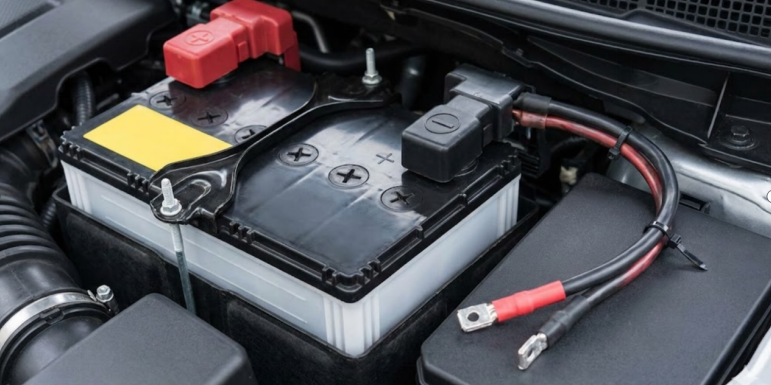

Disconnecting a car battery is quick, but the order matters. Done wrong, you can cause sparks or damage electronics. Park on level ground, switch the car fully off, and wear safety glasses and acid-resistant gloves. Work in fresh air and keep flames and smoking far away.
Turn the car off, then remove the negative (–) cable first and move it away from metal. Next, remove the positive (+) cable. To reconnect, put the positive cable on first and tighten it, then connect the negative cable. Keep tools from touching both a terminal and bare metal at the same time.
Key takeaways
- Negative off first; negative on last.
- Use the right socket (10 mm is common, but sizes vary).
- Secure loose cable ends so they can’t touch posts or metal.
- Some settings may reset unless you use a memory saver.
Understanding Car Battery Basics
Most cars use a 12-volt lead-acid battery. It has two terminals: positive (+) and negative (–). Look for the +/– marks on the case. Don’t rely on cable color alone.
A fully charged battery is usually about 12.6–12.8 volts when it has been resting. If the terminals have white or blue-green crust, plan to clean them after you disconnect the cables.
Gathering the Necessary Tools and Safety Gear
Grab your tools first so you don’t leave a loose cable hanging. Use a wrench or socket that fits the clamp nut snugly. A 10 mm socket is common, but some batteries use 8 mm (5/16 in) or 13 mm.
- Safety glassesand acid-resistant gloves
- Correct-size wrench or socket
- Optional: terminal puller, wire brush, baking soda + water
- Optional: memory saver (OBD-II or 12-V outlet)
If you’re shopping for a memory saver, terminal cleaner, or a battery maintainer, you can compare options in
SellySell automotive product review guides.
Locating and Identifying Battery Terminals
Open the hood and find the battery. Clear away loose tools and metal parts. Confirm which terminal is + and which is – on the case, then follow each cable so you know what it connects to.
Preparing the Vehicle for Battery Disconnection
Park, set the parking brake, and turn off the engine. Switch off lights, wipers, and the radio. Take off rings and watches. They can short a battery fast.
Safely Removing the Negative Terminal
Start with the negative (–) terminal. Loosen the clamp nut by turning it counterclockwise. Wiggle the clamp and lift it off the post.
Move the cable end away from the battery and any bare metal. Tie it back or rest it on a non-metal surface so it can’t spring back.
Detaching the Positive Terminal Correctly
Double-check that the negative cable is fully clear. Then loosen the positive (+) clamp and lift it straight off the post. Keep your wrench from touching any metal while it’s on the positive side.
Handling and Storing the Disconnected Battery
If you remove the battery, keep it upright and carry it with both hands. Store it on a flat surface in a cool, dry place. Keep it away from sparks and flames. Cover both terminals with caps or electrical tape.
| Step | Action | Purpose |
| 1 | Keep it upright and stable | Help prevent leaks |
| 2 | Store cool and dry | Slow aging |
| 3 | Cap or tape terminals | Stop shorts |
| 4 | Recharge as needed | Keep it ready |
Reconnecting the Battery in the Proper Order
Reconnect in reverse. Put the positive (+) clamp on first and tighten it. Then connect and tighten the negative (–) clamp. Give each clamp a gentle twist. It should not move.
Proper Disposal and Maintenance Best Practices
Car batteries should be recycled, not trashed. Many parts stores and local programs will take them. For general collection guidance, see
EPA battery collection best practices.
Check terminals for corrosion and looseness. Clean light corrosion with baking soda and water, rinse, dry, then apply dielectric grease.
FAQs
Will disconnecting the battery erase my radio presets or computer memory?
It can reset the clock, radio presets, and some learned settings. If you want to keep them, use a memory saver or write your presets down before you disconnect the battery.
How long can a car sit with the battery disconnected?
The battery will still self-discharge over time. For long storage, keep it cool and dry and use a maintainer, or recharge it every few weeks to months.
Can disconnecting the battery clear a check-engine light?
It may clear the light for a short time, but it won’t fix the problem and can erase useful data. Scan the codes, repair the cause, then clear the codes.
Is it safe to disconnect a hybrid or electric vehicle 12-volt battery myself?
Often yes, but follow the owner’s manual. High-voltage parts may still be present, so avoid orange cables and stop if you are unsure.
Will my alarm or immobilizer be affected when I disconnect the battery?
Sometimes. A power loss can reset alarms, radios, and anti-theft systems. Check your manual for codes or reset steps, and keep your key fob handy.
Conclusion
Turn everything off, remove the negative cable first, then remove the positive cable. Keep both cable ends away from metal. When you’re done, reconnect positive first and negative last. Work slowly and you’ll avoid sparks, spills, and most common mistakes.

You Might Like Also





