

Across the United Kingdom, businesses are under increasing pressure to reduce carbon emissions — not just to meet government regulations, but to satisfy customers, investors, and supply chain partners. Yet for many organisations, replacing entire vehicle fleets or industrial engines simply isn’t financially realistic.
The good news? Thousands of UK companies are successfully cutting emissions without changing engines at all.
After two decades in content strategy and industry reporting, I’ve seen firsthand how innovation often happens not through dramatic overhauls — but through smart optimisation. In this guide, we’ll explore how UK businesses are lowering emissions, reducing fuel costs, and staying compliant — all while keeping their existing engines.
Why UK Businesses Are Focusing on Emissions Now
The UK has set ambitious climate goals under the leadership of the UK Government, aiming for net-zero greenhouse gas emissions by 2050. This target influences everything from fleet management to procurement policies.
Industries feeling the pressure most include:
Logistics and transport
Construction
Agriculture
Marine operations
Manufacturing
Public sector fleets
But instead of scrapping perfectly functional engines, businesses are choosing smarter emission-reduction methods.
1. Switching to Renewable Fuels (Like HVO)
One of the fastest-growing solutions in the UK is Hydrotreated Vegetable Oil (HVO) — a renewable diesel alternative that works in most existing diesel engines without modification.
Why UK Companies Are Choosing HVO:
Reduces lifecycle CO₂ emissions by up to 90%
Drop-in replacement — no engine changes required
Cleaner combustion (lower particulates)
Immediate impact on carbon reporting
From construction firms in Birmingham to logistics operators in Manchester, HVO is becoming a practical bridge between traditional diesel and full electrification.
For businesses that can’t electrify heavy machinery yet, this is a powerful interim strategy.
2. Installing Emission Reduction Technology
Rather than replacing engines, many UK fleet operators are retrofitting vehicles with:
Diesel Particulate Filters (DPFs)
Selective Catalytic Reduction (SCR) systems
Exhaust after-treatment upgrades
These systems dramatically cut nitrogen oxides (NOx) and particulate emissions — especially important in Clean Air Zones across cities like London, Birmingham, and Bristol.
Retrofitting costs a fraction of new vehicle investment and helps businesses remain compliant with urban emission standards.
3. Smarter Fleet Management & Telematics
Technology is proving just as powerful as hardware upgrades.
Modern telematics systems monitor:
Idling time
Harsh acceleration
Route inefficiencies
Fuel consumption patterns
UK companies using fleet analytics report fuel savings of 10–20%, which directly translates into lower emissions.
Reducing unnecessary idling alone can significantly decrease fuel waste — particularly in delivery fleets operating in congested city centres.
4. Regular Engine Optimisation & Maintenance
It may sound simple, but well-maintained engines emit less.
Businesses are focusing on:
Scheduled servicing
High-quality lubricants
Fuel injector cleaning
Air filter replacements
Engine remapping for efficiency
An engine running at peak performance burns fuel more efficiently, producing fewer emissions per mile.
This approach is especially common among SME haulage operators who need cost-effective solutions.
5. Driver Training & Behavioural Change
Human behaviour remains one of the most overlooked emission factors.
Eco-driving programmes across the UK focus on:
Smooth acceleration and braking
Reduced engine idling
Optimal gear shifting
Anticipatory driving
Even a 5–10% improvement in driving efficiency makes a significant difference across a 100-vehicle fleet.
And unlike new engines, training costs very little.
6. Transitioning to Hybrid Operations (Not Full Replacement)
Some businesses are adopting a gradual transition:
Keeping existing diesel engines for heavy-duty routes
Introducing electric vehicles for short urban trips
Using alternative fuels for regional transport
This phased approach reduces emissions without the capital shock of full fleet replacement.
The Financial Advantage of Not Changing Engines
Engine replacement is expensive. For heavy goods vehicles (HGVs), costs can reach tens of thousands of pounds per unit.
By contrast:
Fuel switching = immediate carbon reduction
Retrofit systems = regulatory compliance
Telematics = ongoing savings
Maintenance = efficiency improvement
The combined impact often delivers a stronger short-term ROI than wholesale electrification.
The Compliance Factor: Clean Air Zones
Cities across the UK have implemented Clean Air Zones (CAZ) requiring vehicles to meet emission standards or face daily charges.
Businesses avoiding engine replacement are instead:
Retrofitting to meet Euro standards
Switching to cleaner fuels
Adjusting delivery routes strategically
These smart adjustments keep fleets operational without expensive upgrades.
Environmental Reporting & ESG Benefits
Today’s UK businesses aren’t just reducing emissions for compliance — they’re reporting it.
Clients and procurement frameworks increasingly demand:
Scope 1 carbon reduction plans
Transparent sustainability reporting
Demonstrable carbon savings
Switching fuels or installing emission-reduction technology gives businesses measurable carbon reductions they can document in ESG reports.
Is This a Permanent Solution?
For some industries, yes.
For others, it’s a transitional strategy until electric or hydrogen infrastructure becomes more viable across the UK.
What’s clear is this: engine replacement is no longer the only path to emission reduction.
Smart businesses are proving that innovation often lies in optimisation — not replacement.
Frequently Asked Questions (FAQ)
1. Can UK businesses reduce emissions without buying new vehicles?
Yes. Many companies are switching to renewable fuels like HVO, retrofitting emission control systems, improving maintenance, and using telematics to reduce fuel consumption — all without replacing engines.
2. Is HVO fuel available across the United Kingdom?
Yes. HVO supply has expanded significantly across England, Scotland, Wales, and Northern Ireland, especially for commercial bulk delivery.
3. Do emission retrofits help with Clean Air Zone compliance?
In many cases, yes. Approved retrofit systems can upgrade vehicles to meet required emission standards, helping avoid daily CAZ charges.
4. Is reducing emissions without changing engines cost-effective?
For most SMEs and fleet operators, it’s significantly more affordable than replacing vehicles. It also provides faster ROI and immediate carbon reporting benefits.
5. Will the UK eventually require full electrification?
While long-term policy trends favour zero-emission vehicles, transitional solutions remain critical — particularly for heavy transport and specialist machinery.
Final Thoughts
UK businesses are proving that sustainability doesn’t always require dramatic transformation. Through fuel innovation, retrofitting, smart technology, and operational improvements, companies are cutting emissions today — without touching their engines.
In a rapidly evolving regulatory landscape, agility matters more than ever. And sometimes, the smartest move isn’t replacement — it’s optimisation.

You Might Like Also

Off-Grid Heating in the UK: Why 1.5 Million Homes Still Rely on Oil


What Every HGV Driver Needs to Know About DERV Fuel
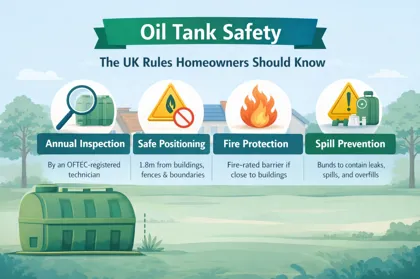
Oil Tank Safety: The UK Rules Homeowners Should Know




