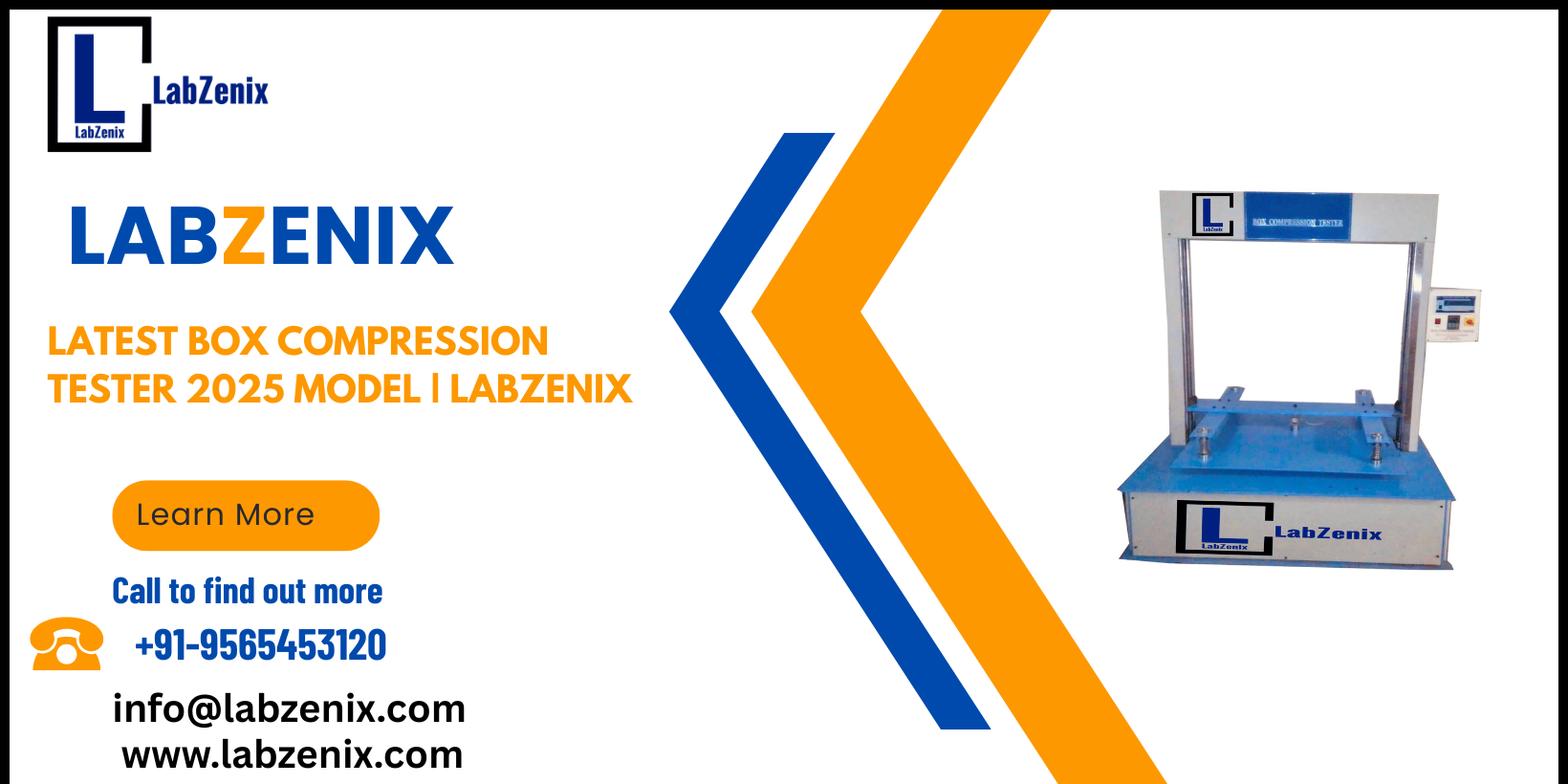
The Unseen Hero of Your Supply Chain: Why the Box Compression Tester is Non-Negotiable 📦
In the bustling world of logistics and product delivery, where corrugated boxes are the unsung workhorses, there's a silent guardian ensuring their strength and reliability. This guardian isn't a person, but a precision instrument: the Box Compression Tester. For anyone in the packaging and corrugated box industry, from mill managers to quality control technicians, this machine is the cornerstone of confidence. It’s the definitive answer to the critical question: "Will my boxes survive the journey?"
Imagine a tower of your product-filled boxes in a warehouse. The bottom box bears the immense weight of dozens, sometimes hundreds, of other boxes. Now, imagine the catastrophic cost of that bottom box collapsing. Product damage, logistical nightmares, financial losses, and a damaged brand reputation—all because of a single structural failure. This is precisely the scenario a reliable Box Compression Tester is designed to prevent. It simulates these real-world stacking conditions in a controlled lab environment, providing invaluable data long before your boxes ever reach the pallet.
What Exactly is a Box Compression Tester? 🧐
At its core, a Box Compression Tester is a robust, electromechanical system designed to apply a compressive, or crushing, force to a test specimen—in this case, a corrugated box—until it deforms or collapses. The primary objective is to measure the Box Compression Strength (BCT), which is the maximum load a box can withstand before buckling. This BCT value is the single most important metric for determining a box's stacking strength.
A standard Box Compression Tester consists of a strong frame, a motorized loading unit, a precision load cell to measure the force, and two parallel plates. The box is placed on the lower plate, and the upper plate moves downward at a constant speed, uniformly distributing the pressure across the top of the box. Sophisticated digital models, like those offered by innovators such as LabZenix, are integrated with software that not only records the peak compression force but also generates detailed graphs and reports for comprehensive analysis.
The Science Behind the Strength: It’s All About the Corrugation 🧪
To truly appreciate the value of a Box Compression Tester, one must understand what it's actually testing. The strength of a corrugated box doesn't come from the paper alone; it comes from the ingenious engineering of the fluted medium sandwiched between liners. This construction creates a columnar strength that resists top-to-bottom compression.
However, this strength is influenced by a multitude of factors:
Flute Profile (A, B, C, E, F): Different flute sizes offer different balances of cushioning and stacking strength.
Paper Quality (GSM): The grammage of the liner and medium paper directly impacts rigidity.
Adhesive Quality: The bonding between the flutes and liners must be impeccable.
Humidity and Conditioning: Corrugated board is hygroscopic; its strength can significantly decrease in high-moisture environments.
A Box Compression Tester doesn't just give a pass/fail result. It quantifies the cumulative effect of all these variables. By conducting a Box Compression Test, manufacturers can validate their material choices, optimize their designs for cost-efficiency without sacrificing strength, and ensure consistent quality across production batches.
Beyond the Basic Test: The Multifaceted Role of the Tester in the Industry 🔍
The application of a Box Compression Tester extends far beyond a simple strength check. It is a versatile tool for comprehensive quality assurance and research and development.
Quality Control and Batch Consistency: In a high-volume corrugated box plant, every batch of paper and every shift's production can have slight variations. Regular testing with a Box Compression Tester ensures that every box leaving the facility meets the specified BCT standards, guaranteeing consistency for the end-client.
Design Validation and Optimization: Are you designing a new box for a heavier product? A Box Compression Tester allows you to prototype and test different combinations of flute profiles and paper grades. This data-driven approach prevents over-engineering (saving money) and under-engineering (preventing failure).
Supplier Qualification and Raw Material Verification: Before committing to a new paper supplier, a manufacturer can use the Box Compression Tester to compare the BCT of boxes made from different suppliers' materials. This provides an objective, performance-based metric for selection.
Troubleshooting and Failure Analysis: When a client reports box failures in the field, the Box Compression Tester becomes a forensic tool. By testing retained samples from the same batch, manufacturers can determine if the failure was due to a manufacturing defect, improper storage (like high humidity), or mishandling during transit.
Compliance with International Standards: The packaging industry is governed by strict standards like ASTM D642, ISO 12048, and TAPPI T804. Using a calibrated Box Compression Tester is essential for certifying that your packaging complies with these global norms, a critical requirement for exporting goods.
Choosing the Right Box Compression Tester: A LabZenix Perspective 💡
Not all Box Compression Testers are created equal. Selecting the right one is crucial for accurate and reliable results. Key considerations include:
Load Capacity: The machine must have a higher maximum load capacity than the expected BCT of your strongest box.
Accuracy and Calibration: Look for machines with high-precision load cells and a commitment to easy calibration.
Platen Size and Parallelism: The plates must be large enough to fully support the test box and must remain perfectly parallel during the test to ensure uniform force distribution.
User-Friendly Software: Modern testers from providers like LabZenix offer intuitive software that simplifies operation, data storage, and report generation, making the Box Compression Test accessible to all operators.
Safety Features: Emergency stops, safety guards, and overload protection are non-negotiable for operator safety.
Investing in a high-quality Box Compression Tester is not an expense; it's an investment in product integrity, customer trust, and long-term profitability. It’s the smartest way to ensure your packaging is built to perform, every single time.
Frequently Asked Questions (FAQ) 🤔
Q1: What is the main purpose of a Box Compression Tester?
The main purpose of a Box Compression Tester is to determine the maximum compressive load a corrugated box can withstand before collapsing. This value, known as the Box Compression Strength (BCT), is critical for predicting how well boxes will perform when stacked in warehouses or during shipping.
Q2: How does a Box Compression Tester simulate real-world conditions?
A Box Compression Tester accurately simulates the static load experienced by boxes at the bottom of a stack. By applying a controlled, downward force, it replicates the constant pressure that can lead to box failure over time, allowing manufacturers to design packaging that can safely support the required weight.
Q3: Can a Box Compression Tester be used for boxes of all sizes?
Yes, a well-designed Box Compression Tester features adjustable platens or a sufficiently large testing area to accommodate a wide range of box sizes. It is crucial to ensure the machine's specifications match the largest box size you need to test.
Q4: Why is conditioning the boxes before a Box Compression Test so important?
Corrugated board is highly sensitive to moisture. Conditioning boxes in a standard atmosphere (typically 23°C and 50% relative humidity) for 24-48 hours ensures that the test results are consistent, repeatable, and comparable to industry standards, eliminating humidity as a variable.
Q5: What is the difference between a Box Compression Test and a Ring Crush Test (RCT)?
While both assess strength, they are fundamentally different. A Box Compression Test is performed on a complete, assembled box to measure its overall stacking strength. A Ring Crush Test is performed on a small strip of the corrugated board itself to measure the edgewise compressive strength of the paper composite, which is a key predictor of the final box's strength.
Q6: How often should a Box Compression Tester be calibrated?
To maintain accuracy and comply with international standards, a Box Compression Tester should be calibrated at least once a year. However, more frequent calibrations may be necessary depending on usage frequency and the requirements of your quality management system.

You Might Like Also
Vacuum Leak Tester Manufacturer And Supplier


Core Compression Tester Manufacturer in India


Carbonation Assembly Delhi Tamil Nadu Gujrat India 2026

Pinhole Tester - Manufacturer and Supplier, Price

Drop Tester Manufacturer price in India 2026




