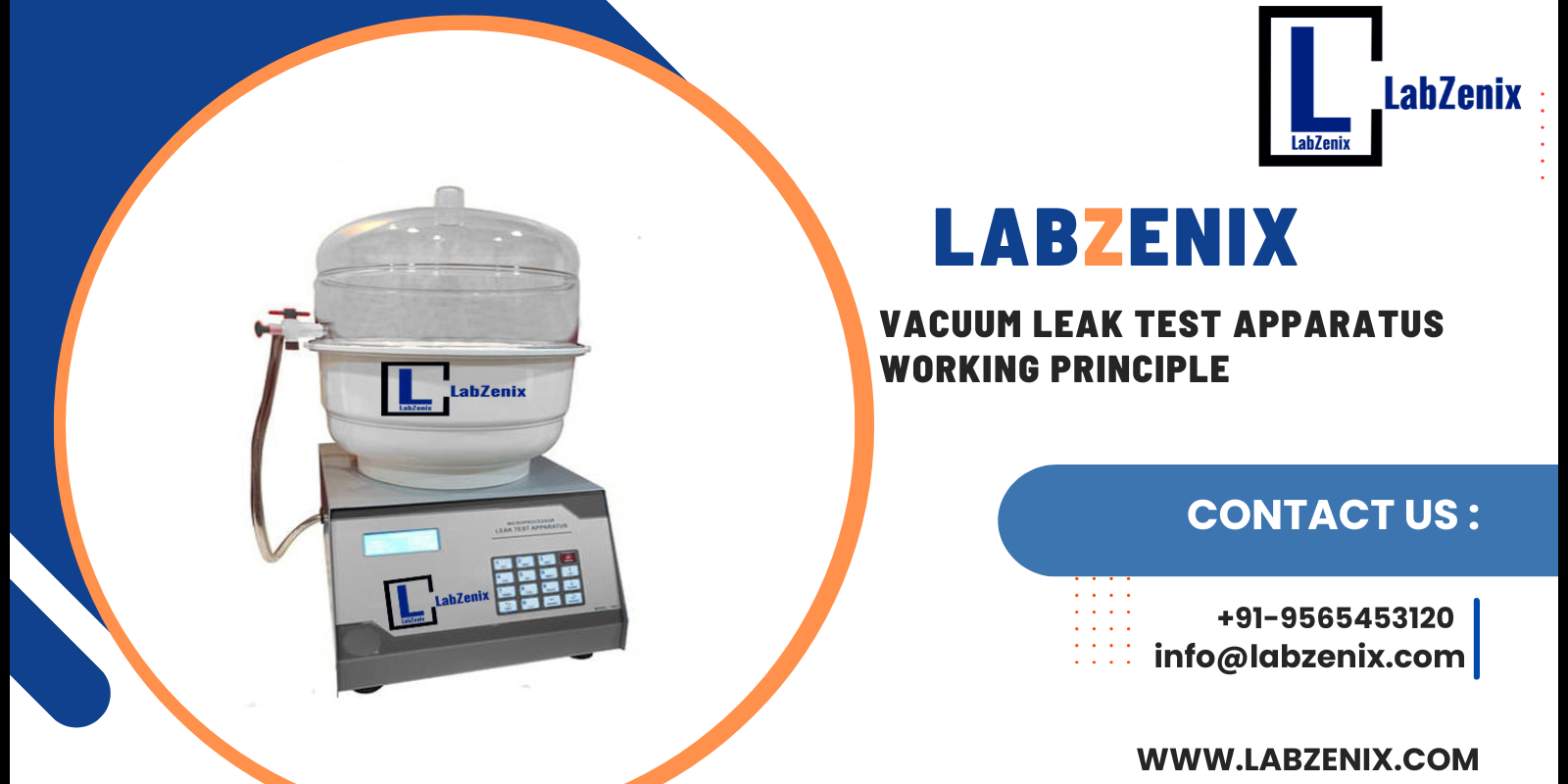
🛡️ Ensuring Perfect Seals: The Science Behind Vacuum Leak Test Apparatus in Packaging 🧊
In the high-stakes world of packaging, especially for corrugated boxes containing liquids, sensitive electronics, or sterile medical devices, a tiny leak is a giant problem. A compromised seal can lead to product spoilage, costly recalls, and a damaged brand reputation. So, how do manufacturers guarantee that their packaging is hermetically sealed and secure? The answer lies in a powerful, non-destructive testing method powered by a Vacuum Leak Test Apparatus.
This isn't just a "nice-to-have" tool; it's a critical checkpoint for quality assurance. For anyone in the packaging and corrugated box industry, understanding the Vacuum Leak Test Apparatus working principle is fundamental to delivering flawless products. Let's pull back the curtain on this fascinating technology. 🔍
The Core Mission: What is a Vacuum Leak Test Apparatus?
At its heart, a Vacuum Leak Test Apparatus is a precision instrument designed to detect leaks in a sealed package by subjecting it to a controlled vacuum. Instead of guessing if a seal is good, this apparatus provides scientific, repeatable data. It answers a simple yes-or-no question: "Does this package maintain its integrity under a specific pressure differential?"
This is crucial for boxes containing:
Aseptic Food & Beverages: Juice boxes, soup cartons.
Pharmaceuticals: Blister packs, medicine bottles in secondary packaging.
Electronics: Moisture-sensitive components.
Medical Devices: Sterile kits and trays.
Demystifying the Vacuum Leak Test Apparatus Working Principle 🧪
The Vacuum Leak Test Apparatus working principle is elegantly simple, rooted in basic physics. It’s a test of a package's ability to withstand an internal pressure that is higher than the external pressure. Here’s a step-by-step breakdown of the process:
Step 1: The Setup – Sealing the Test Chamber
The package to be tested is placed inside a robust, transparent testing chamber. This chamber is then securely sealed, creating an airtight environment around the package. This is the first critical step in the Vacuum Leak Test Apparatus working principle.
Step 2: Creating the Vacuum – The Pressure Differential
The apparatus activates a vacuum pump, which begins to evacuate air from the sealed chamber. As air is removed, the pressure inside the chamber drops significantly, creating a vacuum. Meanwhile, the air trapped inside the sealed package remains at (or near) atmospheric pressure. This creates a positive pressure differential—the inside of the package is now at a higher pressure than the outside environment (the chamber).
Step 3: The Dwell Period – Observation & Stabilization
Once the desired vacuum level (measured in mbar or kPa) is reached, the system enters a "dwell" or "soak" period. The vacuum pump may be shut off, and the chamber is held at this constant low pressure for a pre-set amount of time. This is the moment of truth. The Vacuum Leak Test Apparatus working principle relies on observing what happens during this stable vacuum state.
Step 4: Detection – The Tell-Tale Signs of a Leak
A perfectly sealed package will simply expand slightly (like a balloon) due to the internal positive pressure but will hold its form. It will not collapse, and no bubbles will appear.
A leaking package, however, behaves differently. The higher-pressure air from inside the package will find the path of least resistance—the leak. It will force its way out through any micro-tear, pinhole, or faulty seal. There are two primary detection methods based on the Vacuum Leak Test Apparatus working principle:
Visual Inspection (Bubble Emission Test): If the test chamber is filled with water or the package is submerged in a water bath within the chamber, the escaping air will form a steady stream of bubbles. This visually pinpoints the exact location of the leak. 💨
Pressure Decay Monitoring: For a more automated and quantitative approach, sensitive pressure sensors monitor the vacuum level inside the chamber during the dwell period. If the vacuum pressure rises (decays) over time, it indicates that air from the leaking package is re-entering the chamber, compromising the vacuum. The rate of pressure decay can even be correlated to the size of the leak.
Step 5: Venting and Conclusion
After the test cycle is complete, the chamber is safely vented, allowing atmospheric air to flow back in. The package can then be removed. The result is clear: pass or fail.
Why This Principle is a Game-Changer for the Corrugated Box Industry 📦
You might think, "It's just cardboard?" But modern packaging is complex. Corrugated boxes often house sealed plastic blisters, pouches, or liquid containers. A weak seam in an inner pouch or a faulty cap on a bottle inside the box can lead to disaster.
Validating Barrier Properties: Many corrugated boxes are lined with barrier films. The Vacuum Leak Test Apparatus working principle validates the integrity of these liners.
Testing the Entire System: It tests not just the primary package (e.g., a bottle) but also how it interacts with the secondary corrugated packaging. A lid might seal fine alone but fail when slight pressure is applied by the box's structure.
Preventing "In-Transit" Failures: The vacuum test simulates the low-pressure conditions experienced during air freight or when transported over high-altitude mountain passes, where external pressure drops.
Advantages of Embracing the Vacuum Leak Test
Non-Destructive: Good packages are not damaged or altered by the test and can be sold.
Highly Sensitive: Capable of detecting extremely small leaks that are invisible to the naked eye.
Quantifiable: Provides objective data, moving beyond subjective "squeeze tests."
Cost-Effective: Prevents massive losses by catching defects early in the production line.
Frequently Asked Questions (FAQ) ❓
Q1: How is the vacuum level for the test determined?
A: The ideal vacuum level is determined by the package's material strength, size, and intended use conditions. Standards like ASTM D3078 provide guidelines. Testing at too high a vacuum can damage good packages, while too low a vacuum might miss smaller leaks.
Q2: Can this method test porous packages like plain corrugated cardboard?
A: No, the standard Vacuum Leak Test Apparatus working principle is designed for non-porous, sealed packages. Porous materials would allow air to pass through naturally, making leak detection impossible. It's perfect for testing the sealed components within a corrugated box.
Q3: Is the test safe for all types of flexible packages?
A: Generally, yes. However, the test parameters (vacuum level and dwell time) must be carefully set to avoid over-stressing and bursting packages that are designed to be weak or flexible.
Q4: What is the difference between a Vacuum Leak Test and a Pressure Decay Test?
A: They are closely related. A Vacuum Leak Test places the package in a vacuum chamber and looks for air coming out. A Pressure Decay Test (often used for rigid containers) pressurizes the package from the inside and looks for a drop in that internal pressure, indicating air escaping. The core Vacuum Leak Test Apparatus working principle is based on the first method.
Q5: How does LabZenix ensure the reliability of its Vacuum Leak Test Apparatus?
A: At LabZenix, our apparatus is built with high-precision vacuum sensors, durable chamber construction for a perfect seal, and user-friendly digital controls for accurate parameter setting. We focus on robust design and consistent performance to make the Vacuum Leak Test Apparatus working principle a reliable pillar of your quality control process. ✅
By integrating a Vacuum Leak Test Apparatus into your quality control line, you are not just testing packages; you are building trust. You are ensuring that what you ship is exactly what the customer receives—perfect, pristine, and protected. 🚚✨

You Might Like Also

Vacuum Leak Tester Manufacturer And Supplier


Core Compression Tester Manufacturer in India


Carbonation Assembly Delhi Tamil Nadu Gujrat India 2026

Pinhole Tester - Manufacturer and Supplier, Price

Drop Tester Manufacturer price in India 2026




