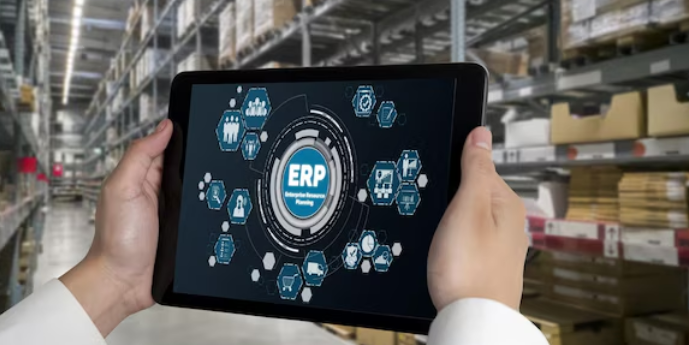

1. The Evolution of Manufacturing and the Rise of ERP for Manufacturing Industry
Manufacturing operations have significantly evolved over the past few decades. Once dominated by manual processes and spreadsheets, today’s production environments demand precision, automation, and data-driven decision-making. This evolution is largely fueled by the increasing need for efficiency, traceability, and responsiveness in a highly competitive global market. To adapt and thrive, businesses are turning to ERP for the manufacturing industry to streamline operations and meet customer expectations effectively.
For manufacturers, enterprise resource planning (ERP) solutions are the digital foundation. They integrate all departments—from CRM to procurement and production to inventory and finance—into a single cohesive platform. This unified system ensures that data flows seamlessly across departments, offering real-time insights that improve productivity and decision-making.
In this context, manufacturing ERP is no longer a luxury or a futuristic concept; it’s a strategic necessity. Companies that delay implementing ERP risk falling behind due to inefficiencies, duplication of work, compliance issues, and lack of transparency. The modern manufacturing landscape requires agility and adaptability, and ERP provides exactly that.
2. Benefits of Manufacturing ERP Software in Daily Operations
One of the major advantages of using manufacturing ERP software is real-time visibility. From raw material procurement to the final product delivery, every stage can be monitored, optimized, and recorded. This allows manufacturers to make informed decisions instantly, helping them respond to market changes or production issues without delay.
Inventory management is another area where ERP plays a vital role. ERP systems can automatically track inventory levels, predict shortages, and even automate reordering. This minimizes stockouts and overstock situations, ensuring a balanced inventory at all times. Moreover, accurate demand forecasting based on historical data becomes more manageable through ERP.
Furthermore, ERP enhances collaboration across departments. When everyone from the shop floor to the back office is working on a centralized system, communication improves, and operational silos are eliminated. This results in fewer errors, higher compliance, and greater overall performance.
3. Why Cloud ERP Software Is Transforming Manufacturing
With advancements in cloud technology, cloud ERP software has emerged as a game-changer. Unlike traditional on-premise solutions, cloud ERP has a low infrastructure investment and is easily expandable. This makes it particularly attractive for small and mid-sized manufacturers looking to embrace digital transformation without incurring huge costs.
Manufacturers can manage operations, monitor production, and generate reports from anywhere, anytime. This kind of accessibility has become increasingly important in today's hybrid and dispersed work contexts.
Additionally, cloud ERP ensures data security, frequent backups, and easy updates. These features not only reduce IT overhead but also provide peace of mind, knowing that business data is safe and always accessible. For manufacturers aiming to stay competitive, cloud ERP is proving to be the most cost-effective and future-ready solution.
4. Tackling Industry-Specific Challenges with ERP for Manufacturing Industry
The ERP for manufacturing industry is designed to handle sector-specific challenges. Whether it's maintaining quality standards, adhering to compliance regulations, or managing custom orders, ERP systems are tailored to address these complex requirements efficiently.
Traceability is important in industries such as pharmaceuticals and food manufacturing. ERP systems help track each batch from raw materials to finished products, ensuring compliance with safety standards and facilitating easier recalls if needed. This kind of traceability fosters trust among consumers and regulatory agencies alike.
Customization capabilities of modern ERP systems also make them suitable for niche manufacturing. Businesses can configure modules based on their unique workflows and operational models. This adaptability ensures that the ERP system grows with the business, supporting both day-to-day operations and long-term strategies.
5. Manufacturing ERP Software Improves Productivity and Reduces Costs.
Implementing a manufacturing ERP software directly contributes to improved productivity. Automated workflows minimize manual intervention, reducing the chances of human error. This streamlining accelerates production cycles, reduces downtime, and ensures more output in less time.
Moreover, ERP systems offer powerful analytical tools that help in cost management. Businesses can discover and correct wasteful practices by monitoring production costs, labor efficiency, and procurement expenses. These insights lead to smarter budgeting and higher profit margins.
Another cost-saving feature is predictive maintenance. ERP systems can track machine usage and alert teams before a breakdown occurs, reducing costly downtimes and ensuring continuous production. These capabilities are especially important in capital-intensive manufacturing setups.
6. The Strategic Edge of Cloud Based ERP Software
As businesses strive to expand, the scalability of cloud based ERP software becomes a major advantage. Cloud platforms allow for quick addition of new users, features, and even new sites, making them ideal for growing manufacturers. This scalability ensures that the ERP system continues to serve the business effectively as it evolves.
These integrations can automate quality checks, monitor equipment in real-time, and provide predictive analytics. As a result, manufacturers gain a strategic edge by leveraging real-time insights and automation.
Lastly, cloud ERP promotes sustainability by enabling paperless processes, optimized resource usage, and energy-efficient operations. As environmental regulations tighten and customers become more eco-conscious, sustainable manufacturing practices powered by cloud ERP will be a competitive advantage.
Embrace the Future of Manufacturing with TheERPHub
In today’s fast-paced manufacturing environment, businesses cannot afford inefficiencies, delays, or outdated systems. ERP has evolved into an indispensable tool for managing and optimizing manufacturing operations. From real-time visibility and cost control to flexibility and compliance, ERP covers all the bases.
TheERPHub offers cutting-edge cloud based ERP software tailored specifically for the manufacturing sector. Whether you’re a small business looking to scale or an established enterprise aiming to enhance efficiency, TheERPHub provides reliable, scalable, and industry-compliant ERP solutions.
Ready to transform your manufacturing operations? Connect with us today and take the first step toward smarter, streamlined, and future-ready manufacturing.

You Might Like Also





